Pakistan Moves to Merge Privatisation Commission and P3A into Single Umbrella Body
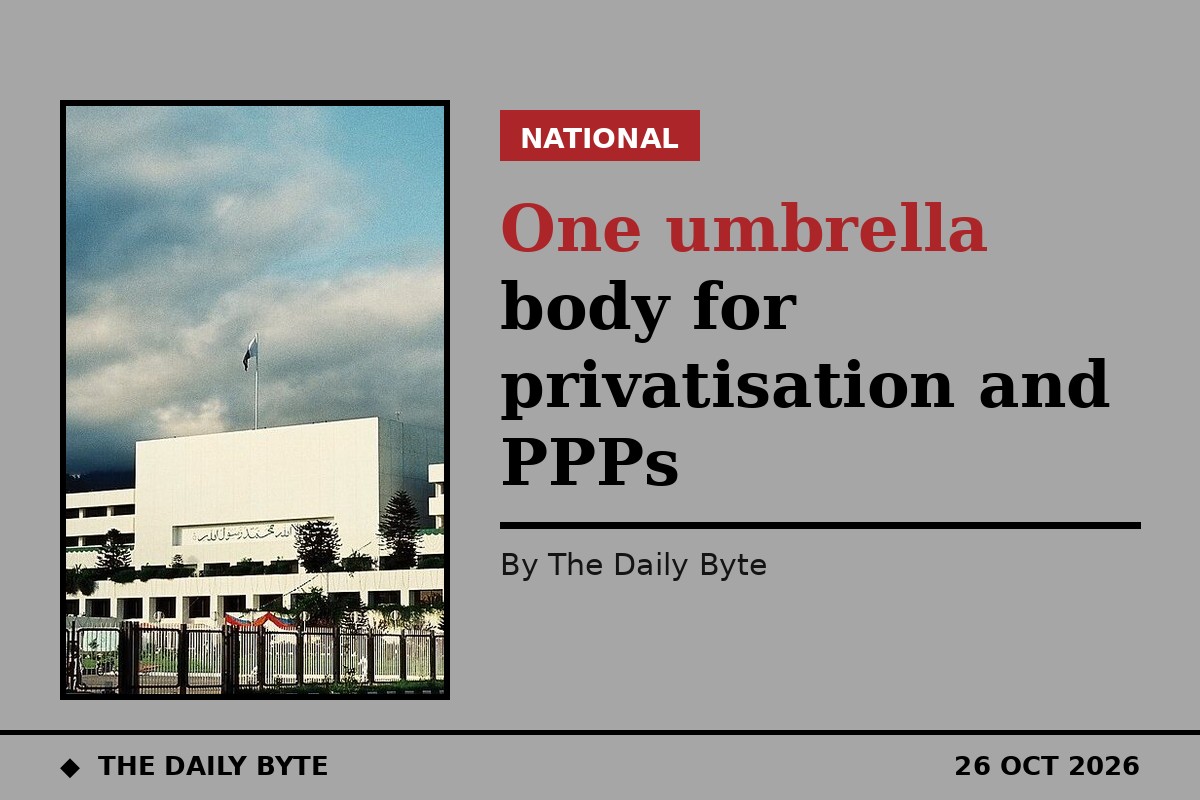
Pakistan's government has tabled legislation in the National Assembly to merge the Privatisation Commission and the Public-Private Partnership Authority (P3A) into a single body, the proposed Privatisation and Public-Private Partnership Commission. The Privatisation Commission (Amendment) Bill, 2026 was listed as laid in the Assembly on 22 October 2026, and the plan was reported by Dawn on 26 October. The proposal is at the legislative stage: it has been introduced, not enacted, and the full draft text has not been publicly verified in independent checks of the Assembly register.
Under the reported plan, the new commission would advise on, appraise, structure, facilitate and monitor public-private partnership projects, bringing together work currently split between two bodies. The bill would amend the Privatisation Commission Ordinance, 2000 and repeal the Public Private Partnership Authority Act, 2017, formally dissolving the P3A once enacted. Government agencies would be required to provide project lists within 15 days of a written request, with failures referred to the concerned ministry or division, and existing P3A contracts would transfer to the new body without disadvantage to private parties.
Board, funds and reported protections
The unified commission would be headed by incumbent chairman Muhammad Ali, with a reconstituted board featuring a majority of independent private-sector members, including at least two women directors, according to the Dawn report. It would manage four non-lapsable funds covering privatisation, public contributions, viability gaps and PPP project development, and PPP agreements would be designated as public documents. The bill is also reported to grant legal and investigative protections to current and former chairmen, secretaries, board members, staff and consultants for acts performed in good faith, with public funds committed for legal defence. P3A staff would be retained for up to six months or until their contracts end on equivalent terms.