Pakistan Proposes SCO Cultural Network at Delhi Forum
Pakistan has proposed a three-point plan for protecting shared cultural heritage across the Shanghai Cooperation Organisation, including a network of cultural institutions, a shared digital repository and a climate-resilient heritage framework. Federal Minister for Climate Change and Environmental Coordination Dr Musadik Malik put the proposals to the first SCO Civilisational Dialogue Forum in New Delhi, which ran from 20 to 22 November 2026.
Malik led Pakistan's delegation to the forum at Purana Qila, the Old Fort in Delhi, where he addressed the ministerial gathering in Urdu and referred to the poets Mirza Ghalib and Allama Iqbal. His message was that climate change has become a threat to civilisation itself, and to the historic heritage that civilisations leave behind.
The three proposals
First, Malik proposed an SCO network of cultural institutions, naming Pakistan's Lok Virsa and the Pakistan National Council of the Arts as the country's possible focal institutions for the initiative. The network would organise cultural exchanges, joint exhibitions, folk art events and workshops among member states.
Second, he proposed a shared digital repository that would use artificial intelligence, machine learning and virtual reality to document and present the region's cultural and natural heritage. The platform would hold folk traditions, stories, oral histories, music and traditional knowledge, and would be open to researchers, artists, cultural experts and young people.
Third, he proposed developing a climate-resilient heritage framework at the next SCO gathering in Pakistan in 2027, so that protecting historic sites from environmental damage becomes part of the organisation's regular agenda. Pakistan also offered to share its experience in early warning systems for climate-related disasters with other SCO member states.
Mohenjo-daro and the 2022 floods
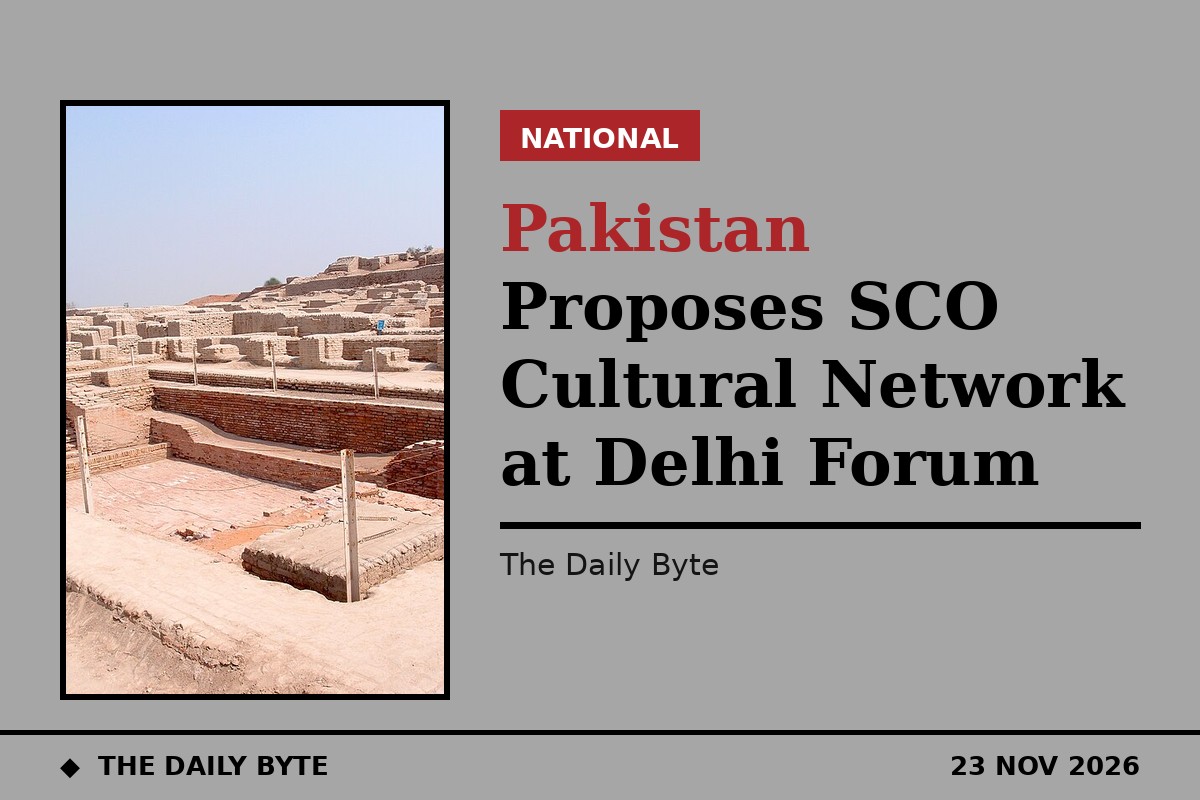
Malik illustrated the threat with Pakistan's own experience. The devastating floods of 2022 damaged the ancient site of Mohenjo-daro, the Indus Valley city in Sindh, showing how extreme weather can strike heritage that has survived for thousands of years. He invited experts from SCO countries to visit Mohenjo-daro to study the ancient civilisation and the challenges of preserving it.
Pakistan is home to the ancient civilisations of the Indus Valley and Gandhara, Malik told the forum, and has been the custodian of three major civilisational eras. He argued that the region's shared past, from Central Asia and Persia to the Indus Valley, belonged to humanity as a whole and should be protected together.
Dialogue with India
The visit was a multilateral one rather than a bilateral trip: Malik was in New Delhi for an SCO event, invited in the same way as every other member state. Pakistan's Foreign Office had announced on 14 November that he would lead the delegation, after India had originally invited Pakistan's heritage minister, Aurangzeb Khan Khichi.
Malik also used the forum to invite all SCO member states, including India, to engage in dialogue, and he met Indian minister Gajendra Singh Shekhawat informally at the Old Fort. The forum itself was opened by Indian Prime Minister Narendra Modi, who urged member states to digitise and translate ancient texts and open their archives to joint research.
Frequently asked questions
What did Pakistan propose at the SCO forum? A network of cultural institutions, a shared digital repository using AI and virtual reality, and a climate-resilient heritage framework to be developed at the next SCO gathering in Pakistan in 2027.
Who presented Pakistan's proposals? Federal Minister for Climate Change Dr Musadik Malik, leading Pakistan's delegation to the first SCO Civilisational Dialogue Forum in New Delhi.
Why did Malik cite Mohenjo-daro? The 2022 floods damaged the ancient Indus Valley site, which he used as an example of how climate change threatens historic heritage.
Sources: Daily Times, reporting the three proposals made on 23 November 2026; Pakistan TV, reporting the forum address and the 2022 flood damage to Mohenjo-daro. Published 23 November 2026.