Pakistan raises policy rate to 12% amid inflation fears
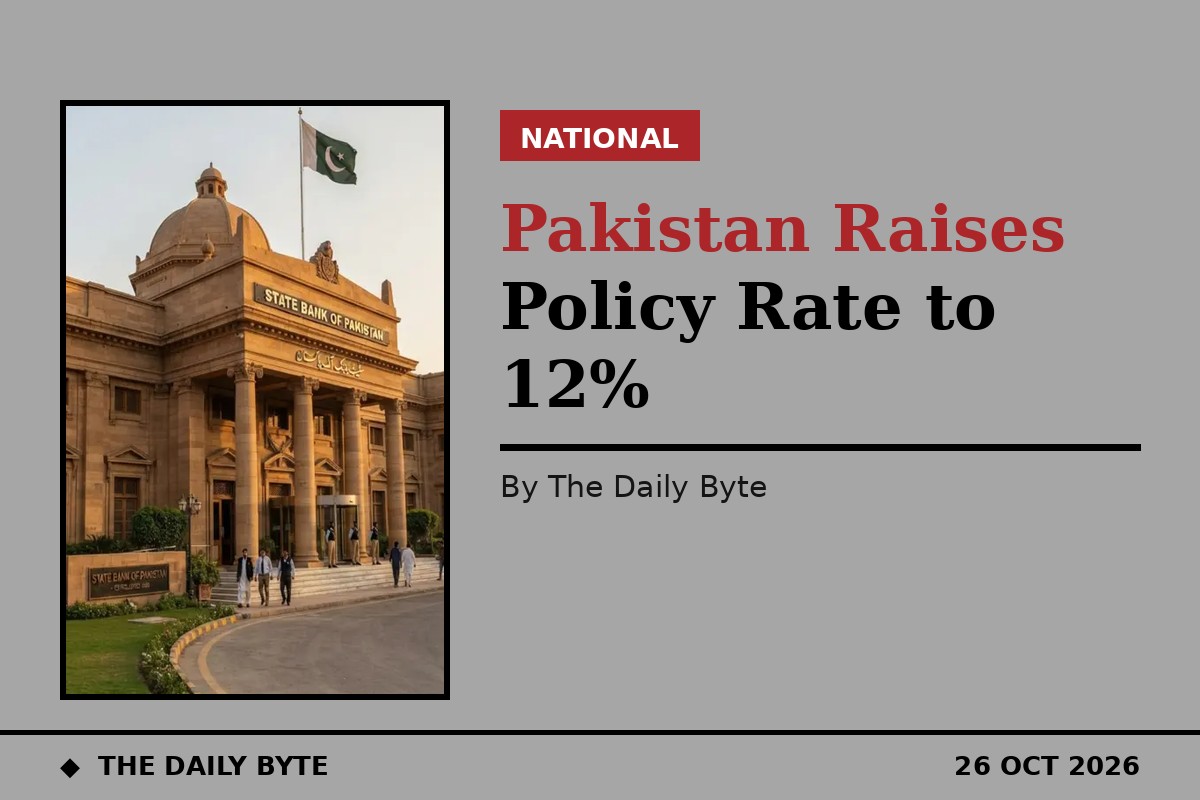
The State Bank of Pakistan has raised its benchmark policy rate by 50 basis points to 12.0%, in its first increase since April. The decision was taken at the central bank's meeting on Monday, 26 October 2026, as rising energy and food costs threatened to slow the pace of disinflation.
First increase since April
The move reverses the recent direction of monetary policy and puts borrowing costs back at the centre of the fight against price pressures. According to the coverage, nine of the ten members of the Monetary Policy Committee backed the increase.
Inflation still above target
Inflation has remained above the central bank's 5%-7% target range for seven consecutive months, TradingView News reported. Annual headline inflation eased to 10.3% in September, from 11.1% in August, but that was still well above the 5.8% recorded a year earlier. The picture was less reassuring month by month: prices rose 1.3% in September alone, while annual wholesale price inflation accelerated to 13.3%, from 11.8% in August. Governor Jameel Ahmad pointed to global crude oil prices above $100 a barrel, a level that raises fuel and transport costs and puts pressure on both inflation and Pakistan's external accounts. The reports link those pressures to the wider US-Iran conflict and to the risk of second-round effects, where higher energy costs feed through into the prices of other goods and services.
What higher rates mean for borrowers
A higher policy rate normally makes borrowing more expensive for households and businesses, which can cool spending and help bring inflation down over time. For now, the central bank has judged that the risk of inflation becoming entrenched outweighs that cost, and markets will now watch its next statements for any signal about how long rates will stay at this level.