Pakistan, Uganda plan direct rice trade, joint group
Pakistan and Uganda agreed on Monday to expand agricultural trade, with a focus on selling Pakistani rice directly to Ugandan buyers and setting up a joint working group to give the cooperation a formal structure. The understanding was reached in Islamabad during a meeting between Pakistan's Federal Minister for National Food Security and Research and Uganda's Minister of State for Agriculture, Animal Industry and Fisheries, Desire Muhooza.
The two sides discussed ways to increase agricultural trade, improve market access, promote research collaboration and strengthen institutional links between the two countries. They also talked about cooperation in seed development and livestock, alongside the central question of how to get more Pakistani rice into the Ugandan market.
The meeting was told that the current trade balance between the two countries favours Uganda. Pakistan imports goods worth about 14 million dollars from Uganda, while Pakistani exports to the country stand at only around 3 million dollars. Pakistan said it wants to raise its agricultural exports and is also looking at importing pulses and other farm commodities from Uganda.
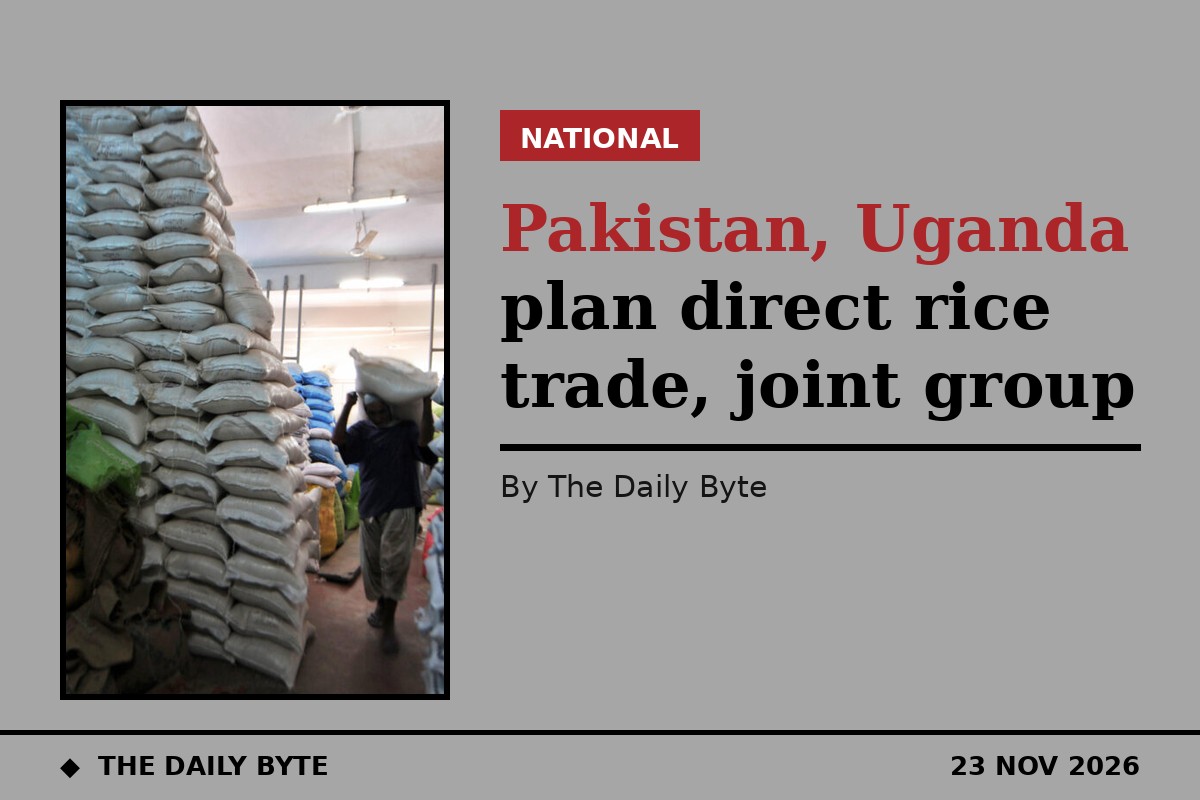
Rice was the clearest opportunity on the table. Uganda imports rice worth about 300 million dollars a year, but Pakistan's share of that market is only around 3 million dollars. Pakistan's minister said the country has the capacity to supply high-quality rice at competitive prices, and proposed direct commercial links between Pakistani exporters and Ugandan importers to increase that share.
Both sides also discussed a problem that has held the trade back: Pakistani rice sometimes reaches Uganda through intermediary markets, including Tanzania, which adds to costs. They agreed that direct trade would improve price competitiveness, strengthen commercial relations and create new opportunities for exporters. A meeting between Ugandan buyers and Pakistani rice exporters based in Karachi was also proposed.
To put the cooperation on a structured footing, Pakistan's minister proposed establishing a Joint Working Group on agriculture. The group would provide a formal mechanism for regular consultations, identifying trade opportunities, addressing technical issues and implementing joint initiatives, with periodic meetings between the relevant institutions backed by technical consultations when needed.
The two sides also discussed finalising, at an early date, a pending memorandum of understanding on agricultural cooperation that was first exchanged through diplomatic channels in 2017. They agreed that the remaining institutional and procedural matters should be settled through coordination between the relevant ministries and diplomatic missions.
Uganda's pending request for market access for fresh avocados in Pakistan was also reviewed. The Pakistani side said Uganda needs to submit the technical information required to conduct a pest risk analysis, and both sides called for close coordination between their plant protection authorities to complete the regulatory steps.
Agricultural research, climate-resilient seed development, crop improvement, modern agricultural machinery and livestock development were identified as important areas for future cooperation. Pakistan's minister highlighted the research capabilities of the Pakistan Agricultural Research Council and the National Agricultural Research Centre, and proposed a visit by the Ugandan delegation to the centre so it could see the facilities and explore partnerships in wheat, rice, potatoes, modern seed technologies and agricultural innovation.
The minister also spoke about Pakistan's emerging olive industry and told the Ugandan side that Pakistani olive oil had won a silver medal in an international quality competition in New York, with the possibility of introducing it to the Ugandan market also discussed. Both sides noted the commercial opportunities arising from the Ugandan delegation's participation in the food and agriculture exhibition held in Karachi on 23 November, and reaffirmed their commitment to turning the discussions into practical steps, including the joint working group, the finalisation of the memorandum and direct rice trade.