Port Qasim coal terminal conveyor fails, imports hit
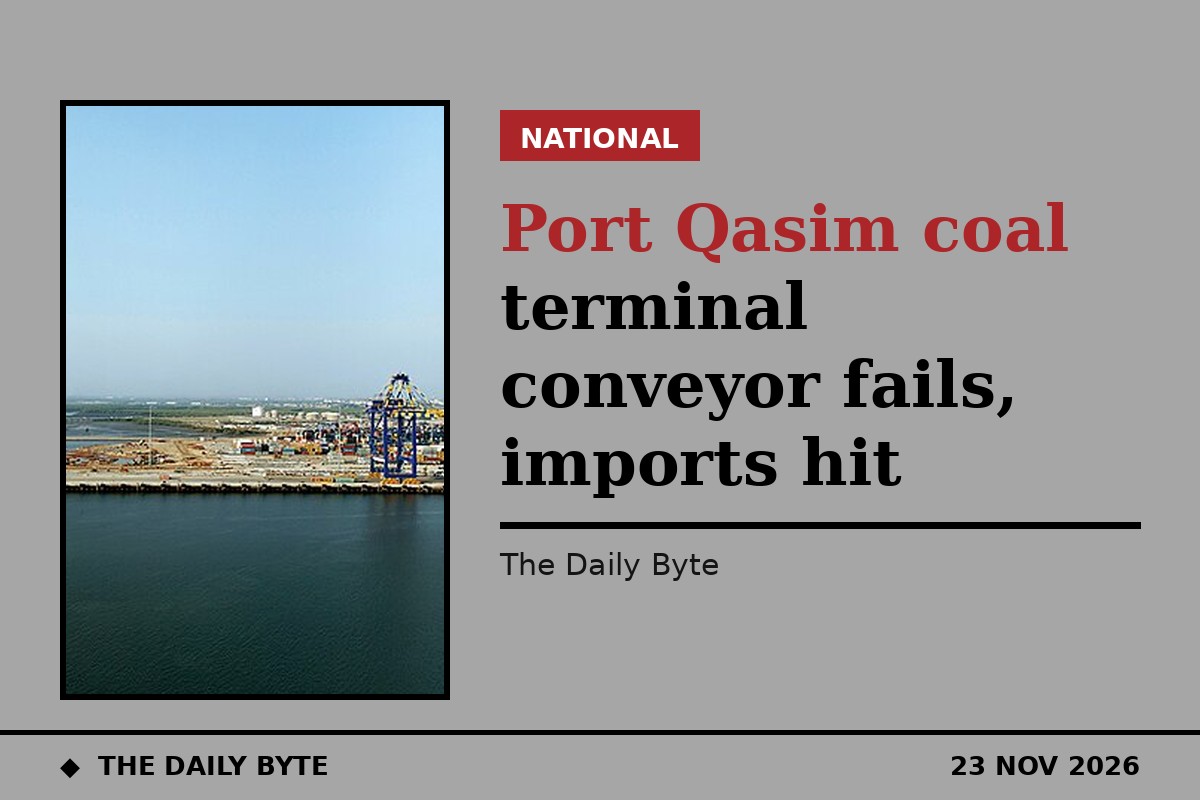
Coal imports through Pakistan's only dedicated bulk terminal have been disrupted after the conveyor system at Port Qasim broke down, forcing ships to be unloaded by hand at a fraction of the normal rate. The Pakistan International Bulk Terminal (PIBT) has been out of operation since 18 November 2026, and repairs are expected to take eight to 10 days, Dawn reported.
The breakdown has cut the rate at which coal can be discharged from 30,000 tonnes a day to just 3,000 tonnes, as manual unloading replaces the conveyor. With coal supplies feeding both power plants and cement factories, the disruption risks delays, extra costs for importers, and pressure on fuel supplies at a time when the power sector is already coping with reduced hydropower and interruptions to liquefied natural gas (LNG) imports.
What caused the breakdown
According to Dawn, the conveyor was damaged while coal was being discharged from the vessel Pegasus 8. The cargo, Tanzanian coal, was described as excessively dusty and mixed with foreign material, in particular sharp pieces of iron, which damaged the belt system. The terminal's conveyor is the country's only coal-handling system of its kind, so there was no alternative route for the cargo once it failed.
PIBT's own website describes the terminal as Pakistan's first coal, clinker and cement terminal, with coal-handling capacity of 12 million tonnes a year and a belt conveyor rated at 3,600 tonnes an hour, as shown on pibt.com.pk.
Ships face demurrage bills
The Jamshoro Power Company (JPC) has warned that the breakdown could leave it exposed to demurrage of more than $2-3 million, or between Rs556 million and Rs834 million, on five vessels due to arrive with coal. JPC, which generates power from imported coal, also warned of potential capacity-payment losses of about Rs2.2 billion a month if its plants cannot run as planned.
In a letter to the terminal, JPC asked PIBT to declare force majeure, arguing that the breakdown was beyond the power company's control. PIBT refused, saying the discharge of coal was continuing, albeit through conventional means, and that the situation did not amount to force majeure. A shipping line has also warned that it will seek compensation from the terminal over the delays.
A single point of failure
The incident has exposed how heavily Pakistan's coal imports depend on a single jetty, a single coal berth and a single conveyor at Port Qasim. A second conveyor was proposed in 2021 to raise the terminal's capacity from 12 million to 17 million tonnes a year, but it has still not been built. The terminal said in 2021 that the additional line could be installed once regulatory approvals were in place, as reported at the time by Alpine Marine Services.
Industry voices have long argued that the country needs more coal-handling berths, pointing to the Supreme Court's 2018 ban on unloading coal at Karachi Port Trust, which concentrated all imported coal at PIBT. Until the conveyor is repaired, importers face longer waits at anchor and rising demurrage, and the power sector faces a fresh constraint on fuel supplies.
Frequently asked questions
How long will repairs take? Repairs to the conveyor are expected to take eight to 10 days from the breakdown on 18 November 2026.
How much has unloading slowed? Discharge has fallen from 30,000 tonnes a day to 3,000 tonnes a day, with cargo now unloaded manually.
Why does it matter for power supply? PIBT is the country's only coal-handling terminal, and its customers include coal-fired power plants and cement factories, so delays can raise costs and squeeze fuel supplies.
Source: Dawn. Background on the terminal's capacity from PIBT.