Ransomware Hit Record 2,830 Victims in Q3 2026
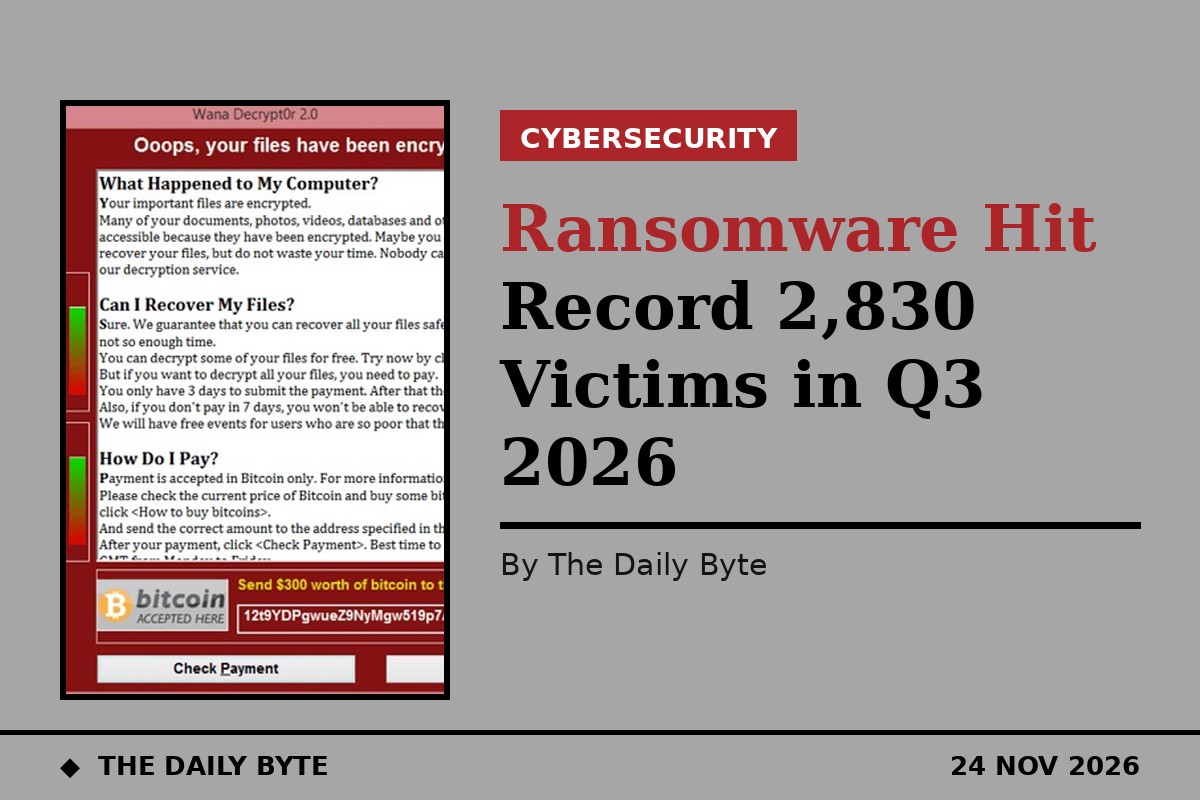
Ransomware gangs named a record 2,830 victims on their data leak sites in the third quarter of 2026, according to Check Point Research, which published its State of Ransomware Q3 2026 report on 18 November. It was the highest quarterly total the company has recorded, and it came with a shift in the shape of the ransomware market: more groups are claiming victims, and the biggest names account for a smaller share than ever before.
The quarter's total was built month by month. July recorded 964 victims, August reached 1,042 and September recorded 824. Check Point counts victims from what ransomware groups publish on their leak sites, so the figures reflect claimed attacks rather than every intrusion, and some claims are never independently confirmed. Even with that caveat, the direction is clear: the third quarter passed every previous quarter in the report's coverage.
A more crowded and fragmented market
The top 10 groups accounted for 71 percent of victims in the first quarter of 2026, 58 percent in the second and only 49 percent in the third. It was the first time groups outside the top ten collectively claimed the majority of observed victims. The number of distinct brands claiming at least one victim rose from 91 in the second quarter to 117 in the third. Of those 117, 51 had not claimed a victim in the second quarter, and 42 made their first observed victim claims during the third quarter.
Qilin remained on top, narrowly ahead of The Gentlemen. The two groups traded the lead during the quarter: Qilin reclaimed first place in July and August after briefly losing it at the end of the second quarter, The Gentlemen overtook it again in September, and Qilin finished the quarter ahead by a narrow gap, with 366 victims to The Gentlemen's 339. LockBit, once one of the most prolific ransomware operations, recorded fewer victims in each successive quarter of 2026 and fell out of the top ten altogether in the third quarter.
Payment patterns moved in different directions. Average payments fell 45 percent quarter over quarter to just over $1 million, while the median payment rose 167 percent to $400,000. Check Point said the split points to different dynamics between routine payments and the largest extortion demands. Several major organisations pushed back against those demands during the quarter: Stadler Rail, the Berlin state government and Manchester Airports Group were among the high-profile organisations that publicly refused to pay.
Business Services was the largest industry category, accounting for 34 percent of victims, ahead of Industrial Manufacturing and Consumer Goods and Services at 13 percent each. Check Point's assessment is that accessibility and opportunity, rather than preference for a particular sector alone, continue to play a major role in victim selection. The report also described rivalry inside the criminal ecosystem, with ShinyHunters reportedly breaching and defacing Clop's leak site and demanding a public apology alongside payment, while law-enforcement pressure against cybercriminal operations increased during the quarter.
The message for defenders is that ransomware can no longer be planned around a handful of familiar names. With 117 brands active and the top ten holding less than half of all victims, an organisation's next attacker is as likely to be a group it has never heard of as one of the established operations. The record quarter shows the volume is still rising; the fragmentation shows the threat is spreading wider at the same time. Check Point Research published the full findings, and Cyber Magazine reported the record total and the sector breakdown.