Resident doctors strike for five days across England
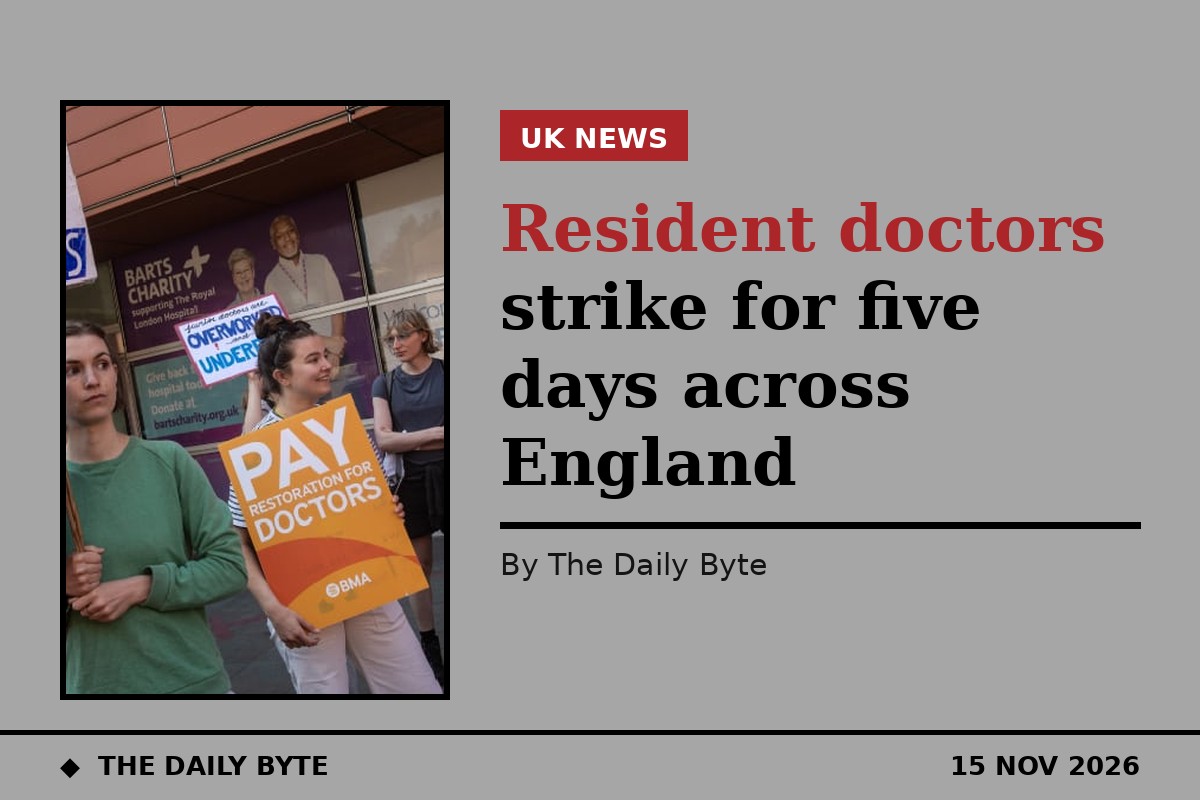
Resident doctors in England are on strike for five days, from 7am on Friday 14 November to 7am on Wednesday 19 November, after national pay negotiations failed to reach agreement. The British Medical Association (BMA) called the industrial action, and NHS trusts across England have warned patients to expect disruption as the health service heads into the busy winter period.
Resident doctors — previously known as junior doctors — make up a large part of hospital medical teams, from doctors who have recently finished medical school to those in specialist training. During the strike, consultants and other NHS staff, including specialist doctors, nurses and other clinicians, will still be working, and the NHS says its focus is on keeping as many services as possible running safely.
Local NHS leaders say the action comes at a difficult time. Flu cases are expected to rise sharply in mid-November, adding pressure on hospitals already managing winter demand. Some trusts are also adjusting to new ways of working: at Barking, Havering and Redbridge University Hospitals, teams introduced a new electronic patient record on Saturday 8 November, just days before the strike began.
What patients should do
The NHS message to patients is to keep coming forward for care and to attend any pre-arranged appointment unless contacted. A small number of planned appointments, procedures and operations may be postponed so hospitals can safely manage the impact of the strike and protect urgent and emergency care. Patients whose appointments need to be rescheduled will be contacted directly, and the NHS says it will re-book them as soon as possible.
Emergency departments remain open around the clock, and people should still come in for life-saving care. GP practices will continue to be open during the strike. For urgent health needs that are not life-threatening, the NHS asks people to use NHS 111 online or by phone first, and to call 999 only in a life-threatening emergency. Urgent treatment centres and pharmacies are also available, and trusts are asking people to choose the service that is right for their needs so those who need help most can get it.
Those who need urgent care, including cancer patients and people who have already waited a long time, are being prioritised, according to hospital trusts. At the Royal Surrey, the trust said a small amount of planned care may be postponed and that its hospitals are likely to be busier than usual, with consultant cover in place to keep services safe.
How hospitals are coping
Trusts say they have tried and tested plans in place to provide safe urgent and emergency care, and that the NHS is working closely with the BMA to discuss any patient safety concerns and to make sure safe staffing for emergency care continues. Maternity care is covered throughout the strike, and mental health support continues to be available.
But several trusts have been frank about the scale of the impact. NHS Kent and Medway said it anticipates the action will have a significant impact on services across all areas of the NHS, including hospitals, GP practices and mental health services. The Hillingdon Hospitals NHS Foundation Trust said it was working hard to keep disruption to urgent patients to a minimum, while Mid Yorkshire Teaching NHS Trust, which runs Pinderfields, Dewsbury and Pontefract hospitals, appealed to local people to consider the right service for their needs.
The strike is the latest round of industrial action by resident doctors over pay. It ends at 7am on Wednesday 19 November. Patients with appointments during the strike period who have not heard from their hospital should assume their appointment is going ahead and attend as planned.


