Royal Navy Rebuild Explained: Biggest Since WWII
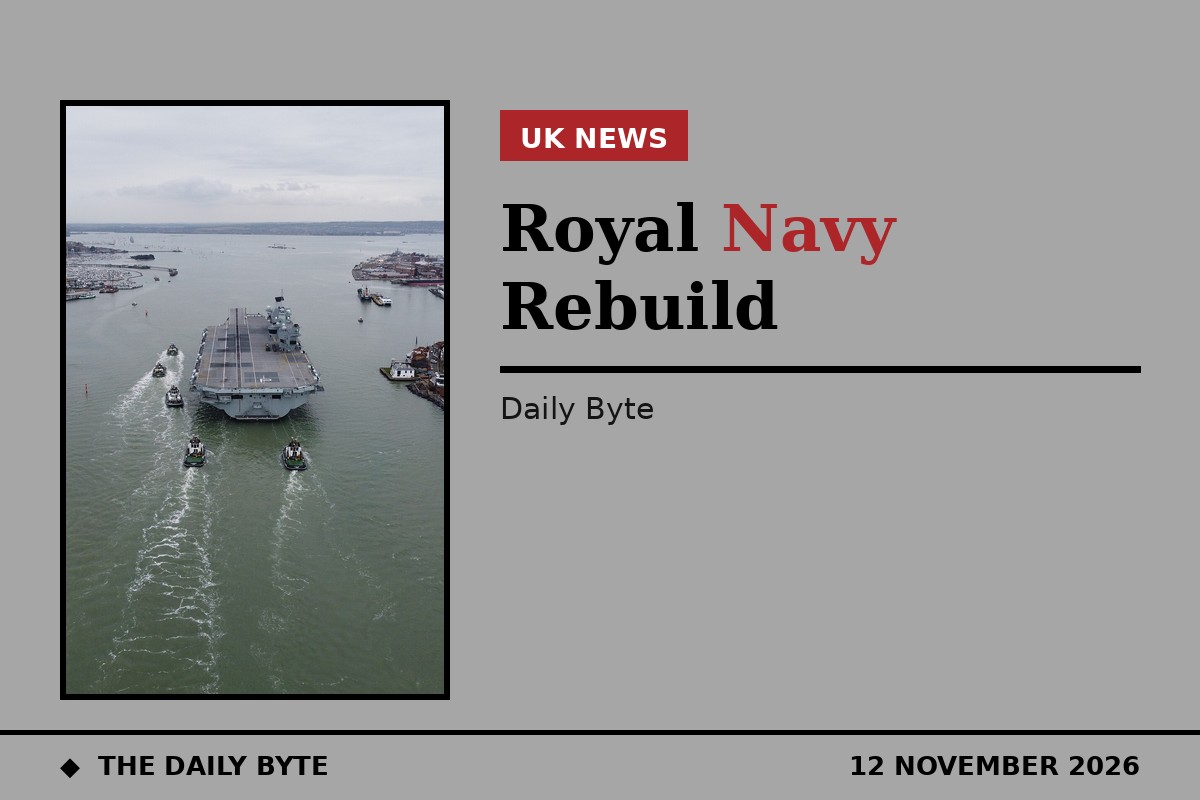
The Royal Navy is embarking on its most extensive rebuilding programme since the Second World War, the head of the service has announced. First Sea Lord General Sir Gwyn Jenkins told the International Sea Power Conference aboard the aircraft carrier HMS Prince of Wales in Oslo on 10 November that the navy is in a period of wholesale renewal, driven by rising threats and a government target to be ready to fight within 1,000 days. Here is what the rebuild involves, why it is happening now, and what the navy’s new “Hybrid Navy” actually means.
What is being built?
Thirteen new frigates are already under construction: eight Type 26 anti-submarine ships being built by BAE Systems on the Clyde in Scotland, and five Type 31 general-purpose frigates being built by Babcock at Rosyth. HMS Cardiff, the second Type 26, was floated up at Scotstoun in April, and the lead ship, HMS Glasgow, is expected to reach initial operating capability in 2028. Norway will also operate Type 26 frigates. Six new Common Combat Vessels will follow, designed to command uncrewed systems at sea.
Below the surface, the navy is renewing the nuclear deterrent with four Dreadnought-class submarines, completing the Astute-class attack submarine programme, and preparing for up to a dozen next-generation attack submarines through the AUKUS partnership with Australia and the United States. Four new amphibious ships will give the Royal Marines greater reach, and four Fleet Solid Support ships will keep the fleet supplied around the world. Across the existing programme, that is 280,000 tonnes of new steel, rising to around 450,000 tonnes when planned programmes are included.
What is the Hybrid Navy?
The Hybrid Navy is the navy’s plan to combine crewed warships with uncrewed vessels and aircraft. The navy commissioned its 1st Autonomous Squadron in Portsmouth last week, and its remote-controlled Kraken K3 boats, fitted with advanced radars, will serve alongside warships to guard coastlines and undersea communications cables. A counter-drone capability will be added to the Kraken boats in the new year. The navy is also developing jet-powered “robot wingmen”, known as collaborative combat aircraft, which will fly from HMS Prince of Wales and her sister ship HMS Queen Elizabeth. On 12 November, Jenkins is due to sign a statement of intent with Northrop Grumman to prepare its Talon demonstrator for trials under Project Vanquish, with a demonstration in UK waters, including a launch from a carrier, planned for 2027.
Why now?
Jenkins warned that the world is more unstable than at any time in his 36-year career, that threats are multiplying and that the risk of conflict is rising, with Russia hunting for “weakness” in Britain’s defences. The Ministry of Defence has revealed a 25% increase in Russian activity in and around British waters during the first seven months of 2026, compared with the same period in 2025. Until the new ships and uncrewed platforms enter service, the navy’s fighting surface fleet stands at just six Type 45 destroyers and seven Type 23 frigates, its smallest since the English Civil War. The Defence Secretary has set a target of being ready to fight within 1,000 days, and all navy activity is now oriented towards the end of the decade.
What is the Northern Navies Initiative?
Alongside the rebuild, the Royal Navy has signed a Northern Navies Initiative with its Joint Expeditionary Force allies, a group of 10 maritime nations, to deepen cooperation across northern Europe, the North Atlantic and the Baltic Sea. The agreement, signed aboard HMS Prince of Wales, aims to make the force NATO’s maritime vanguard in the region. The UK is also investing £100 million to transform the UK Commando Force into a warfighting formation focused on the High North, and the first phase of Atlantic Net, part of the Atlantic Bastion programme to protect the North Atlantic, is due to become operational within months.
Frequently asked questions
When will the new ships be ready? HMS Glasgow, the first Type 26, is expected to reach initial operating capability in 2028, with the wider programme running through the decade. The navy says everything it does is now focused on being ready by the end of the decade.
What are collaborative combat aircraft? Jet-powered uncrewed aircraft designed to fly alongside crewed jets as “robot wingmen”. The first, Northrop Grumman’s Talon, is set to be trialled from a Royal Navy carrier in 2027.
Where can I read the official announcement? GOV.UK published the details of the Northern Navies Initiative and the rebuild. Source: GOV.UK, New Royal Navy-Led Northern Navies Initiative.