Royal Navy reservists face training cap of 24 days a year
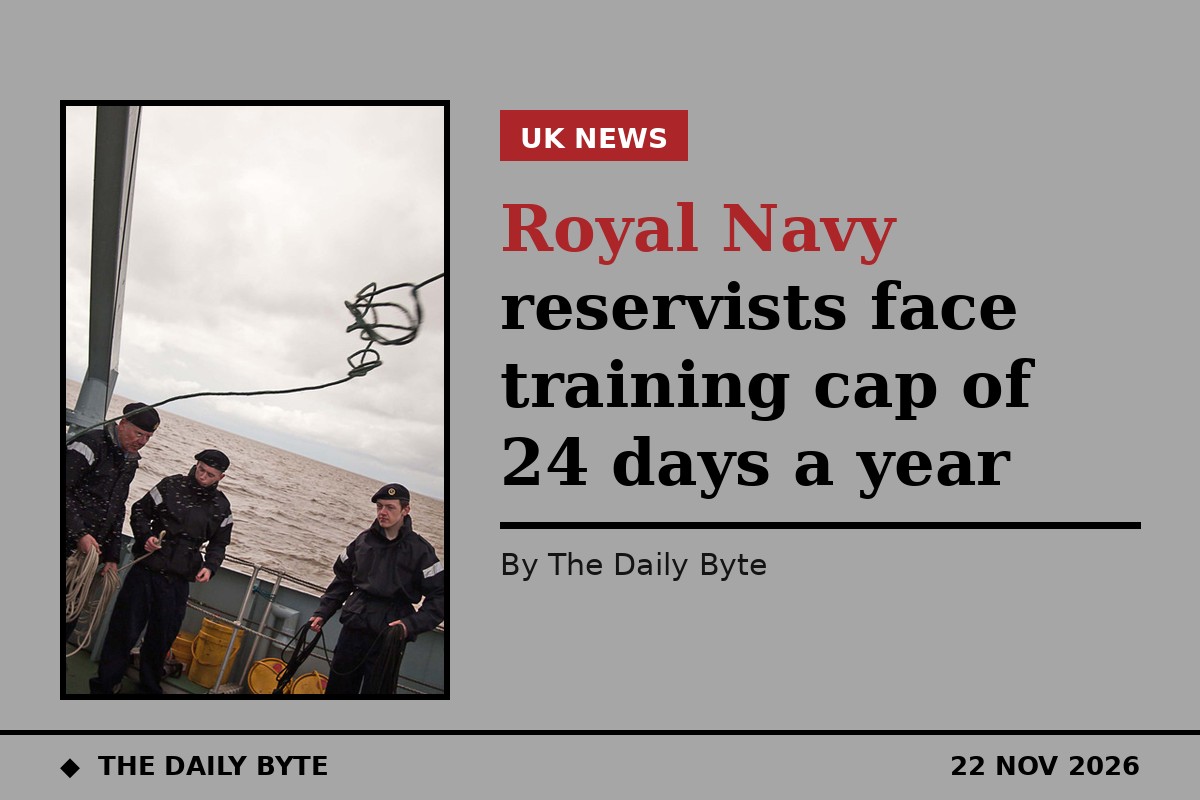
Training for Royal Navy reservists has been capped at 24 days a year as the Ministry of Defence scrambles to save money, prompting warnings that Britain is becoming less ready for war. Army reserves have also been told to cut back, with one officer saying the changes will leave them around £2,000 worse off.
The cap was revealed by the Daily Express, which reported that part-time sailors will now carry out fewer training days, even though 24 days is the usual minimum annual commitment, including a 12-day continuous stint. One reservist described the new limit as a third of what they had done in previous years.
Bounty threshold lowered
Part-time sailors are paid a daily rate, but they can also qualify for an annual tax-free cash bonus, known as a bounty, if they complete enough training days. With fewer training opportunities now on offer, Navy reserve chiefs have been forced to lower the threshold for the bounty from 24 days to 20 days.
Drills are continuing, but they are understood to have been stripped back to focus on core training and maintaining capability. The Royal Navy's own recruitment pages state that reservists generally need to complete 24 days each year, split between 12 days of non-continuous training, such as evening drills and weekends, and 12 days of continuous training, which can include an overseas exercise.
Army reserves also cut
British Army reserves have also been ordered to reduce training as part of the same cost-saving drive. One reserve officer told the Express that the extra 20 days they had initially been allocated at the start of the year had been halved, leaving them around £2,000 worse off.
The cuts come despite the government's Strategic Defence Review, published earlier this year, saying it would boost the reserves. Retired captain John Foreman warned that the latest cut to save short-term cash would have a long-term impact on reserve capability, morale and recruitment.
Political reaction
The Conservatives have accused Labour of making Britain appear weak at a time of growing Russian aggression. Shadow Defence Secretary James Cartlidge said the priority appeared to be the in-year saving rather than making Britain ready for war, adding: "I think that's now irrefutable."
Former commander Tom Sharpe said now was not the time to be cutting reserves, describing the move as indicative of what he called "the budget annualisation issue" in defence spending.
A Royal Navy spokesperson defended the decision, saying: "We are backing our Armed Forces with the largest sustained increase in defence spending since the Cold War. We have made choices to prioritise training which contributes most directly to readiness, deployability and operational effectiveness. Core training has been protected so that we continue to develop trained reservists for the future."
Why it matters
Reservists are the part-time backbone of Britain's Armed Forces, providing skills from civilian life and extra capacity in a crisis. Critics argue that cutting their training now, when the government itself says the threat from Russia is growing, sends the wrong signal to allies and adversaries alike. The Ministry of Defence insists core training is protected, but for the sailors and soldiers affected, fewer training days also means less pay and a harder path to the annual bounty.