School anxiety keeps thousands of pupils out of class as Milburn review nears
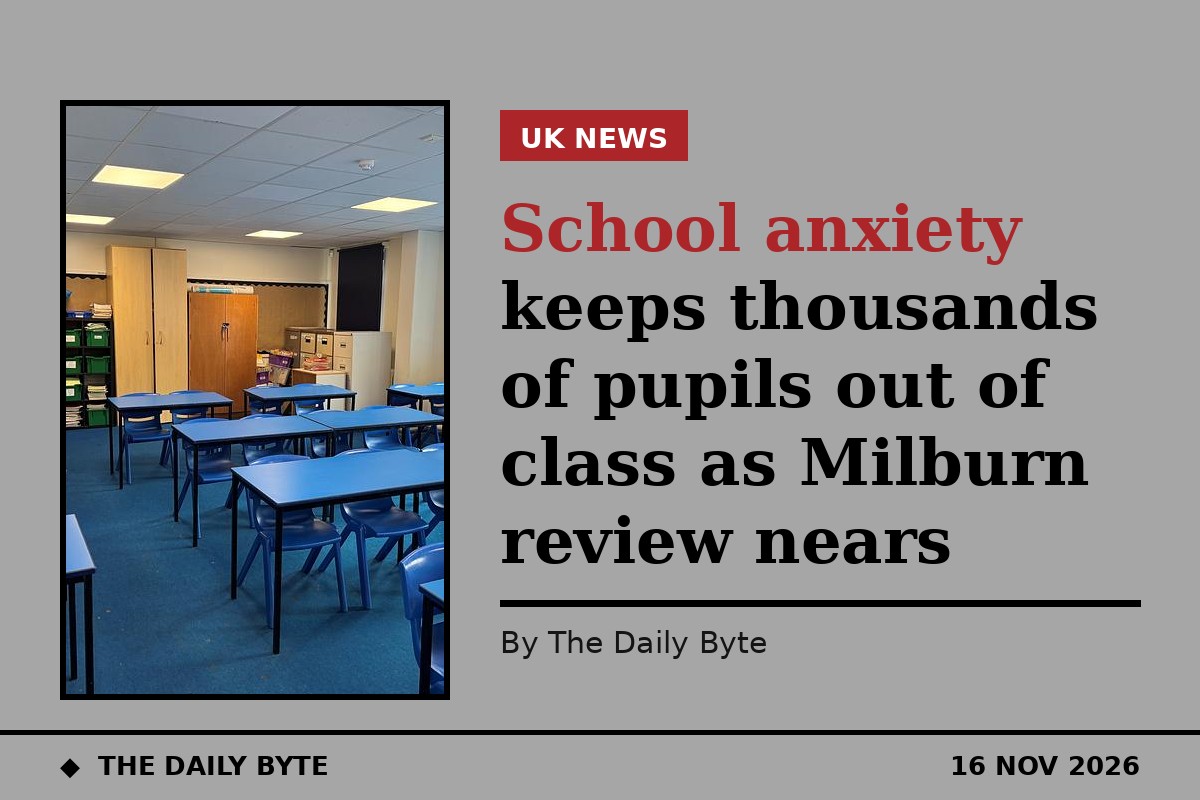
Thousands of school pupils in England miss more than half of the academic year, and experts warn the pattern leaves them far more likely to end up outside education, employment or training.
Two teenagers who live with school anxiety have described to the BBC what stopped them going to class, ahead of a government-commissioned review into the problem that is due to be published on Tuesday.
Eva, who is 13 and autistic, had not been to school for 15 months before September. She stopped attending after struggling with the move from primary to secondary school. Every morning she would try to get ready, get stuck at the front door, and feel a "physical barrier that you can't cross and you can't move". She often ended up fainting or throwing up in the car park on the way to school.
Her parents called her teachers each morning to report her absence, and she spent her days watching YouTube videos and Horrible Histories to keep up. This year she started at an alternative provision school with smaller classes and therapy animals, but she still worries her school avoidance might put off future employers.
"We're not lazy, we want to go, we want to do something, we want to live our lives, but we can't," she said.
Mali, who is 18 and autistic, stopped attending school three years ago after panic attacks took hold. She said trying to leave her bedroom could make her legs go numb. "It felt like I was dying," she said.
Severe absence has nearly tripled since 2019
The latest figures, published in October, show that 168,000 pupils (2.32%) were classed as severely absent — missing more than half of their classes — in the autumn and spring terms of the 2025/26 academic year. That is a significant increase from spring 2019, when the figure was under 60,000.
Total school absence has fallen since its pandemic peak but remains above pre-Covid levels. In the 2025/26 academic year the overall absence rate stood at 6.6%, down from 7.38% in 2021/22 but still higher than the pre-pandemic average of below 5%.
Experts warn the absence will translate into worse outcomes for thousands of young people. New analysis from the Centre for Social Justice (CSJ) shows that 133,000 of today's persistently absent GCSE pupils — those missing more than 10% of school — are on course to spend a year or more outside education, employment or training. Similar research from the National Centre for Social Research linked persistent absence to much higher rates of being outside work, education or training between 16 and 24.
Dan Lilley, head of youth at the CSJ, urged ministers to prioritise getting children back to school. "That means restoring the expectation that children are in school every day," he said.
CSJ polling suggests that 44% of parents consider one in every ten school days an acceptable level of absence — the threshold for persistent absence.
Support for pupils who cannot attend
Sheila Griffiths, co-founder of the Crewe-based charity Hope4More, said autism and ADHD can contribute to school avoidance. "The classroom environment doesn't suit [these children], so we support them here," she said. The charity offers art classes combining creativity and business skills, and helps parents access the support they need.
In response to the CSJ research, the Department for Education said it is supporting children's school attendance through initiatives including free breakfast clubs, improved mental health support and early assistance for pupils with special educational needs.
Review due on Tuesday
Almost one million young people aged 16 to 24 in the UK are neither in education, employment nor training. The latest figures put the total at 981,000 between April and June 2026, or 13% of the age group. The number fell by 30,000 compared with the previous quarter but was still 30,000 higher than a year earlier. Around 60% are economically inactive — neither working nor actively looking for a job.
A review led by Alan Milburn, the former health secretary, is expected to publish its findings on Tuesday, 17 November. The Government asked him to examine why so many young people drift away from education and work. An interim investigation by the review identified mental health difficulties, disability, special educational needs, school absence and exclusion as prominent factors.
Reports ahead of publication suggest the final report will call for a substantial expansion of vocational and technical education, including tens of thousands of extra further education places for 16 to 18-year-olds and 150,000 more for adults under 25. Estimates cited in the review put the annual cost of youth disengagement at up to £125 billion. The Government has already committed an extra £2.5 billion to youth employment and skills support by 2029, alongside the Youth Guarantee, apprenticeship funding and Youth Hubs.


