Scotland disability benefits: young claimants drive surge
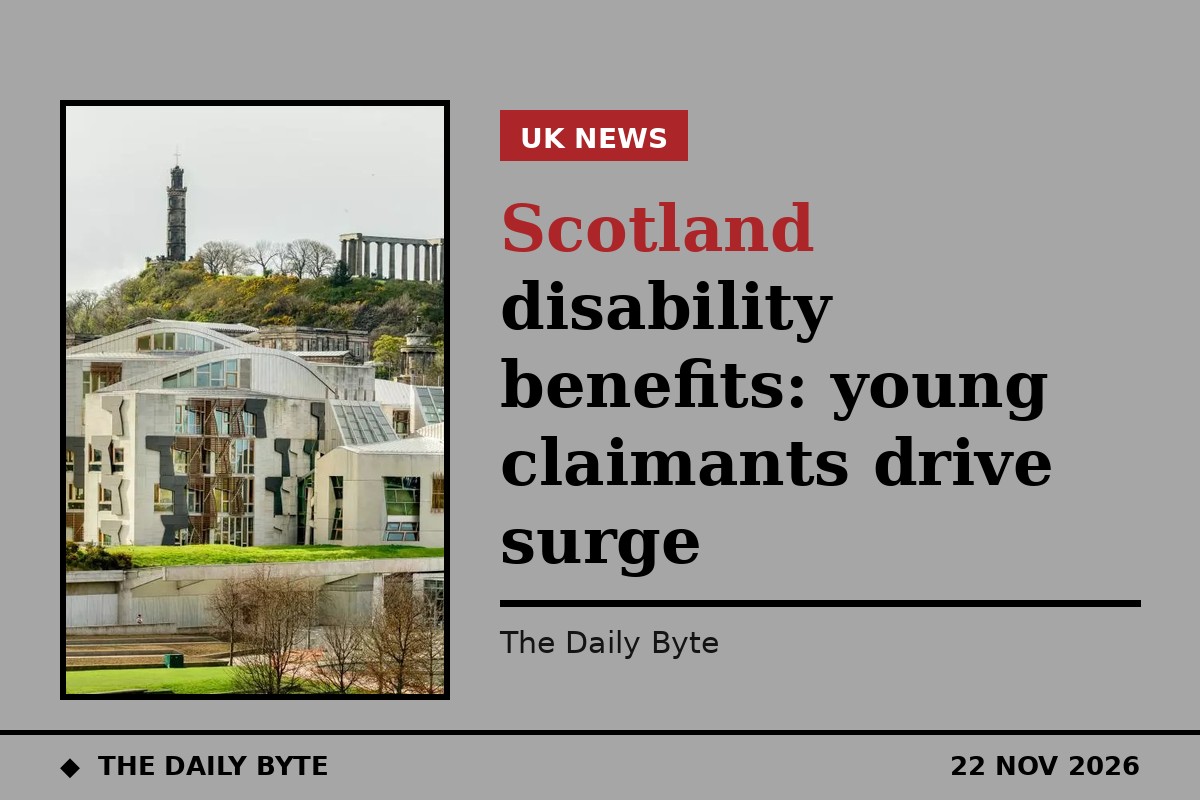
More than 12,000 applications for disability support are made every month in Scotland, and the number of people receiving the benefits has risen sharply since the Covid pandemic, driven in large part by younger claimants and mental health conditions.
About 800,000 people in Scotland now receive disability benefits, and the total is projected to hit one million by the end of the decade. The Scottish Fiscal Commission says there has been a "shift in the age profile of applicants" since 2020, and the Scottish Parliament's research service forecasts the caseload will grow by 31 per cent between 2024 and 2030.
A sharp rise among the young
The share of Scotland's working-age population reporting a disability rose from 19 per cent in 2020-21 to 28 per cent in 2023-24. Among children under 16, the figure doubled from 6 per cent to 12 per cent over the same period.
Some 35 per cent of new applicants for Adult Disability Payment, Scotland's main disability benefit since it was rolled out in 2022, have been people under 35, and more than half have been under 45. Mental health is a key element: 41 per cent of the Adult Disability Payment caseload concerns "mental and behavioural disorders", almost half of those neurotic and stress-related conditions such as anxiety and post-traumatic stress disorder. Before social security was devolved, such conditions accounted for only 26 per cent of Personal Independence Payment claims.
Among children, mental health conditions now account for 64 per cent of applications in Scotland, and the number of under-16s receiving Child Disability Payment for them has more than doubled, from 30,000 in 2020 to 75,000 this year. By contrast, mental health plays a much smaller role in claims from older people, accounting for 13 per cent of the Pension Age Disability Payment caseload.
Why the numbers are rising
Data published this week from the Scottish Health Survey suggested mental wellbeing overall had recovered to pre-pandemic levels, but the 16 to 24 age group had the lowest score of any included, and around a quarter of young adults reported poor enough mental health to suggest a possible psychiatric disorder.
The mental health charity Scottish Action for Mental Health says young people today are "growing up significantly more mentally distressed". Its chief executive, Billy Watson, said they faced a "relentless" pace of life, with social media constantly exposing them to unsettling news and unrealistic comparison.
An independent review for the UK government by Professor Peter Fonagy last month said the problems faced by young people were real, with sharply increasing cases of mental distress, but also warned of an "increasing risk of overdiagnosis or misdiagnosis" because "diagnosis has become the primary gateway to support". Alan Milburn, author of the UK government's review of support for young people, made a similar point, saying diagnosis had "inappropriately become the key that unlocks help".
The cost question
The bill is growing fast. The Scottish system costs about £1bn a year over and above the block grant from Westminster, and the Scottish Fiscal Commission forecasts the social security bill will reach £7.8bn in 2027-28, with Adult Disability Payment accounting for £4.2bn, the pension-age payment £972m and the child payment £659m. By 2030-31 the cost is forecast to rise to £9.2bn, prompting questions from auditors and opposition parties about whether it is sustainable.
Ministers insist they view benefits as an investment in the people of Scotland, and Education Secretary Mairi McAllan said Social Security Scotland undertook a "very robust and close examination" of applications. More than half of initial applications for Adult Disability Payment have been rejected, with 43 per cent approved compared with 54 per cent denied, broadly in line with the system in England and Wales.
First Minister John Swinney has suggested there are "potentially some significant financial implications that could be negative" for Holyrood if the UK government redesigns support in England and Wales. The employment rate among disabled people in Scotland is more than 50 per cent, and studies suggest almost half of young people not in education, employment or training are not claiming benefits at all.