SECP Makes UDIN Check Mandatory on Audit Reports
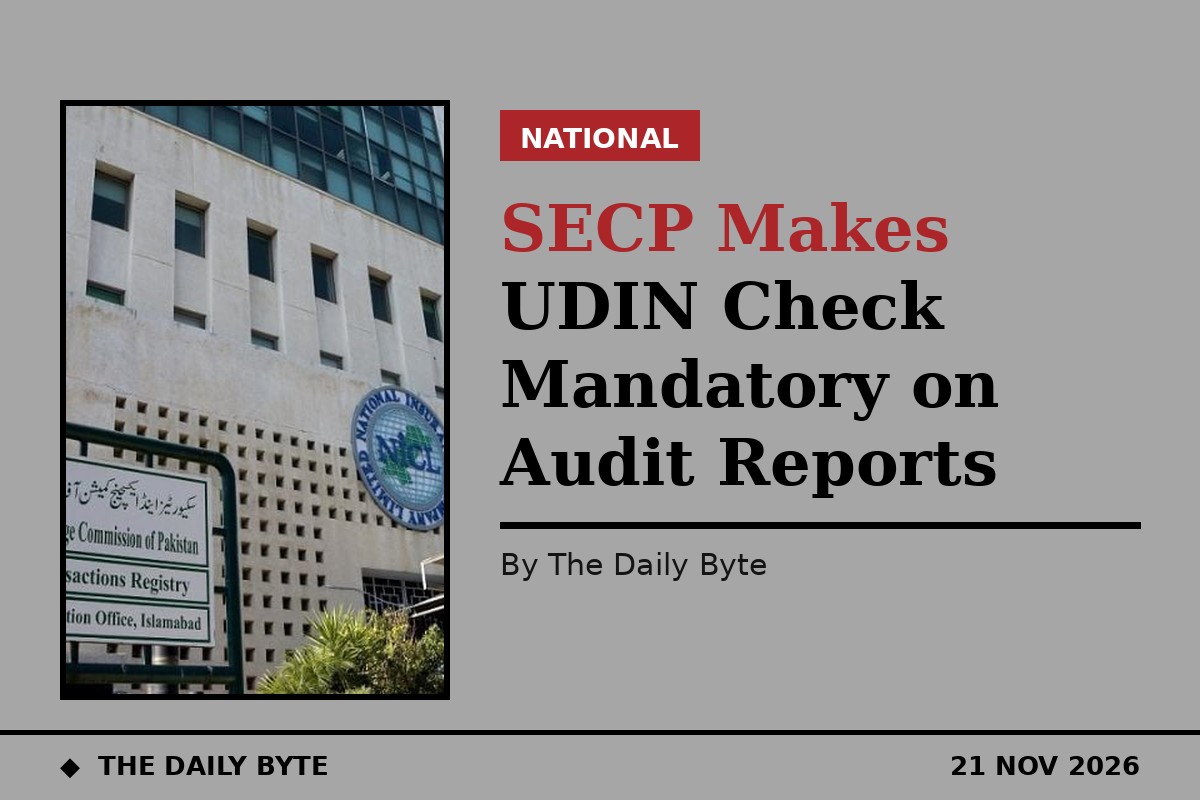
Pakistan's corporate regulator has told companies to check the Unique Document Identification Number (UDIN) on their auditor's report before filing audited financial statements, warning that filings without a valid number will not be accepted.
The Securities and Exchange Commission of Pakistan (SECP) issued the advice on Friday, 20 November, in a news release reported by the Associated Press of Pakistan. It applies to companies that are required by law to file audited financial statements with the regulator.
A UDIN is a unique number that lets users confirm who issued an audit report. Auditors generate the number through the portal of their own professional body, either the Institute of Chartered Accountants of Pakistan or the Institute of Cost and Management Accountants of Pakistan, and companies can check the number through the relevant institute's portal before they file.
The requirement itself is not new. Regulation 6A of the Auditors (Reporting Obligations) Regulations, 2018, inserted by the regulator in January 2024, requires auditors to include a UDIN on every report they issue under the regulations. What the SECP has done now is to reinforce the rule at the filing stage: it will accept filings only if the accompanying auditor's report carries a valid UDIN.
Rejection and legal action
The consequences for getting it wrong are spelled out plainly. The SECP says a filing without a valid UDIN may be rejected, and the use of an invalid UDIN may lead to regulatory action or civil or criminal proceedings under the applicable law. Companies that submit reports carrying incorrect or altered UDINs may face criminal proceedings, the regulator cautioned.
The step is aimed at confirming that audit reports are genuine and at blocking forged or falsified documents from being filed with the regulator. A UDIN ties a report to the auditor named on it, so a document that claims to come from one firm but carries another firm's number, or no number at all, can be caught before it enters the record.
Audited accounts underpin investor confidence and the integrity of the disclosures companies make to the regulator and the market, and the SECP said the requirement is part of a broader effort to tighten verification of corporate financial statements and stop fake audit reports being used in regulatory filings.
What companies must do
The practical effect is an extra check in the reporting process. Auditors must generate and record the UDIN when they issue a report, and companies must confirm it with the relevant accounting body before their financial statements are submitted. Firms will need to build the check into their reporting timetables ahead of filing deadlines.
The regulator has not indicated any extension or grace period for the requirement, and companies are expected to ensure their audit reports meet the new condition before submission. The SECP's own notice to companies and auditors carries the same message in capital letters: check the UDIN before filing.