Social Care AI Guidance Published for England
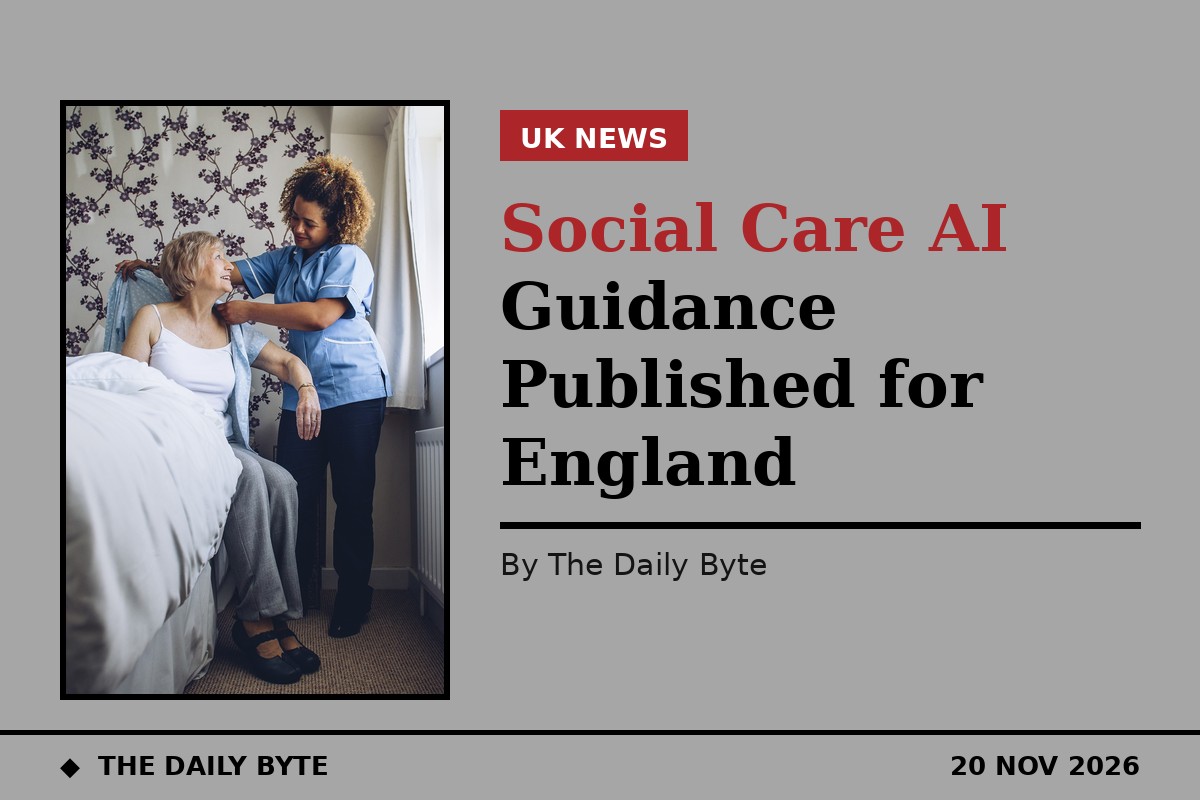
England has published its first cross-sector guidance on the use of artificial intelligence in children's and adult social care, setting out how councils and care providers can use the technology to cut paperwork and give staff more time with the people they support.
The guidance was published on Friday 20 November by the Department of Health and Social Care and the Department for Education. It is the first document of its kind to cover both children's and adult services, giving leaders, practitioners and provider organisations a single national reference point for adopting AI safely.
Ministers say the aim is practical rather than futuristic. AI tools can transcribe and summarise case notes, translate information for families, search complex case histories and flag gaps in support, freeing social workers and carers from administrative tasks so they can spend more of their working day with people and families.
Swindon pilot cut admin time by 63%
The headline evidence comes from a pilot in Swindon Borough Council's adult social care service, where an AI tool supporting social workers delivered a 63% reduction in administrative time. In that pilot, a typical Care Act assessment conversation shortened from 90 minutes to 30 minutes, while the time needed to write up an assessment fell from four hours to an hour and a half.
Another example comes from Peterborough, where council staff built a bespoke AI assistant called Hey Geraldine, drawing on the knowledge of an experienced occupational therapist to give instant guidance to colleagues. The assistant has answered more than 1,200 questions from staff since it was introduced.
Minister of State for Social Care and Mental Health Alison McGovern said the guidance would help providers adopt AI in a way that improves the care people receive. "Whether it's giving carers back more time to look after people or using translation to make sure that they understand patients' needs or simply transcribing interactions to cut paperwork - the national guidance will clearly set out how providers can best adopt AI to improve the care patients receive," she said.
Governance, data protection and human oversight
The guidance is non-statutory, but it sets out clear principles on governance, accountability, data protection and professional oversight, alongside practical advice for organisations considering AI tools. It is aimed chiefly at local authorities providing children's and adult social care, although its principles are intended to apply to other care organisations as well.
The emphasis throughout is that AI should support professional judgement rather than replace it. Tools are presented as help with administrative and analytical work, with named people remaining accountable for care decisions and for checking what AI systems produce.
The government says the guidance supports its wider ambition for all care providers to be fully digitised by the end of this Parliament, with digital tools used to make services easier for people to understand and to access.
What happens next
Councils and providers will now be able to measure their own plans against a shared national framework, rather than each developing separate rules for a fast-moving technology. Sector bodies and local authorities are expected to use the document when deciding which tools to trial, how to train staff and how to handle the personal data involved.
For families and people who draw on care, the test of the guidance will be whether the promised time savings reach the front line: shorter waits, clearer information and care workers with more time to listen, rather than more time at a keyboard.


