Somerset cider makers fear for British apples
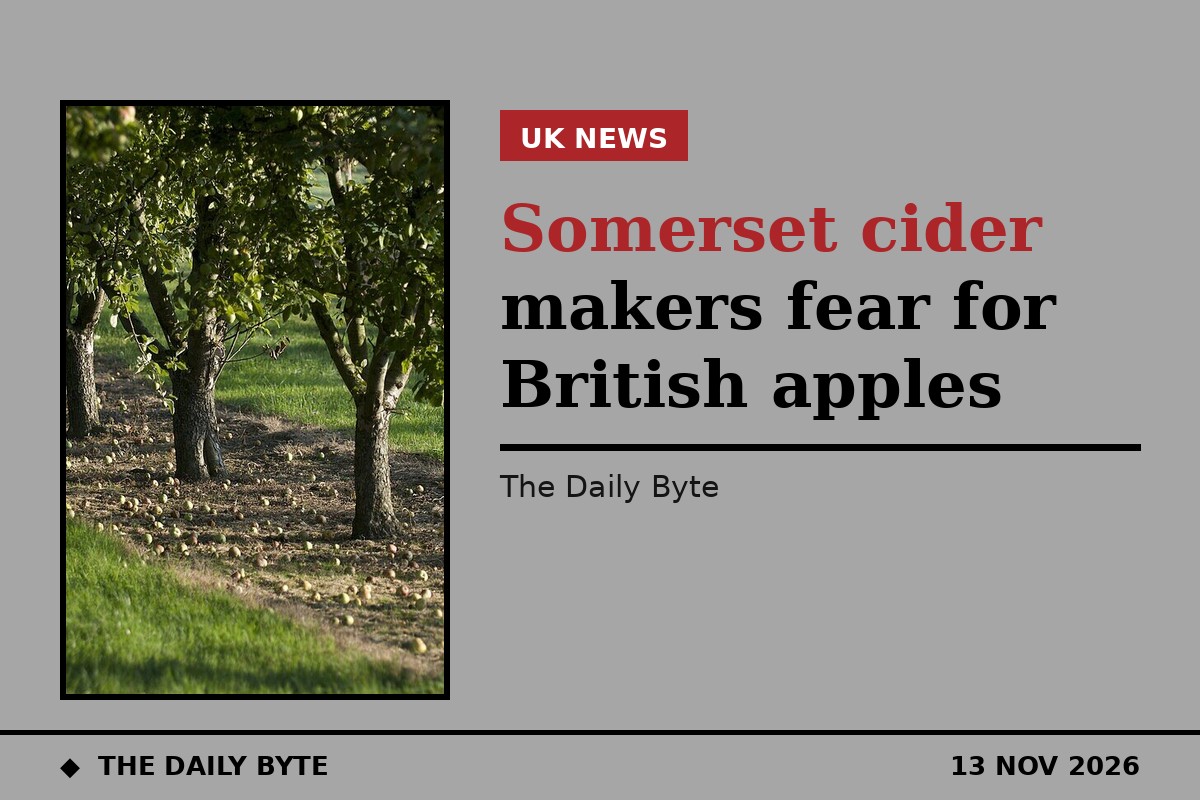
Rising costs could force cider makers to cut back on British-grown apples, according to several established businesses in Somerset.
Higher alcohol duty, energy bills and packaging costs are squeezing profits, producers say, and some warn the maths no longer works for traditional cider made from fruit grown in local orchards.
Matilda Temperley, director of Burrow Hill farm near Martock, said it would be a tragedy to stop using the farm’s own apples. Her farm has been growing apples for 300 years, but she said recent increases had added to pressures the industry was already facing. At 6% alcohol, she said, their traditional cider is taxed at a higher rate than mass-produced cider.
By next February, Temperley said, the farm will have seen a 61% increase in tax on its standard 50cl bottles. She welcomed the rise in Small Producer Relief, which gives lower duty rates to some smaller and medium-sized producers, but said other mounting costs outweighed it. Energy bills are huge, she said, and tax costs have risen by almost 90% since 2020.
Big makers could switch to cheaper fruit
Temperley warned that the pressure will push the biggest makers towards cheaper fruit. If a large cider maker wants to cut costs, she said, the only way to do it is to stop using British apples. That would be a real tragedy, she added, because cider should be made from the orchards that have shaped the county’s landscape for centuries.
The squeeze is not limited to duty. Isaac Stell, a financial analyst at Wealth Club in Bristol, said the government had pledged not to raise the main rates of income tax, national insurance or VAT for working people, so the recent Budget looked elsewhere to plug the gap in the public finances. Producers, he said, are also dealing with higher employer national insurance contributions and increases in the minimum wage.
Those extra costs will not stay with the producers, Stell said. Inevitably, he added, some of them will find their way through to the pubs, clubs and restaurants that producers supply, and ultimately to a consumer who is already squeezed. For drinkers, that means the price of a pint is likely to carry more of the industry’s rising bill.
Not every maker wants more help
Not every maker sees the answer in government help. The Showerings family, known for producing Babycham, has been making drinks in Shepton Mallet for more than 14 generations, and its business has grown sharply in the last ten years. Matthew Showering, the firm’s managing director, said the workforce had risen from 80 employees to around 350, and that the last couple of years had been good, with drinks that are popular and growing.
Showering acknowledged the rising costs, but said he would rather see less government intervention. He said the firm does not want help from the government, and would prefer ministers to keep out of things as much as possible.
Smaller producers face a different calculation. Matt Gillett, of Tricky’s Cider in Low Ham, said the size of his operation means he will be eligible for Small Producer Relief, but added that he will not see a huge benefit, because alcohol duty is a fairly substantial part of his monthly outgoings. He said he would not consider importing pulp or concentrate to cut costs.
Gillett said his pride is in being a craft producer in Somerset, taking fruit from local orchards, traditional orchards, and using what is available in the county. For him, the identity of the drink is tied to where its apples are grown, and switching to imported ingredients would mean giving up what makes the cider worth making.
Government points to duty relief
The government says it is supporting the sector. It said it was increasing the value of Small Producer Relief, which provides lower alcohol duty rates for some smaller and medium-sized producers. A Treasury spokesperson said the cider industry makes a vital contribution to the rural economy and communities, and that cider continues to benefit from significantly lower duty rates than other alcoholic drinks.
The spokesperson added that the government knows the industry is facing continued pressures, and that the Budget provides additional support by cutting costs for pubs and bars, which are vital customers for the industry. Poured pints, the Treasury said, continue to benefit from draught relief.
Under the changes announced at Budget 2026, all alcohol duty rates will be uprated in line with the Retail Price Index, at 4.55%, from 1 February 2027, while Small Producer Relief will become more generous for products under 8.5% alcohol by volume.
For producers like Temperley, the question is whether that help is enough to keep British apples at the heart of the cider they make.
Sources: BBC News, World Right Now and GOV.UK.