South Korea Waives Margin Rule to Curb Forced Selling
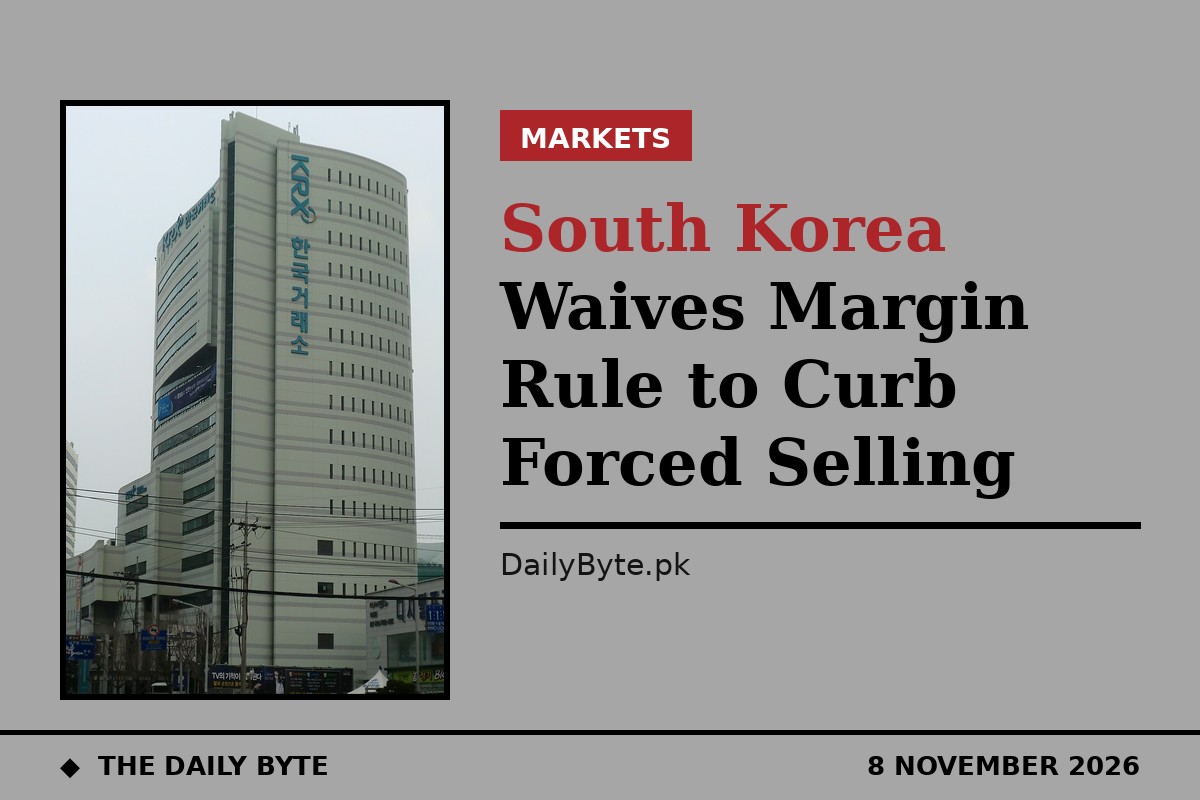
South Korea will waive the rule requiring securities firms to keep a 140 percent collateral ratio on margin loans for three months from Monday 9 November, in a move aimed at stopping a wave of forced stock sales after the Kospi's sharp slide.
The measure was decided at an emergency market monitoring meeting on Friday 6 November, chaired by Finance Minister Lee Hyoung-il alongside Financial Services Commission chairman Lee Eok-weon, Financial Supervisory Service governor Lee Chan-jin and Bank of Korea senior deputy governor Kwon Min-soo. Morningstar reported that the minister said the step would help prevent excessive forced selling from further destabilising the market.
Under the current rule, brokerages must demand collateral worth at least 140 percent of the amount lent to customers who buy shares on margin. From 9 November, firms will be exempt from that requirement, and the Financial Supervisory Service is expected to issue a no-action letter confirming the relief. Investors whose collateral falls below the threshold will not face automatic forced selling during the three months.
The intervention follows a brutal week for Seoul. The Kospi plunged more than 8 percent shortly after the open on Friday, falling as low as 4,911.28 and below the 5,000 mark, which triggered a 20-minute circuit-breaker halt. The index recovered some ground but still closed down 6.02 percent at 5,059.69, a day after falling 5.28 percent to 5,383.80.
The relief has limits. Forced selling is not banned outright, and brokerages may still apply their own risk standards and the terms of individual contracts. Margin loan balances stood at 28.64 trillion won as of 4 November, down 25.9 percent from a June peak of 38.63 trillion won, according to the Korea Financial Investment Association, suggesting some leveraged positions had already been cut before the rout.