Sulphur Shortage Threatens Indonesia Nickel Growth
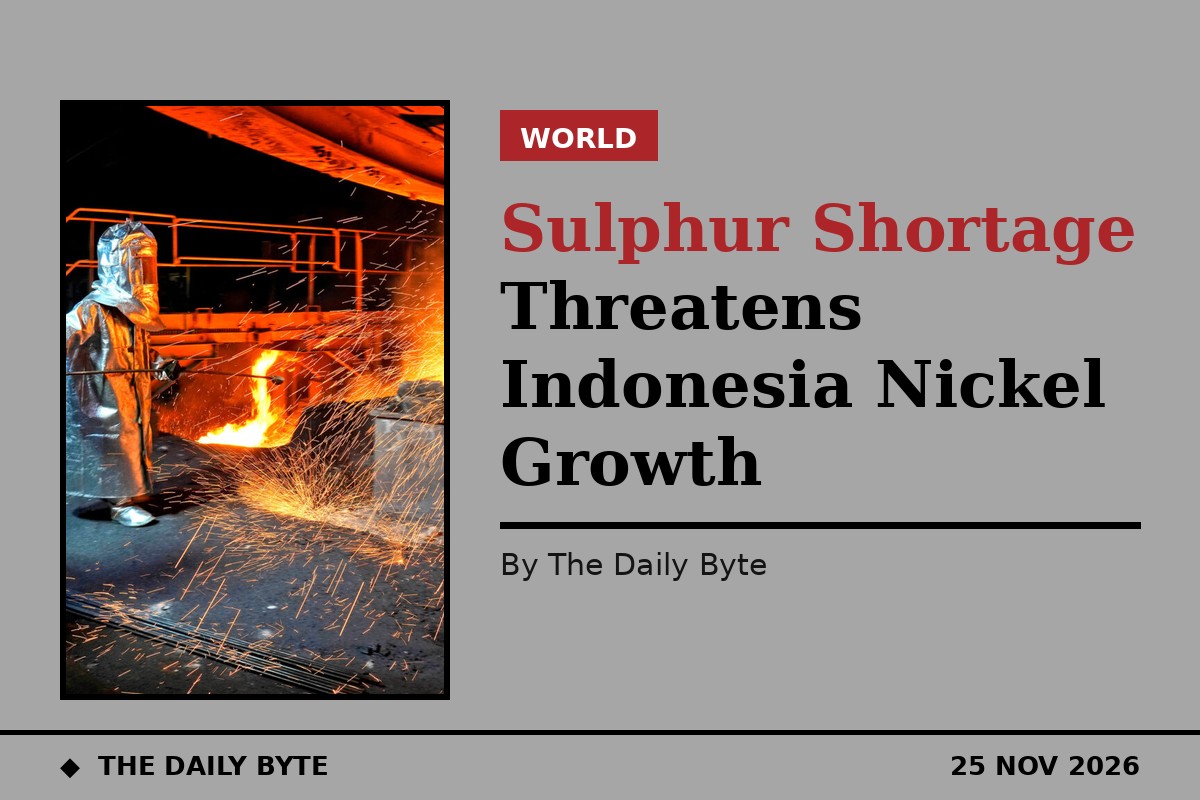
A shortage of sulphur is threatening to slow the expansion of Indonesia's nickel industry, with projects that would add more than 600,000 tonnes of capacity now at risk, according to new analysis from consultancy Wood Mackenzie published on Wednesday.
Indonesia is the world's largest nickel producer, and its output feeds the batteries used in electric vehicles as well as stainless steel production around the world. The warning underlines how a disruption in the supply of a single industrial chemical can ripple through the global energy transition.
Imports fall as prices nearly triple
Wood Mackenzie said Indonesia had relied on the Middle East for about 80 per cent of its sulphur imports before the closure of the Strait of Hormuz disrupted established supply routes. Sulphur imports fell 29 per cent year on year in the first half of 2026, while average prices nearly tripled over the same period, the consultancy reported.
Indonesian plants use sulphur to make the acid that extracts nickel and cobalt from ore for use in batteries. The high-pressure acid leach process used by many of the country's newer plants produces mixed hydroxide precipitate, an intermediate product that is then refined into battery chemicals. The International Energy Agency estimates that sulphur accounts for roughly half of the operating cost of these plants.
Wood Mackenzie research associate Ziyi Liu said the squeeze was unlikely to ease soon. Logistics would take time to return to normal even if conflict-related disruption faded, Liu said, and strong demand from the fertiliser sector limits how much of the available supply can be redirected to industrial buyers.
Drought adds to the pressure
The sulphur problem is not the only strain on Indonesia's nickel sector. Drought has also hit operating plants, with smelters at the Indonesia Morowali Industrial Park on Sulawesi reporting production cuts of 30 to 45 per cent in late September as water grew scarce and barges struggled to deliver coal.
Indonesia mined an estimated 2.6 million tonnes of nickel in 2025, according to the United States Geological Survey, representing about two-thirds of world output. That scale means any slowdown in Indonesian expansion is felt across global battery and steel supply chains.
The pressure is also reaching stainless steel. Falling grades in Indonesian ore have cut production of nickel pig iron, a lower-grade product used in stainless steel, prompting mills to buy more pure nickel and to use more scrap. Scrap now makes up about a quarter of the stainless-steel feed mix, up from 21 to 22 per cent a few years ago, Wood Mackenzie estimates.
Surplus expected to persist for now
Despite the bottlenecks, Wood Mackenzie does not expect a sudden shortage of refined nickel. Even with mills buying more pure metal, the consultancy expects a surplus of high-purity nickel to persist unless supply also falls. It also forecasts that global consumption of refined cobalt will decline this year.
Markets have so far taken the warning in their stride. The London Metal Exchange cash nickel price settled at 15,060 dollars per tonne on Tuesday. But the report highlights a wider vulnerability: Indonesia's dominance of nickel supply means that a chemical shortage, a drought or a shipping disruption in one country can shape prices and investment decisions worldwide.
For battery makers and car manufacturers, the message is that the race to secure nickel is no longer only about mines and ore grades. Access to sulphur, water and reliable logistics now matters just as much to whether new capacity arrives on schedule.