Sweden Faces Christmas Deadline to Form a Government or Call a Snap Election
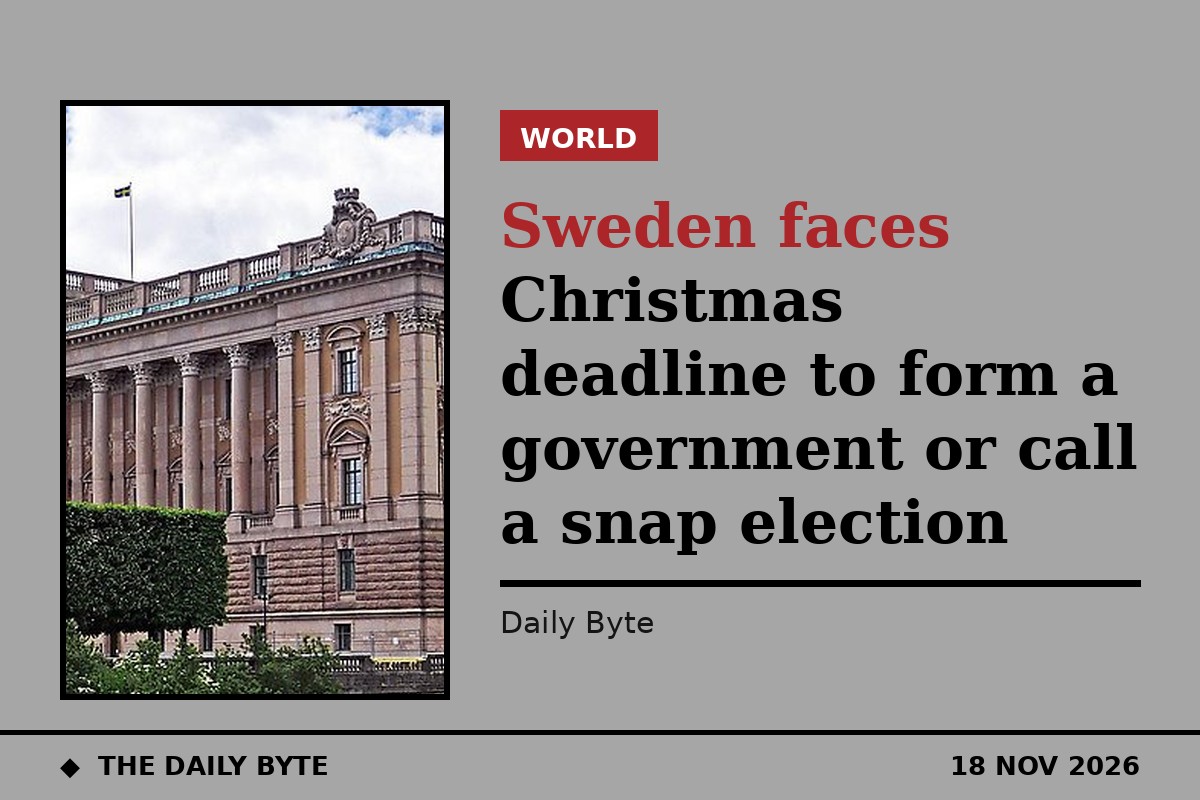
Sweden must have a new government in place, or be preparing for an extraordinary election, by Christmas, the country's parliament speaker has warned, after granting party leaders one more week to break the deadlock left by September's election.
Speaker Andreas Norlen announced on Tuesday 17 November that he would consult all party leaders again on 24 or 25 November, in the hope of overcoming a gridlock that has now lasted for more than two months. Caretaker Prime Minister Ulf Kristersson, leader of the Moderate Party, told Norlen earlier on Tuesday that he had not been able to form a centre-right government, and asked for more time.
"I am granting Ulf Kristersson and everyone else a one-week reprieve in the process," Norlen said. "I will therefore call all party leaders to consultations next Tuesday or Wednesday in order to get a full picture of the situation."
"When the Swedish people celebrate Christmas, they should know that Sweden either has a new government or is preparing for an extraordinary election," he added, according to Reuters.
Two blocs, neither with a working majority
The deadlock follows a September election in which the centre-left bloc, led by Social Democratic leader Magdalena Andersson, won a narrow majority, but has so far failed to unite its four parties behind a coalition government. Parliament has already rejected both Andersson and Centre Party leader Elisabeth Thand Ringqvist as prime minister.
The Centre Party decided on Sunday 15 November to pursue talks with Andersson's Social Democrats first, rather than accept Kristersson's rival proposal. Those talks would involve the Social Democrats and the Green Party, with cooperation from the Left Party. The Left Party has been seeking a cabinet post, which the Centre Party has so far refused to accept.
Kristersson, meanwhile, has proposed a minority government of the Moderates, the Christian Democrats, the Liberals and the Centre Party, which would negotiate with other parties in parliament to secure support for its policies. He has been exploring that four-party option while the Centre Party tests the Social Democrats' offer.
What happens next
Under Sweden's rules for forming a government, four failed prime ministerial votes trigger an extraordinary election, which must be held within three months of the final failed vote. Two votes have already failed, so two more rejections would send voters back to the polls.
Norlen said a third prime ministerial vote could take place later next week or early the following week, but it would not necessarily be a vote on Kristersson. At next week's consultations, Kristersson is expected to formally conclude his exploratory assignment, and Andersson and the other party leaders will set out their assessments.
The speaker's Christmas deadline sets a clear end point to a process that has left Sweden governed by a caretaker administration since the election. Until a new government is in place, major decisions — including the budget and Sweden's defence spending plans — remain in the hands of an administration that cannot claim a fresh mandate from parliament.
Frequently asked questions
Why does Sweden still not have a government? Neither the centre-left nor the centre-right bloc has been able to assemble a coalition that can survive a vote in the Riksdag, and the Centre Party — courted by both sides — has not committed to either.
What happens if the talks fail? If four prime ministerial votes fail in total, Sweden must hold an extraordinary election within three months.
When will we know more? Speaker Andreas Norlen will consult party leaders on 24 or 25 November, with a possible prime ministerial vote in late November.
Sources: Reuters; Nordisk Post, reporting Yle.