The Politics of being Apolitical
“I don’t do politics”
This statement often sounds like a
personal preference. But the reason you don’t pick sides, voice your opinions,
fight or protest is because your privilege protects you from either extreme.
Politics impacts everyone.
Your existence itself is political.
The air we breathe, the food we eat, the water we drink, and whatever we do in our
daily lives. The prices we pay, the opportunities we get, the quality of our
education, the services we receive, all depend on the people in power. Being
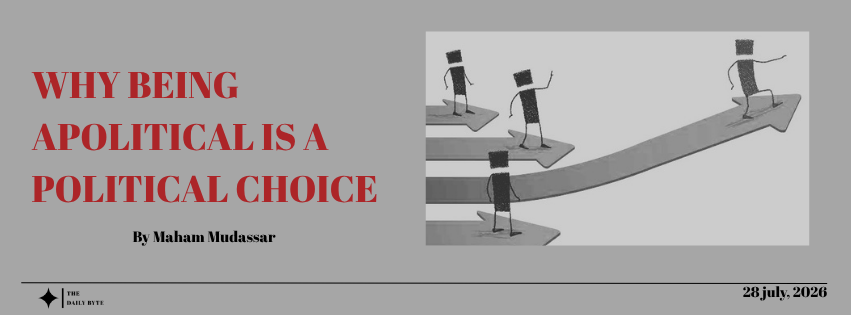
apolitical is not about being neutral, it’s choosing not to care.
You exist within a jurisdiction. Long
before you learn to speak, laws have already defined many of your rights,
responsibilities, and freedoms. Politics doesn’t stop affecting you when you’ve decided you’re not
interested in it. It’s like treating basic human rights like a group project. Opting
out and still expecting the grade.
Politics bleeds through the cracks
of the walls we build to keep it out. We may convince ourselves
that politics belongs only in parliaments or election rallies, but it does not
stay confined there. It follows us into our homes through the cost of
groceries, into our hospitals through the quality of healthcare, into our classrooms
through our education, into our workplaces through labor laws and economic
decisions. It shapes the freedom we often take for granted. Even those who
insist they are "not political" continue to live under laws they did
not write, institutions they did not build, and policies that influence nearly
every aspect of their lives. Politics is woven into the very fabric of the
society we inhabit. The walls we build in an attempt to keep politics at a
distance may shield us from political discussions, but they cannot shield us
from political consequences.
Doing nothing is still doing
something. When you choose silence, you
consent to the endorsement of status quo. Choosing silence allows existing
systems to continue without challenge.
Silence is not empty. It speaks. Neutrality
helps the oppressor and never the victim. Silence has never been neutral. It
always chooses a side. Staying apolitical won’t make your life better or peaceful.
It won’t solve any problem and it definitely won’t save you from the very thing
you’re running from. Whether you follow politics or not, it will follow you.
It’s always “I don’t do politics”
until the gas prices soar, inflation rises and healthcare becomes unaffordable.
You don’t need to scream your opinions
because you are already heard. You don’t need to pick sides because you benefit
from the difficult decisions made by others. You don’t get into protests or
fight for yourself because others are fighting those battles for you. You are
already safe, that’s why you don’t feel the need to.
Ask yourself if you will stay this
way when the tables turn? The answer is no. Because when your freedom is
restricted, your silence suddenly finds a voice. Because when the system starts
failing you, you demand accountability from the very institutions you once
ignored.
Circumstances have a way of turning
spectators into participants. Freedom today does not promise freedom
tomorrow.
The walls we build between politics and ourselves crack
under the weight of injustice, conflict, and loss. It is easy to dismiss
politics when life is comfortable. Politics has never been confined to
parliaments or election campaigns; it lives everywhere. Perhaps the real
privilege is not being apolitical, but believing that it will never reach your
doorstep.
The question is, when it finally does, will you still
call yourself apolitical?