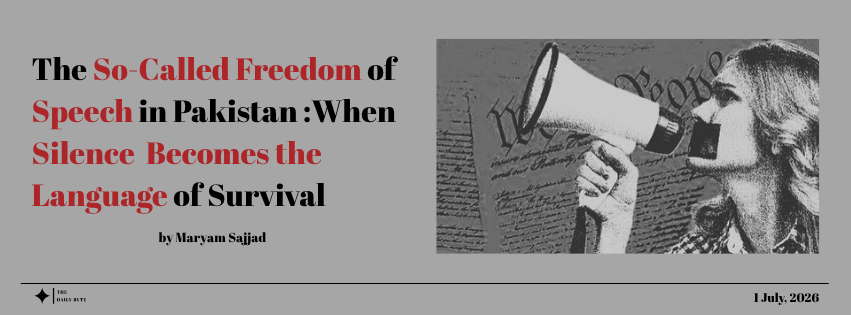
The So-Called Freedom of Speech in Pakistan :When Silence Becomes the Language of Survival
Introduction
A democracy does not weaken overnight. It begins to weaken when people no longer feel free to speak about what is right or wrong. If people cannot speak about what is right and what is wrong especially when they witness injustice or experience it themselves, then freedom exists only in words not in reality.
Freedom of speech is much more than a constitutional right; it is the conscience of a nation. It is the freedom to ask difficult questions, challenge injustice, express unpopular opinions , and hold those in power accountable. It is the bridge between citizens and the state built not on fear but on trust.
Pakistan’s Constitution guarantees freedom of speech under Article 19 ( Constitution of the Islamic Republic of Pakistan, 1973 ). However, many people still hesitate before expressing their opinions. Whether it is discussing politics , social issues, or sharing views online, many think carefully before speaking because they worry about the possible consequences.
This raises an important question:
Is freedom of speech meaningful if people are afraid to use it?
A Right That Should Be Lived, Not Just Written
A constitutional right has little value if people do not feel comfortable enough to exercise. Like many democratic countries, Pakistan allows certain restrictions on freedom of speech in matters related to national security, public order , morality , religion, and the integrity of the state (Constitution of the Islamic Republic of Pakistan, 1973). At the same time, people should never feel afraid to express their opinions respectfully and peacefully. A healthy democracy is built on dialogue, not silence.
The Reality of Speaking Out
Today, people who speak about injustice are often criticised instead of being supported. Whether someone raises their voice against harassment, child abuse , violence , or speaks about women’s education and rights, they are sometimes told to stay quiet instead of being heard. When society discourages people from speaking, it becomes easier for wrongdoers to continue their actions. Silence encourages those who commit injustice, while the people who speak up are made to feel isolated or afraid.
Change Begins With Us
Ending this fear is not only the government’s responsibility . It is ours too.
Educated and responsible people should speak against injustice , false information, and misconceptions instead of remaining silent. At the same time, we should respond with respect when someone shares their experiences or raises awareness about sensitive issues like rape, harassment , child abuse, or women education.
A few words of support can encourage someone to speak. Judgement and criticism can force them back into silence.
If we want a better society, we must create an environment where speaking the truth is respected not feared.
Conclusion
Freedom of speech is not just about having the right to speak. It is about having the confidence to raise our voices against injustice without fear. A society cannot move forward if people remain silent while wrongdoing continues around them. Real change begins when ordinary people choose to speak with honesty, responsibility, and respect.
Pakistan already recognises freedom of speech as a constitutional right. The real challenge is making sure that every citizen feels safe enough to exercise that right. When people stop speaking, injustice finds the silence it needs to grow.