Tories pledge to halt screen-based school exams
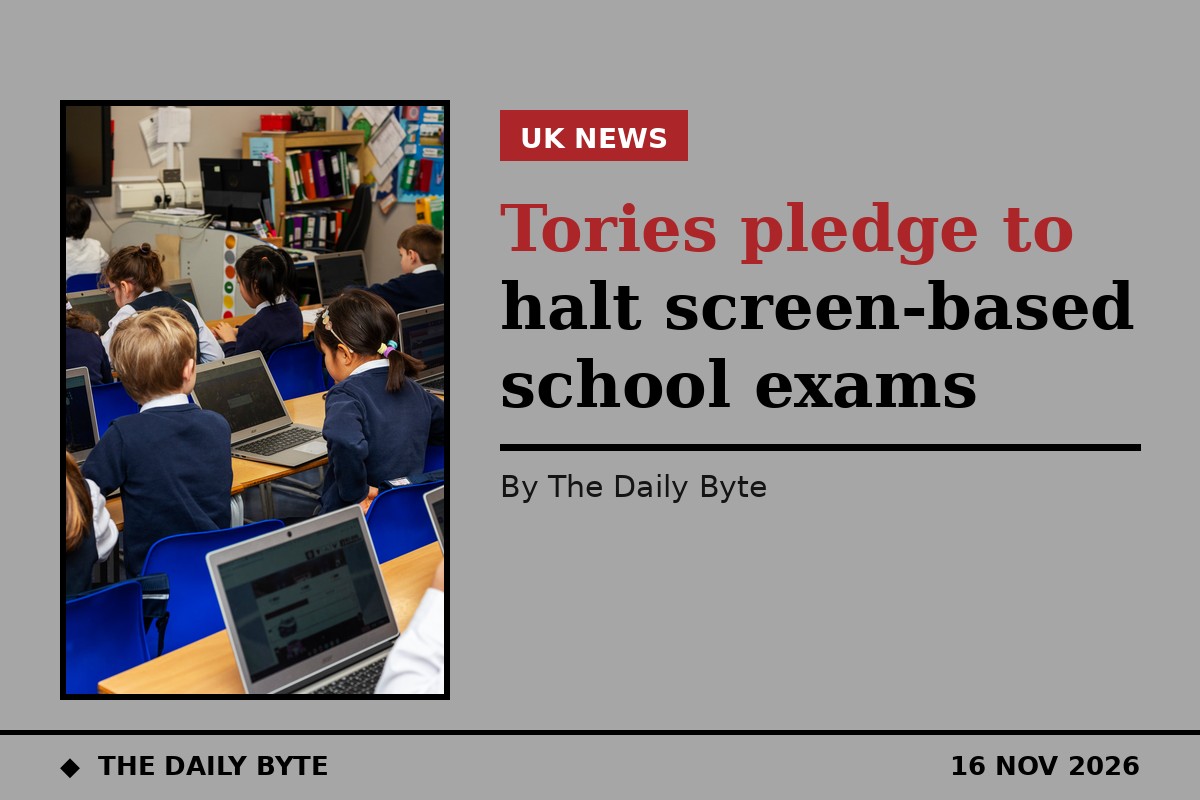
The Conservatives have promised to halt screen-based exams and cut coursework in England if the party returns to power, in a bid to limit the use of artificial intelligence by schoolchildren and reduce the amount of time pupils spend looking at screens.
Under the plans, announced on Sunday 15 November, screen time for secondary school pupils would be limited to no more than two hours a day. Primary schools would be required to keep screen use to a minimum and use screens only where necessary, such as in computing lessons, while there would be no screens in early years settings.
The party also said it would minimise the amount of coursework in school assessments, arguing that coursework lowers educational standards and makes it easier for pupils to rely on AI tools rather than their own work.
Clinicians warn over screen time
The announcement follows a warning last month from a group of more than 150 clinicians that the amount of time children in England spend on screens at school could be harming their physical and developmental health.
In an open letter to Education Secretary Lucy Powell and Health Secretary Yvette Cooper, the clinicians said they were prescribing glasses, hearing aids and speech therapy to children for a problem they said was unintentionally being made worse in schools.
The Conservatives said their plans draw on the work of the Health Professionals for Safer Screens campaign group. Its founder, Dr Rebecca Foljambe, said daily screen time can profoundly affect a child’s health, whatever they are watching or doing, and that the debate had become excessively preoccupied with content rather than time spent on screens.
Textbooks fund and government response
Shadow education secretary Laura Trott said she wanted to slash screen use in classrooms and set a new norm where screens are no longer the default. “That means no screens in early years, minimal use in primary schools except where required by the curriculum,” she said.
As part of the proposal, the party said £900 million that the government currently spends on educational technology would be repurposed to create a £250 million fund for new textbooks.
A Department for Education spokesperson said schools decided how much to spend on educational technology, which alongside screens also includes management information systems, from within their own budgets. The spokesperson added that the department would publish clear guidance on screen use for all children aged 5 to 18 in the new year, building on guidance already published for children under five.
Figures from the most recent government survey show that in 2024, most teachers (89 per cent) used interactive whiteboards within lessons, although most teachers said pupils used individual devices in fewer than a quarter of lessons, or not at all.
A ban on smartphones in schools in England came into force in June, making individual schools and trusts legally responsible for being phone-free throughout the school day. A ban on social media for under-16s, covering major platforms such as TikTok and Instagram, is due to come into force in March. Education is a devolved matter, with each of the four nations of the UK managing its own school system.
Read the full report on the Britain Post report.