Tories would scrap Burnham EU deal, Burghart says
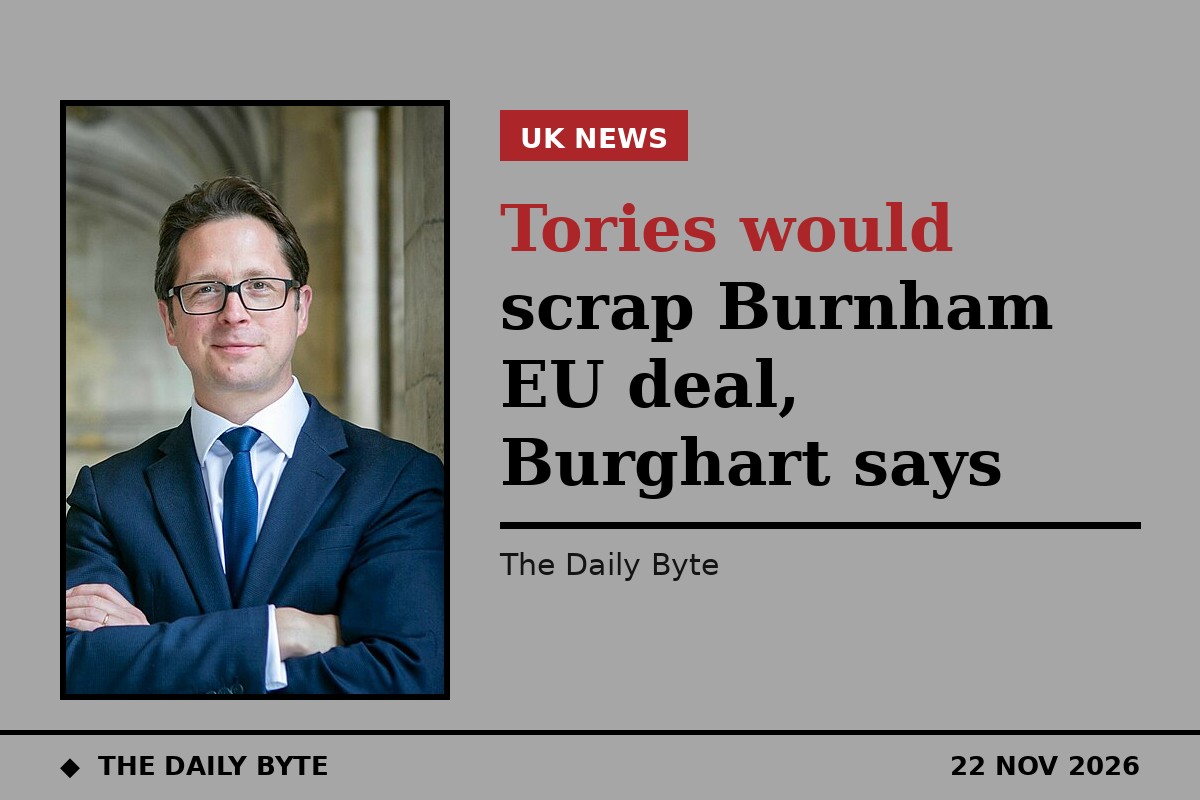
The Conservatives would scrap the UK's new deal with the European Union if they win the next general election, the party's deputy leader has said. Alex Burghart told the BBC's Sunday with Laura Kuenssberg programme that the agreement signed by Prime Minister Andy Burnham on Friday was "a dog's dinner" and would not bring down prices in the shops.
Pressed on whether the Conservatives were committed to scrapping the deal if the party wins the next general election, Mr Burghart said: "I don't think that there will be positive outcomes, and yes, we would scrap it." The statement puts the future of the agreement in doubt before its main parts have even taken effect.
What Burghart said
Mr Burghart argued the deal would mean the UK "gives up our ability to set our own rules" and said it would not lead to lower prices in the shops. He also said it would put a "massive additional burden on the 90% of farmers that don't do any trade with the EU", even though he acknowledged it would scale back some trade friction for exporters.
His comments go further than those of the Conservative leader, Kemi Badenoch, who told reporters on Friday that the deal "isn't fair" and that her party would "seek to amend it". Mr Burghart's pledge to scrap the agreement outright is the party's clearest position yet on the deal, and it sets up a parliamentary battle when the legislation to implement it reaches the Commons.
What the deal covers
The agreement, reached at a summit in Brussels on Friday 20 November, covers British food exports, emissions trading and a youth experience scheme. It will scrap most requirements for trading food, agricultural goods, animals and plants between the UK and the EU, and will link the UK and EU carbon markets, which the European Commission president said would cut emissions and reduce dependence on imported fossil fuels.
The youth experience scheme will allow 100,000 young people from both the UK and the EU to work, study or travel in the other territory for up to three years. The UK and the EU will also negotiate over the next six months on cutting university tuition fees for European students studying at British universities.
Legislation to implement the deal is expected to be introduced in Parliament next week, with the food exports arrangements due to come into force from 2028.
Reaction across the parties
The deal has divided Westminster. Reform UK has opposed it, with leader Nigel Farage describing it as a step back towards the European single market because the UK will follow some European rules. The Liberal Democrats welcomed the youth scheme but said the deal did not go far enough.
Former prime ministers have also weighed in. Theresa May told the BBC she was "aghast" at Mr Burnham's plans and said "Brexit is done", while Tony Blair warned the UK should only rejoin the EU if it innovates on technology. Mr Burnham has said the UK has lost more than it has gained since Brexit and has argued the deal is in the interests of young people in particular.
What happens next
The immediate test comes in Parliament, where the bill to implement the package is due to be introduced next week. The Conservatives are expected to try to amend it, and Reform UK will oppose it, but the government holds a majority and the legislation is expected to pass.
The longer-term question is what happens at the next general election. Mr Burghart's pledge means the deal's survival would depend on the result: a Labour victory would keep it in place, while a Conservative victory would see it scrapped. That makes the agreement, signed only on Friday, already an issue for the next election campaign.