UK-EU Summit Deal Worth £17bn a Year Agreed
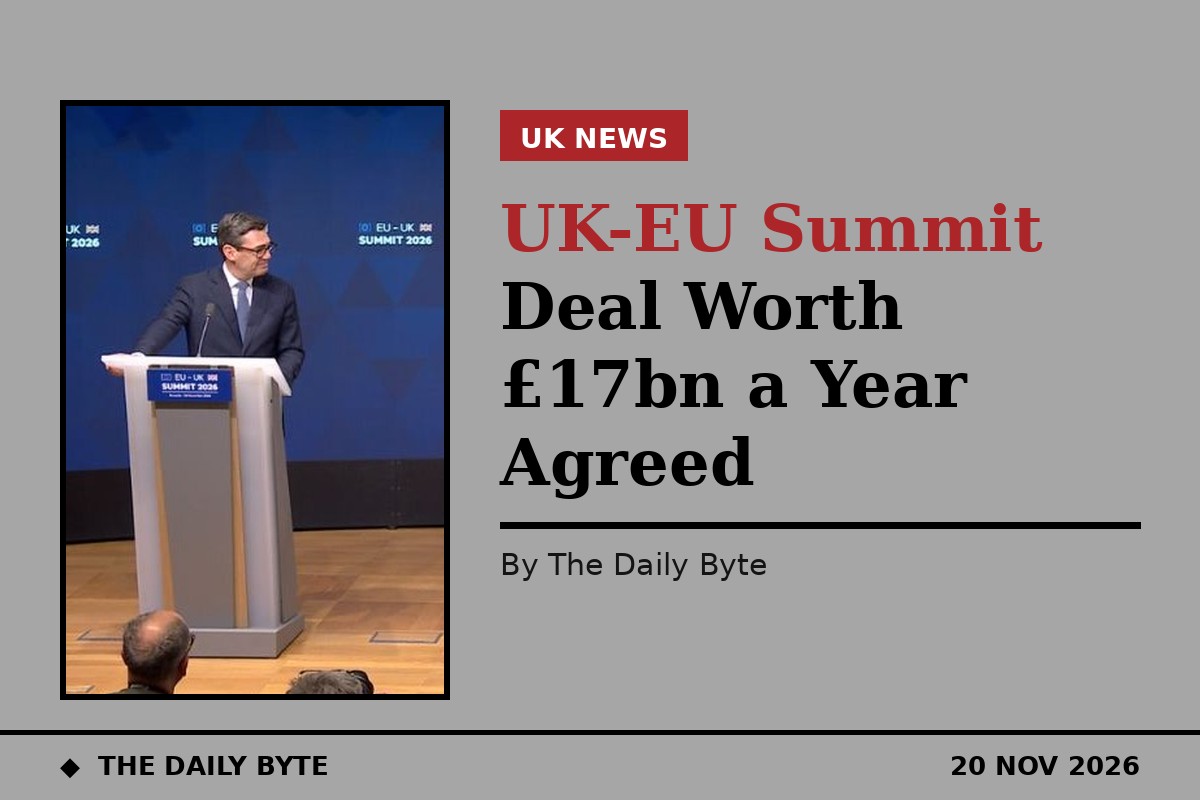
Prime Minister Andy Burnham has agreed a landmark package of deals with the European Union at the UK-EU Summit in Brussels, with the government saying the measures could be worth up to £17 billion a year to the British economy by 2040. The package covers food and drink trade, linked carbon markets and a new youth mobility scheme, alongside closer cooperation on migration, security and defence.
Mr Burnham, European Commission president Ursula von der Leyen and European Council president António Costa announced the conclusion of the talks on Friday 20 November, ten years on from the Brexit referendum. The prime minister called the agreement a “win-win” and said it was “the single biggest growth measure that we could take in this Parliament”.
Food and drink trade to be freed up
The centrepiece for businesses is a new food and drink deal that will end most of the expensive checks and paperwork on food, farming and plant products moving between Britain and the EU. Export Health Certificates, which can cost up to £200 each, will be scrapped, and fresh produce should reach supermarket shelves faster, with less waste and lower costs.
British foods that were blocked from European markets under the Brexit deal will be sold in Europe again, including fresh sausages and burgers, Welsh mussels and Scottish seed potatoes. Once fully implemented, the deal will also remove the vast majority of “Not for EU” labels, and most paperwork and checks on food and plants moving from Great Britain to Northern Ireland will go, working alongside the Windsor Framework.
The government says the food and drink agreement could add up to £5.1 billion a year to the UK economy by 2040. Ministers point to National Farmers’ Union figures showing British agricultural exports to the EU have fallen by more than 30 per cent over the past decade. Government-commissioned research found that 79 per cent of food and drink manufacturers identified less paperwork as the biggest factor that would help boost exports to the EU, while more than half of small and medium-sized exporters reported lower profits after the new trading requirements were introduced.
Carbon markets linked to protect industry
The second major deal links the UK and EU emissions trading schemes, creating what the government describes as the world’s largest linked carbon market. It will exempt £6.5 billion of British exports, including steel and aluminium, from the EU’s Carbon Border Adjustment Mechanism, removing a major post-Brexit barrier for heavy industry. Linking the emissions markets is expected to add up to £3.8 billion a year to the UK economy by 2040.
The government has confirmed that nothing in the food, emissions and youth deals will require UK taxpayers to pay into the EU budget. Taken together, the deals agreed today could add up to 0.5 per cent to UK GDP by 2040, equivalent to around £17 billion a year, according to the government’s estimates.
Youth scheme and closer work on borders
A new Youth Experience Scheme will allow people aged 18 to 31 to live, work, study and travel in Europe for up to three years, with no need for a job offer and no language or salary requirements. The reciprocal scheme will be capped, time-limited and visa-based, with no access to benefits and no right to bring dependants. Reports put the cap at up to 100,000 places a year on each side.
The UK and EU will also establish a new Structured Dialogue on migration and work more closely under the Channel Action Plan to break up people-smuggling gangs. The government says cooperation with Europe has already helped stop more than 50,000 attempted small-boat crossings. On defence, both sides committed to a new shared ambition, including a crackdown on Russia’s “shadow fleet”, joint work against cyber attacks and disinformation, and continued support for Ukraine, building on a £260 million package including 1,000 long-range drones announced at the Coalition of the Willing meeting in Berlin on Thursday.
One issue remains unresolved: tuition fees for EU students at British universities. The two sides have given themselves six months to reach agreement on fees, with Brussels warning that implementing other parts of the deal could be held up until the question is settled. Mr Burnham said the bill to put the package into law will enter Parliament next week.
Sources: GOV.UK, Farmers Guide