UK and Germany pledge farm trade cooperation
The UK and Germany have pledged to work more closely together on farming, food security and trade, in a joint statement published on 13 November, as both countries look ahead to a UK-EU summit on 20 November that is expected to finalise a deal to simplify checks on food, plants and animals.
Environment Secretary Dame Angela Eagle welcomed Germany’s agriculture minister, Alois Rainer, to London on 29 October for talks on agricultural resilience, food security and trade. The statement that followed the meeting says both governments want to reduce trade barriers in the agriculture and food sector, promote research and innovation, and strengthen animal and plant health alongside sustainable and climate-resilient farming.
Why the two countries are acting now
The statement points to geopolitical instability and climate change disrupting global supply chains, and notes that droughts in 2026 affected agriculture and forestry in both the UK and Germany. It also says trade volumes in agricultural products and food have declined in recent years, underlining the need to unlock more of the potential in the trading relationship.
The declaration builds on the Kensington Treaty, the Treaty of Friendship and Bilateral Cooperation between the UK and Germany, which was signed in July 2025 and formally ratified when the Prime Minister visited Berlin on 8 October. Both ministers reaffirmed their commitment to the treaty as the foundation for a deeper partnership.
What the 20 November summit could deliver
The joint statement says the UK and Germany are looking forward to the UK-EU summit on 20 November, “with the expectation that an ambitious UK–EU Sanitary and Phytosanitary (SPS) Agreement will be finalised, helping to simplify trade, reduce administrative burdens, and provide long-term certainty for producers and retailers on both sides”.
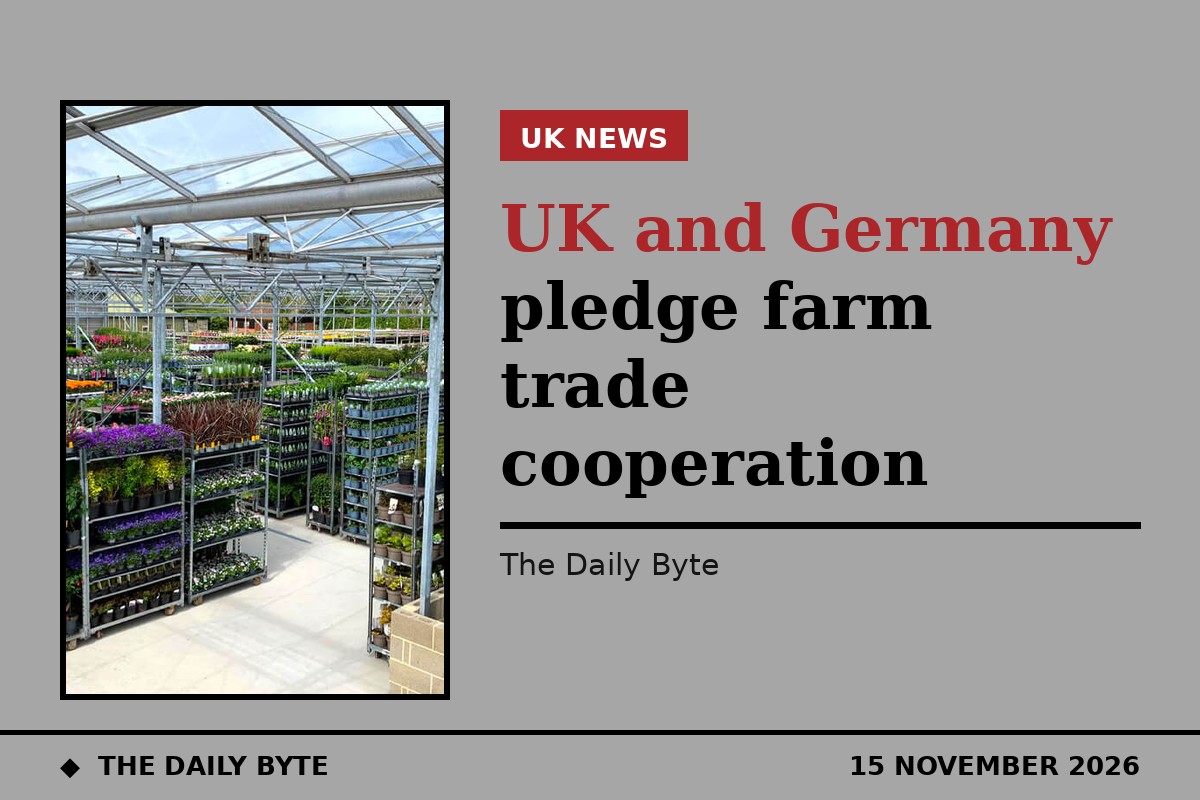
An SPS agreement would remove the vast majority of physical checks and most of the certificates and paperwork currently required for trade in food, plants and animal products. Environment Secretary Angela Eagle told the Guardian during a visit to a plant nursery in Kent that easing plant-trade procedures could remove about £60 million a year in inspection, certification, port, labour and transport costs, a figure calculated by the industry body the Horticultural Trades Association.
Food and drink exports from Britain to the EU have fallen by more than a third since Brexit, according to analysis by the National Farmers’ Union, with egg, chicken and potato producers among those badly affected. The SPS deal was largely agreed between the two sides in May and is due to be signed at next week’s summit.
What it will not do yet
The joint statement is a commitment to cooperate, not a change in customs law. It does not allocate a new bilateral funding package, suspend inspections or set a binding deadline for trade reforms. Even if the SPS agreement is signed on 20 November, it is not expected to take effect straight away: current reporting puts implementation in the first quarter of 2028, subject to the necessary legislative and operational steps.
Businesses will also not be compensated for money already spent coping with border controls since Brexit. Eagle said she hoped the paperwork headaches for importers would disappear once the changes come in, but she would not confirm that the deal would lower food prices in the UK. Prime Minister Andy Burnham has said the deal can lower prices for British consumers and costs for British businesses.
For growers, nurseries and food exporters, the test will be whether the summit delivers a signed agreement on 20 November — and how quickly the promised simpler border arrangements then reach the businesses that have been paying for checks, certificates and delays.
Sources: GOV.UK – Joint Statement on Cooperation in Agriculture between the United Kingdom and Germany; Transatlantic Standard – UK and Germany pledge farm-trade cooperation before planned EU food-checks deal (reporting the Guardian interview with Angela Eagle).


