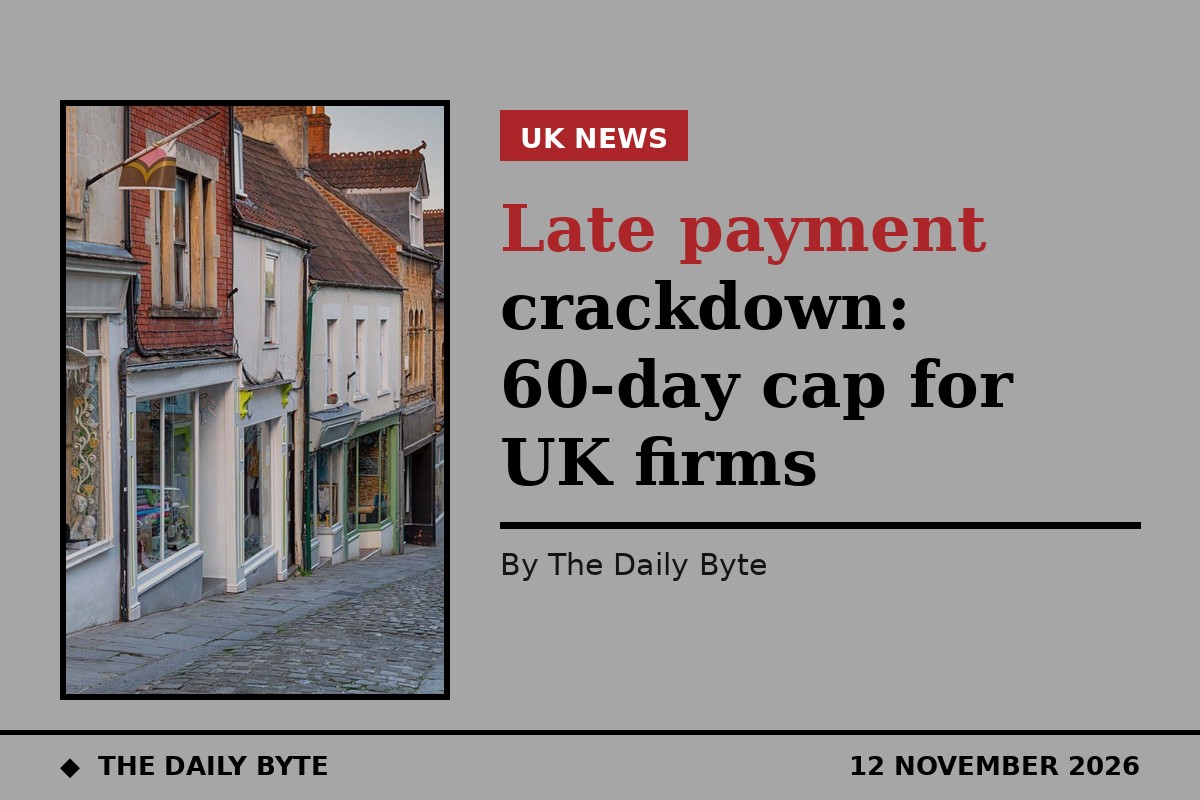
Late payment crackdown: 60-day cap for UK firms
Big businesses that pay small suppliers late face a 60-day cap on payment terms under a Bill now before the House of Commons, with interest on late payments set to become mandatory. The Small Business Commissioner, Emma Jones, says the change would create the toughest late-payment regime in the G7.
Writing on 12 November, Jones said late payment costs the UK economy almost £11 billion a year, with around 14,000 businesses closing because they are not paid on time. Firms affected by late payment spend an average of 86 hours a year chasing money they are already owed.
What the Bill would change
The Commercial Payments (Late Payments) Bill would set a maximum payment term of 60 days in business-to-business contracts, with strictly limited exemptions. Where the customer is a public authority, the cap would be 30 days, and any longer term would be void.
Interest on late payments, set at 8% above the Bank of England base rate, would become mandatory, so a contract could no longer sign it away. The Bill would also ban cash retentions in construction — the share of each payment held back as security against defects — after a two-year transition period.
The Small Business Commissioner would gain stronger powers to investigate persistent poor payment practices, adjudicate payment disputes and take enforcement action, including financial penalties. The Commissioner’s office says the Bill proposes the most significant reforms to payment practices in more than 25 years.
Why it matters now
For many small firms, late payment is not an inconvenience but a threat to survival. Jones said business owners tell her about the time they lose chasing invoices when they could be winning customers, developing products or investing in growth. Paying suppliers on time, she argued, builds the trust that lets small firms invest in their people and plan ahead — and gives big businesses stronger, more resilient supply chains.
“Payment culture is becoming just as important as payment compliance,” Jones said. “Suppliers are not a source of free credit. They are partners who play an important role in helping the business succeed.”
Where the Bill stands
The Bill was introduced in the House of Lords on 19 May 2026 and completed its Lords stages with a third reading on 20 October. It had its first reading in the House of Commons on 21 October and is awaiting a second reading, for which no date has yet been set. It is not law yet, and its details can still change as it passes through the Commons.
The reforms are expected to come into force in 2027. Lawyers at Gowling WLG read the timetable as putting the outright ban on construction retentions in force in 2030 at the earliest, after the two-year transition that follows commencement.
What businesses can do now
Jones urged large businesses to review their payment practices now rather than wait for the law to change: how quickly invoices move through the organisation, how disputes are handled, and whether paying suppliers fairly and on time is treated as a priority across the business. The Fair Payment Code offers a practical framework for businesses to demonstrate their commitment to fair payment, and the Commissioner’s office publishes updates and guidance on the Bill as it progresses.
“Fair payment is good business: get ready!” Jones said.
Sources: Elite Business Magazine; Office of the Small Business Commissioner; UK Parliament.