UK Right to Rent Checks Change: eVisa Holders Must Now Be Verified Online
What changed on 1 October
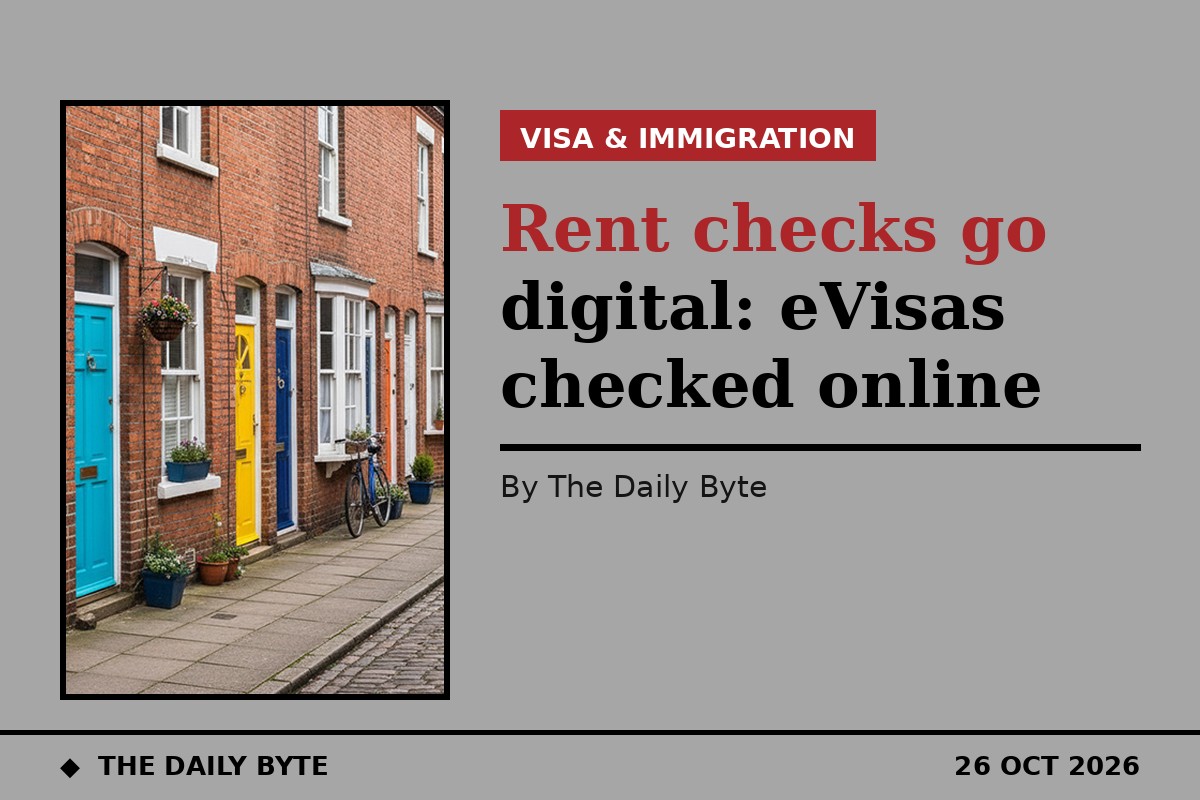
England's right to rent scheme has a new code of practice, in force from 1 October 2026. Its core purpose is unchanged: before an adult moves into a rented home as their only or main home, the landlord or agent must check their right to rent. The update clarifies how that check should be done now that immigration status is increasingly held digitally rather than on paper.
eVisa holders: the online check
Under the updated code, a person who holds an eVisa can only evidence their right to rent through the Home Office online service. In practice, the prospective occupier generates a share code from their UK Visas and Immigration account and gives it, with their date of birth, to the landlord or agent, who checks the live record. Expired biometric residence permits are no longer acceptable for a manual check, and visa vignettes — the stickers once placed in passports — stopped being issued for new applicants from 1 July 2026.
Three routes, and fair treatment
The code sets out three routes to establish a statutory excuse against a civil penalty: a manual document check, a Home Office online check, or a check through a registered right to rent digital verification service provider. Landlords should use the route that fits the individual, rather than insisting every applicant use the same method, and must not treat someone less favourably because their status takes longer to verify or needs a different checking route. Time-limited checks must be made no earlier than 28 days before the agreement, with a follow-up before the excuse expires.
Note: this is a general news summary, not personal immigration advice. Rules and guidance change, so always check the official GOV.UK page linked as the source before acting.
Sources: GOV.UK code of practice, 1 October 2026; NetRent.