UK student visa applications fall 31% in October
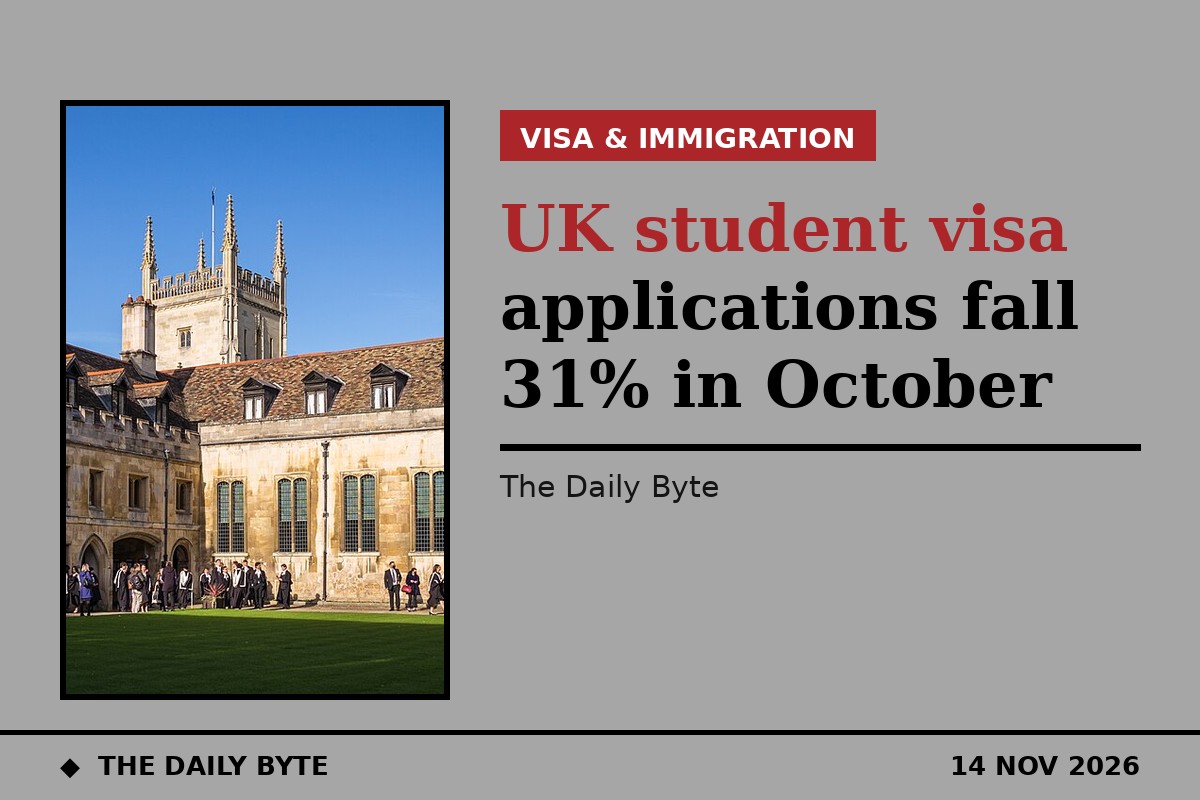
Applications for UK student visas fell sharply in October, with just 5,800 people applying through the sponsored study route, down 31% on the 8,400 who applied in the same month last year, according to Home Office figures published on 12 November.
The October total was also 44% below the 10,400 applications recorded in October 2023. Across the 12 months to October 2026, main applicants under the sponsored study route made 349,900 applications, 20% fewer than the 434,000 in the previous 12 months.
Sharpest fall came after the summer intake
October is normally a quiet month for student visa applications, which peak in August ahead of the academic year. Even so, the latest dip was the sharpest monthly fall of the recent recruitment window. Applications across July to October totalled 236,100, down 16% on the same four months in 2025 and 27% below the 323,100 recorded in 2023.
Applications from dependants of students also fell. There were 15,400 dependant applications in the year to October 2026, 32% lower than a year earlier and 89% below the level seen in the year to December 2023, before rule changes that came into force in January 2024 stopped most students bringing dependants.
Why applications are falling
The fall comes after a series of policy changes. In June 2026 the Home Office tightened its Basic Compliance Assessment rules, meaning universities risk losing their licence to recruit overseas students if more than 5% of their sponsored applicants are refused a visa. At least 15 UK universities have suspended recruitment from Pakistan, according to the Financial Times, with at least nine stopping recruitment from other countries seen as higher risk.
The Home Office also introduced a so-called “visa brake” in late March 2026 for nationals of Afghanistan, Cameroon, Myanmar and Sudan, although the government says those nationalities account for only a small share of sponsored study applications. Jonathan Hill, senior immigration manager at Fragomen solicitors, said some universities had pulled out of certain markets or severely restricted recruitment there, and that this would have played a part in the figures. He added that higher travel costs, economic uncertainty and the planned shortening of the graduate visa were also likely factors.
Under changes announced in May 2025, the Graduate route, which lets international graduates stay and work in the UK after their studies, is due to fall from two years to 18 months for those graduating after January 2027. In last month’s Budget, Chancellor John Healey announced that the two-year graduate visa would return for graduates of “high-compliance” universities with strong labour market outcomes.
Universities warn of pressure on finances
Zaid Kadhum, policy manager at the Russell Group of research-intensive universities, said the figures suggested “the volatility we’ve seen in the international student market shows no sign of slowing”. He said turning the trend around was vital for growth and called the planned return of the two-year graduate route for highly compliant universities “a really positive first step”, while urging ministers to drop the proposed international student levy.
International student fees are a major source of income for UK universities, and most are expected to report deficits in their annual accounts later this year. The Home Office figures are provisional and will be finalised in the quarterly immigration system statistics. Anyone planning to study in the UK should check the official GOV.UK pages for the latest student visa rules, as requirements and fees change.
Sources: GOV.UK and Times Higher Education.