UK Unemployment Falls to 4.6% as Wage Growth Slows, ONS Reports
By aminah
·18 Nov 2026
·4 min read
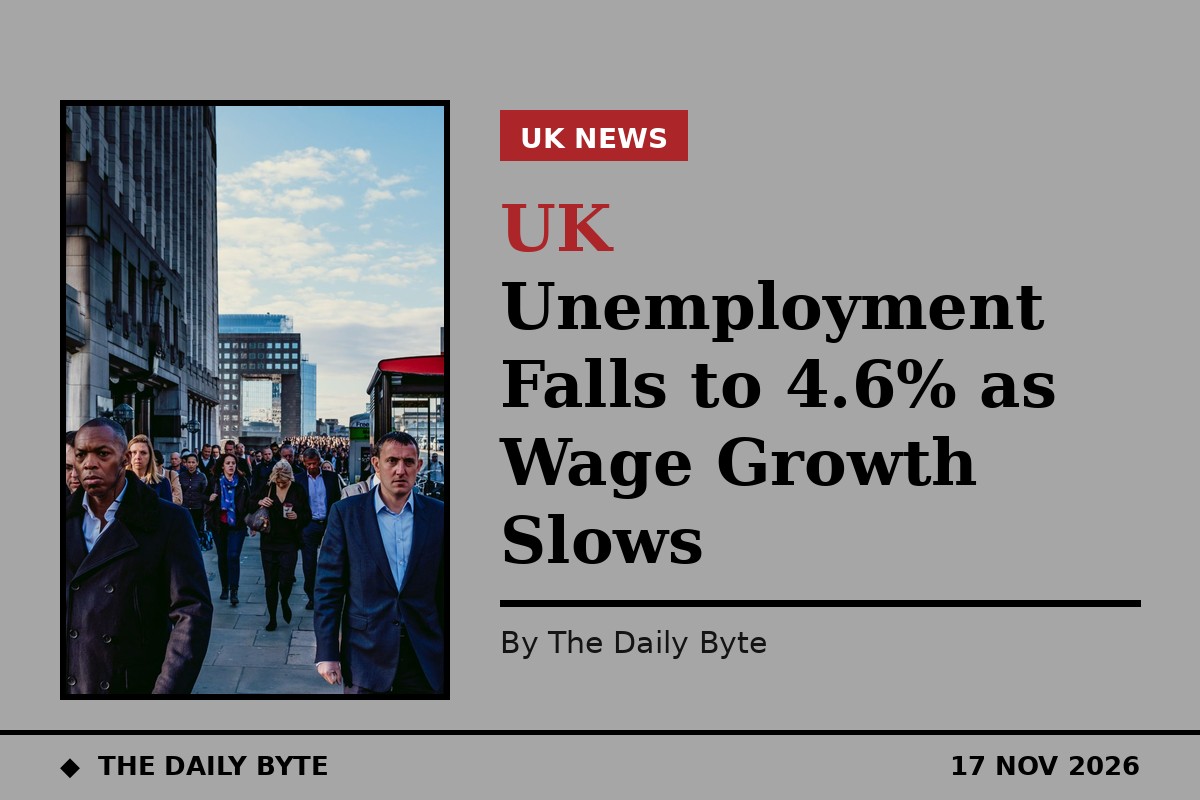
UK unemployment fell to 4.6% in the three months to September 2026, the Office for National Statistics (ONS) said on Tuesday, 17 November. It is the lowest jobless rate since April 2025 and better than economists had expected, with most forecasting the rate to stay at 4.7%.
The headline improvement came with a warning, however. Payrolls fell, vacancies dropped and wage growth slowed, and the ONS itself cautioned that part of the fall in unemployment reflects changes in the survey sample rather than a clear strengthening of the jobs market. Liz McKeown, the ONS director of economic statistics, described the figures as "a mixed picture overall".
## What the figures show
The ONS estimated that 1.684 million people were unemployed in July to September, down 88,000 on the previous three-month period and down 102,000 on a year earlier. The unemployment rate fell by 0.3 percentage points on both the quarter and the year, to 4.6%.
The employment rate for people aged 16 to 64 rose to 75.4%, up 0.3 points on the quarter and 0.4 points on the year. The number of people in employment rose by 155,000 on the quarter to 34.625 million. The economic inactivity rate fell by 0.1 points to 20.8%, with 9.069 million people aged 16 to 64 economically inactive.
## Wage growth slowed
Annual growth in regular pay, excluding bonuses, slowed to 3.5% in the three months to September, down from 3.7% in the previous period and slightly below the 3.6% forecast in a Reuters poll of economists. Total pay growth, including bonuses, eased to 3.6% from 3.8%.
Pay growth differed sharply between sectors. Regular earnings rose by 5.4% a year in the public sector, boosted by the timing of pay awards, compared with 3.1% in the private sector. Once rising prices are taken into account, regular pay was only 0.2% higher than a year earlier on the CPIH measure, so the squeeze on household budgets has not gone away.
## Hiring looks weaker underneath
Other indicators pointed to weaker demand for workers. Job vacancies fell by 22,000 to 690,000 in August to October, their lowest level since 2014 if the pandemic period is excluded. A provisional estimate showed the number of employees on company payrolls falling by 34,000 in October to 30.2 million, 95,000 lower than a year earlier. Early payroll estimates can be revised.
The ONS said the quarterly movements in employment and unemployment partly reflected the rotation of its Labour Force Survey sample. The group of respondents leaving the survey had lower employment and higher unemployment than the group joining it, which contributed to the improvement in the headline rates. The agency advises looking at longer trends rather than drawing firm conclusions from a single quarter.
## What it means for interest rates
The figures matter for the Bank of England, which watches wages and employment closely for signs of persistent inflation. The Bank raised Bank Rate from 3.75% to 4% on 5 November, its first increase since August 2023, with eight of the nine Monetary Policy Committee members voting for the quarter-point rise. Its next decision is due on 17 December.
Slower wage growth would normally ease pressure for further rises, but the Bank has said policy is not on a pre-set path and will depend on the evidence. The next ONS labour market release is due in December.
## Frequently asked questions
**What is the UK unemployment rate now?**
The UK unemployment rate is 4.6% for July to September 2026, according to the ONS, down from 4.7% in the previous three-month period.
**Why did unemployment fall if hiring is weak?**
The ONS said the fall partly reflects rotation in its Labour Force Survey sample, while payrolls fell by 34,000 in October and vacancies dropped to 690,000, pointing to weaker underlying demand for workers.
Sources: [Office for National Statistics, Employment in the UK: November 2026](https://www.ons.gov.uk/employmentandlabourmarket/peopleinwork/employmentandemployeetypes/bulletins/employmentintheuk/latest) and [FE News, ONS Labour Market November 2026](https://www.fenews.co.uk/fe-voices/ons-labour-market-november-2026-uk-unemployment-rate-falls-to-4-6/).
Source
Office for National Statistics — https://www.ons.gov.uk/employmentandlabourmarket/peopleinwork/employmentandemployeetypes/bulletins/employmentintheuk/latest 

