UK Universities See Sharpest Fall in Overseas Postgrads
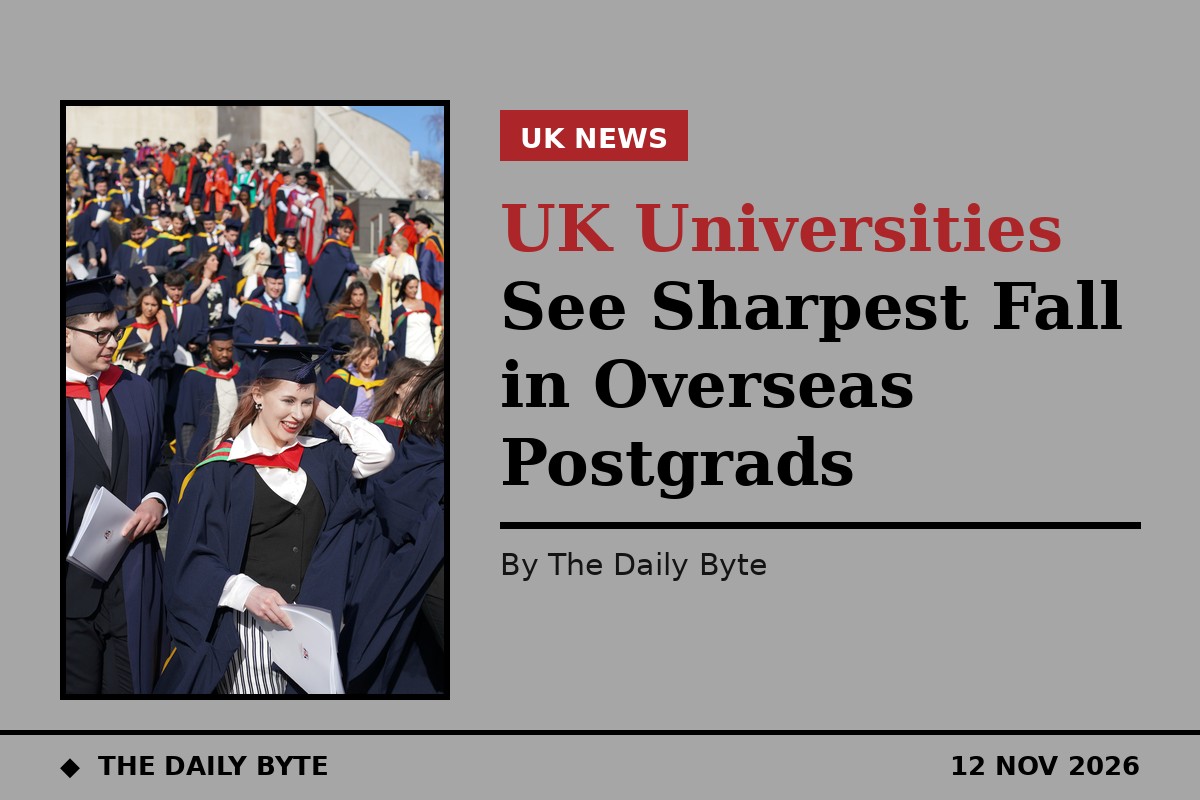
UK universities have recorded the sharpest fall in international postgraduate enrolments among the world's major study destinations, according to a global survey of more than 400 universities published on 12 November 2026.
The Global Enrolment Benchmark Survey, carried out by Studyportals with the Association of International Educators and the Oxford Test of English, found international postgraduate enrolments at UK universities fell by 19% for the autumn intake, a steeper drop than in the United States, Australia or Canada.
How far did enrolments fall?
Four in five UK institutions, 79%, recorded lower international postgraduate recruitment, up from 50% a year ago, according to Times Higher Education's report on the survey. Forty-three per cent of UK institutions also reported reduced undergraduate enrolments from overseas.
Across the so-called big four study destinations — the UK, the US, Australia and Canada — 62% of universities registered a decline in international postgraduate enrolments between August and October 2026, compared with 27% of institutions elsewhere in the world. Students are instead choosing universities in Asia and Europe, where enrolments are rising.
Why are numbers falling?
Visa constraints and other restrictive government policies were named as the single biggest obstacle to international student recruitment in the survey. Universities and sector bodies have pointed to a series of policy changes: tougher immigration controls, rules that put a university's visa sponsorship at risk if more than 5% of its student applicants are refused, and the planned shortening of the Graduate visa from two years to 18 months from 1 January 2027. A levy on international students is also due to come in from 2028.
The fall matters because international fees cross-subsidise teaching and research. Studyportals estimates the reduction could cost the UK sector up to £7 billion a year in tuition fees and other revenue. A government study has estimated that tuition funding for most courses does not cover costs under the £9,790 annual domestic fee cap, leaving institutions dependent on higher-fee international students.
What should readers note about the figures?
The survey asks universities about their own enrolments rather than counting every student, so it shows the direction and scale of the change rather than an exact national headcount. Official statistics on current international student numbers are expected before the end of the year, and they will show whether the survey's picture is confirmed.
For now, the survey's message is clear: the UK is losing international postgraduate students faster than its main competitors, and visa policy is the reason universities themselves give most often.
Sources: Times Higher Education and Traders Union, reporting the Financial Times.