UK Voter ID: Accepted Photo ID and Free Certificate
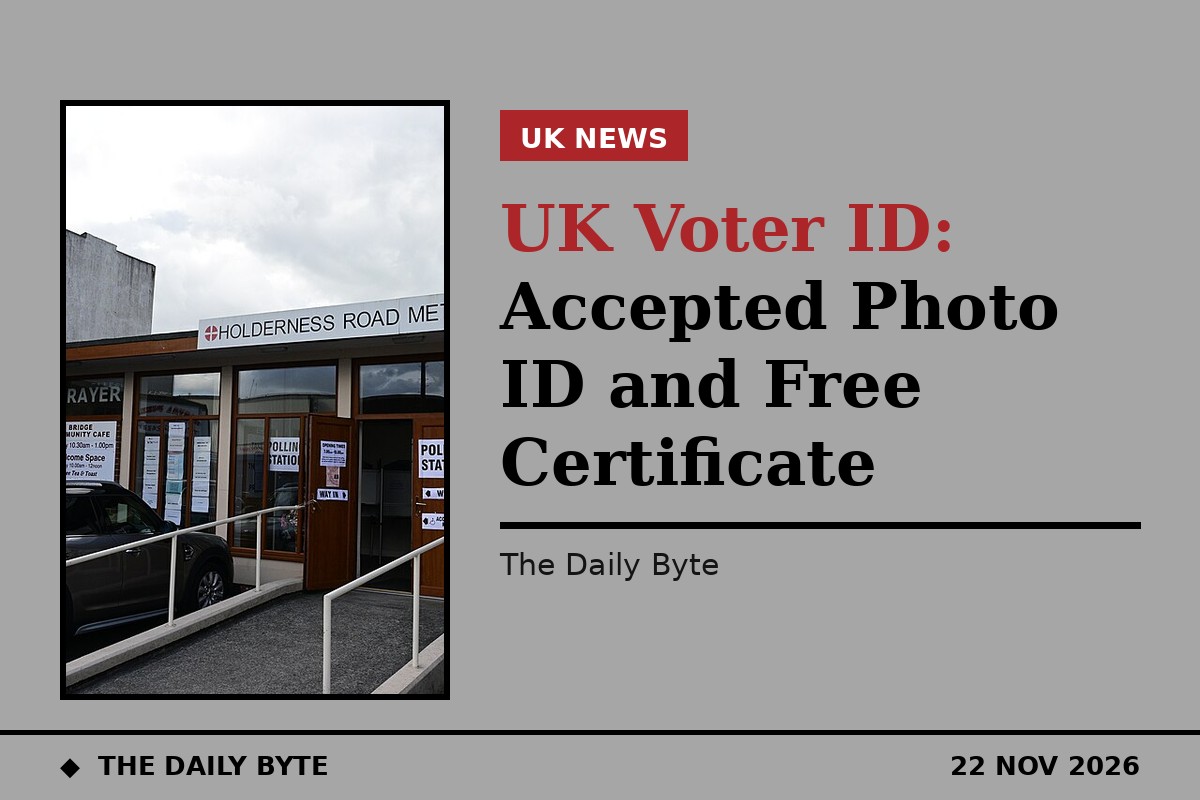
Yes, you need photo ID to vote in person at a polling station in the UK. The rule was introduced by the Elections Act 2022 and first applied in England at the local elections on 4 May 2023. It covers UK Parliament general elections and by-elections, local elections in England, and Police and Crime Commissioner elections in England and Wales. If you arrive at the polling station without an accepted form of photo ID, polling station staff will not issue you a ballot paper. You can go home, collect your ID and return before polls close at 10pm. If you have no accepted ID at all, you can apply for a free Voter Authority Certificate instead, or vote by post, which does not require photo ID.
The rule surprises many voters because it is still fairly new, and because the list of accepted documents is much wider than most people expect. A passport or driving licence works, but so do a Blue Badge, an older person's bus pass, a PASS card and several other documents. This guide explains exactly which documents count, what to do if yours has expired, how to get a free Voter Authority Certificate, and what happens inside the polling station.
When do you need voter ID?
You need to show photo ID when you vote in person at a polling station. That applies to UK Parliament elections, including general elections and by-elections, and to local elections in England. Northern Ireland has required photographic ID at polling stations for much longer, and voters there use the Electoral Identity Card system. You do not need photo ID to vote by post. Postal voters have their identity checked in a different way, through the signature and date of birth they supply with their postal vote. You also do not need photo ID if someone votes on your behalf as your proxy, although the proxy themselves must show their own photo ID at the polling station. The requirement applies however you normally vote, so it is worth checking now, well before polling day, that you have something on the accepted list.
What photo ID is accepted?
The Electoral Commission publishes the full list of accepted photo ID, and polling station staff can only accept documents on that list. You only need to show one form of ID, and it must be the original document, not a photocopy and not a photograph of the document on your phone. The accepted documents are:
International travel: a passport issued by the UK, any of the Channel Islands, the Isle of Man or a British Overseas Territory, or a passport or passport card issued by an EEA state or a country whose citizens are Commonwealth citizens.
Driving and parking: a photocard driving licence issued by the UK, any of the Channel Islands, the Isle of Man or an EEA state, including a provisional driving licence, and a Blue Badge.
Local travel: an Older Person's Bus Pass or Disabled Person's Bus Pass funded by the UK Government, a 60+ London Oyster Photocard funded by Transport for London, a Freedom Pass, a National Entitlement Card issued by a local authority in Scotland, a 60 and Over Welsh Concessionary Travel Card, a Disabled Person's Welsh Concessionary Travel Card, and the Northern Ireland SmartPasses, including the Senior SmartPass, Registered Blind SmartPass, Blind Person's SmartPass, War Disablement SmartPass, 60+ SmartPass and Half Fare SmartPass.
Proof of age: an identity card bearing the Proof of Age Standards Scheme hologram, known as a PASS card.
Other government-issued documents: biometric immigration documents, including eVisas, a Ministry of Defence Form 90 Defence Identity Card, a Ministry of Defence Form 100 HM Armed Forces Veteran Card, a national identity card issued by an EEA state, an Electoral Identity Card issued in Northern Ireland, a Voter Authority Certificate, and an Anonymous Elector's Document. The Electoral Commission also lists digital ID in the form of a veterans' card and an e-visa.
The full list is kept up to date on the Electoral Commission's website, and the link at the end of this article takes you to it. If your document is not on the list, it will not be accepted, even if it carries your photograph.
Can I use expired photo ID?
Yes. An expired photographic ID document can still be used as accepted photo ID at the polling station, as long as the photograph still looks like you. This is an important point, because it means an out-of-date passport or an old driving licence is still useful for voting. Polling station staff are checking that the photograph is a good likeness of the person in front of them, not that the document is in date. If the photograph no longer looks like you, for example because it was taken many years ago and your appearance has changed a great deal, staff may not accept it. In that case, applying for a Voter Authority Certificate with a recent photograph is the safer option.
What if I do not have any accepted photo ID?
If you do not have any of the documents on the accepted list, you can apply for a free voter ID document known as a Voter Authority Certificate. The certificate is a photographic identity document issued specifically for voting, and it is free of charge. You can apply online through GOV.UK or through your local council. You will need a recent digital photograph of yourself, and you will be asked for your National Insurance number. If you cannot apply online, your local council can help you apply. The certificate is valid in England, Scotland and Wales. In Northern Ireland, the equivalent document is the Electoral Identity Card, which you apply for through the Electoral Office for Northern Ireland. The deadline to apply for a Voter Authority Certificate is normally 5pm, six working days before polling day, so do not leave it until the week of the election. If you miss the deadline, you can still apply to vote by post instead, as long as the postal vote deadline has not passed.
What happens at the polling station?
When you arrive at the polling station, a member of staff will ask to see your photo ID before issuing your ballot paper. They will check the photograph against your face and check that the document is on the accepted list. They will not take the document away or record its details. Your name will then be marked off the electoral register and you will be given your ballot paper. If you forget your ID, you will be turned away without a ballot paper, but you can return later the same day with your ID, as long as you arrive before polls close at 10pm. If you are registered as an anonymous elector, you must show your Anonymous Elector's Document and the polling station will have a special process for you. Voters with a disability can ask polling station staff for help, and a companion can assist them if needed. If you are unsure whether your ID will be accepted, the Electoral Commission runs a helpline on 0800 328 0280.
Do I need photo ID to vote by post or by proxy?
No photo ID is needed to vote by post. Postal voters prove their identity by providing their signature and date of birth when they apply for a postal vote, and the same details are checked against the postal voting statement returned with the ballot paper. If you are worried about having the right ID on polling day, applying for a postal vote is a practical alternative, but remember that postal vote applications also have a deadline, normally 5pm, eleven working days before polling day. If someone votes for you as your proxy, the proxy must show their own photo ID at the polling station. The proxy does not need to show your ID. If you are voting by proxy because of a medical emergency or because of work, different deadlines can apply, so check with your local council's electoral services team.
Frequently asked questions
Does my provisional driving licence count as voter ID? Yes. A photocard driving licence issued in the UK counts whether it is a full licence or a provisional licence.
Can I show a photo of my passport on my phone? No. Polling station staff can only accept the original document. Photocopies and pictures on a mobile phone are not accepted.
I have lost my passport. What should I do? Check the rest of the accepted list first. Many people have a bus pass, a Blue Badge or a PASS card they had forgotten about. If none of those apply, apply for a free Voter Authority Certificate well before polling day.
Is voter ID needed for every election? It is needed when you vote in person at a polling station for the elections listed above. Rules in Scotland and Wales for devolved elections can differ, so check the Electoral Commission's guidance for the specific election you are voting in.
Where can I check the official list? The Electoral Commission keeps the accepted forms of photo ID on its website at electoralcommission.org.uk, and the Money Saving Expert guide to voter ID, prepared with the Electoral Commission's help, is also kept up to date. Election rules can change, so always check the official page before polling day.