UK Youth Mobility Scheme Visa Explained
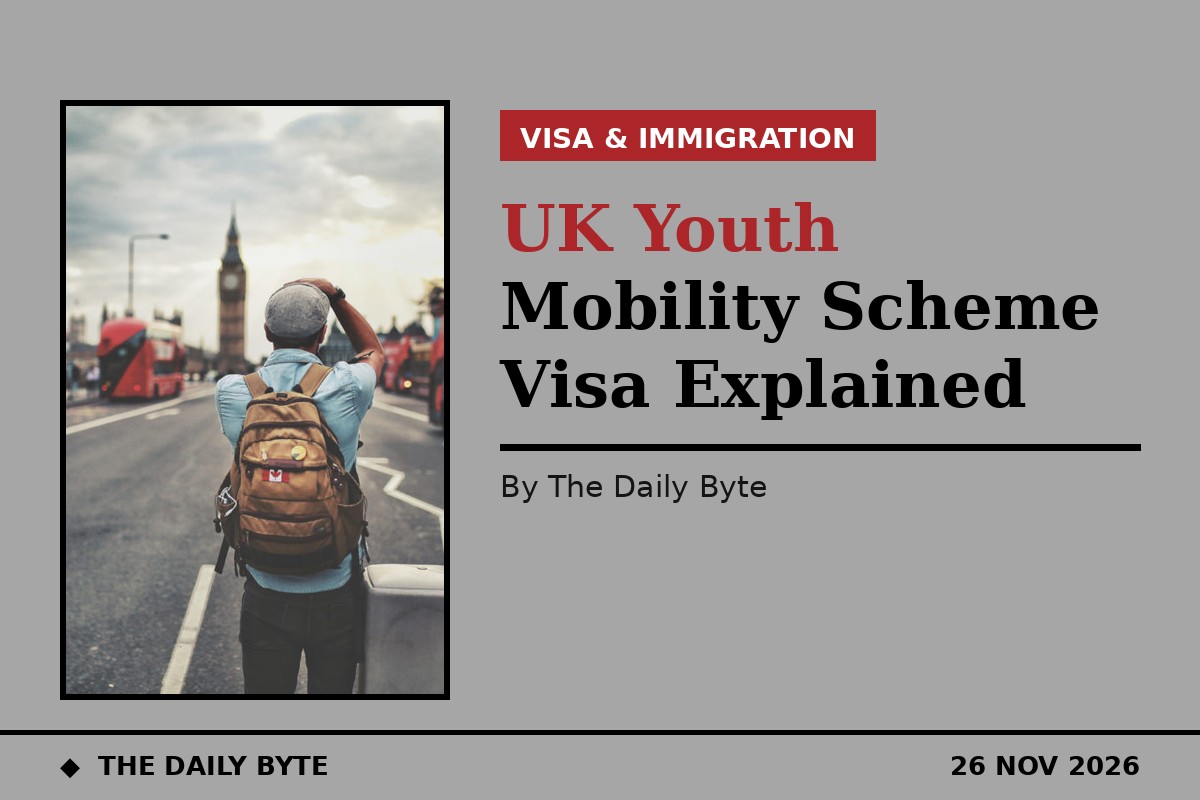
The Youth Mobility Scheme visa is the UK's working holiday visa. It lets young adults from a short list of countries and territories live and work in the UK for up to two years, without needing a job offer, a sponsor or an employer to back them. There is no points test and no requirement to have work lined up before you arrive. If you are the right age, from the right place, and can show you have enough savings, you can apply. It is one of the simplest UK visas to understand, but the details matter: the age limit is checked on the day you apply, some nationalities must win a place in a ballot first, and the visa does not lead to settlement.
This guide explains who can apply, which countries are covered, what it costs, how to apply, what you can and cannot do once you are here, and what happens when the two years end. It is general information, not personal immigration advice, and immigration rules change: always check the official GOV.UK page before you apply or book travel.
What is the Youth Mobility Scheme visa?
The scheme is a reciprocal arrangement: the UK opens its doors to young people from partner countries, and those countries do the same for young Britons. You can live in the UK, work in most jobs, be self-employed within limits, and study. You can enter and leave as often as you like while the visa is valid. You cannot claim public funds, you cannot bring family members on your application, and you cannot extend your stay beyond the visa, unless you are from Australia, Canada or New Zealand, who can extend once for a further year. The visa is granted for up to 24 months, and the earliest you can apply is six months before you travel.
It is not a route to settling in the UK. The scheme does not lead to indefinite leave to remain, and time spent on it does not count towards settlement in the way some work visas do. If you want to stay longer, you would normally need to qualify for a different visa, usually applied for from outside the UK after your Youth Mobility Scheme visa ends.
Who can apply? Countries and age limits
Eligibility turns on two things: your nationality and your age on the day you apply. Four countries have an upper age limit of 35: Australia, Canada, New Zealand and South Korea. You must be aged 18 to 35, meaning 35 or under when you apply, and 18 or over when your visa starts. You can apply before you turn 18 and be over 35 when the visa starts, because the age that counts is your age on the application date.
Everyone else on the list has an upper age limit of 30. That group is Andorra, Iceland, Japan, Monaco, San Marino and Uruguay, plus British overseas citizens, British overseas territories citizens and British nationals (overseas). You must be 30 or under when you apply and 18 or over when the visa starts.
Two nationalities cannot apply directly at all: if you hold a Hong Kong Special Administrative Region passport, or you are from Taiwan, you must first be selected in the Youth Mobility Scheme ballot before you can apply. The ballot runs twice a year, with a short registration window, and places are chosen at random. If you are selected, you will receive an email from the Home Office, and you must provide that email with your application. Indian nationals are not part of this scheme at all: there is a separate India Young Professionals Scheme visa, with its own ballot and its own rules, including a degree requirement.
There are also conditions that apply to everyone. You cannot apply if you have children under 18 who live with you, or children you are financially responsible for. You cannot apply if you have already been in the UK under the Youth Mobility Scheme, or under the old Working Holidaymaker visa. And you must have enough savings, as explained below.
How much does it cost?
There are three separate sums to budget for: the visa fee, the healthcare surcharge, and the savings you must show. The application fee is 340 pounds, paid when you apply. The immigration health surcharge, which gives you access to the NHS, is usually 776 pounds per year, paid upfront for the whole length of your visa, so 1,552 pounds for a standard two-year visa. Together, the fee and the surcharge come to 1,892 pounds before you have bought a flight.
On top of that, you must prove you have at least 2,530 pounds in savings. That money is not spent and not paid to the government: it stays in your bank account and is yours to use when you arrive. But you must show it has been available for at least 28 days in a row, and day 28 of that period must fall within 31 days of the date you apply. A bank statement that shows the money arriving the week before you apply will not pass. Plan the 28 days carefully, and keep the balance above 2,530 pounds for the whole period, because a single day below the line can mean a refusal.
If you are from Australia, Canada or New Zealand and later extend for a third year, you pay the 340 pound application fee and a further 776 pounds of health surcharge for the extra year.
How to apply, step by step
You must apply online from outside the UK, through GOV.UK. The earliest you can apply is six months before you travel: GOV.UK gives the example that if you plan to travel on 15 July, you can apply from 16 January. Once you have applied online, proved your identity and provided your documents, you will usually get a decision within three weeks, although you should allow extra time if you need an appointment.
As part of the application you will need to prove your identity. Depending on your nationality and passport, you will either use the UK Immigration: ID Check app to scan your identity document, or have your fingerprints and photograph taken at a visa application centre. Most visa application centres offer free appointments within five working days, but in some locations you will need to pay 76.50 pounds for a standard appointment, and you may have to travel to another country to reach your nearest centre.
The documents you must provide are a valid passport or other document that shows your identity and nationality, a bank statement showing you have at least 2,530 pounds in savings, and your tuberculosis test results if you are from a country where a test is required. Any document that is not in English or Welsh needs a certified translation. Some nationalities must provide extra documents: Andorra requires a criminal records certificate issued less than six months before you apply, Iceland requires a criminal certificate for private use called a Sakavottord, San Marino requires a letter from its foreign affairs department confirming you are suitable, and Uruguay requires a certificate of judicial records. If you are from Hong Kong or Taiwan, you must provide the Home Office email confirming you were successful in the ballot.
You can save your online form and complete it later, and you can pay to get a faster decision in some locations. If your application is successful, your decision email will tell you what you will get to prove your immigration status and what you need to do next. Most people now prove their status online through a UKVI account rather than a physical document, so set that up as soon as you are told to.
What you can and cannot do in the UK
You can work in most jobs, including full-time, part-time and temporary work, and you can change employers freely. You can study, although some courses require an Academic Technology Approval Scheme certificate. You can be self-employed and set up a company, as long as your premises are rented, your equipment is not worth more than 5,000 pounds, and you do not have any employees. You can leave the UK and come back at any time while your visa is valid.
You cannot work as a professional sportsperson, for example as a coach. You cannot get public funds, which means most benefits and homelessness assistance. You cannot bring family members with you on your application: they must apply separately for their own visa, if they qualify for one. And you cannot extend your stay unless you are from Australia, Canada or New Zealand. If you have a child while you are in the UK, the child does not automatically become a British citizen, and you must apply for their visa as your dependant if you want to travel in and out of the UK with them.
Extending your visa: Australia, Canada and New Zealand only
If you are from Australia, Canada or New Zealand, you can extend your Youth Mobility Scheme visa by one year after the two-year period ends, giving you up to three years in total. You can only extend once. You must apply online, no more than 28 days before your current visa expires, and you must be living in the UK with a valid visa when you apply. The extension costs the 340 pound application fee plus 776 pounds of health surcharge. You will usually get a decision within eight weeks, and you must not travel outside the UK, Ireland, the Channel Islands or the Isle of Man until you get it. The extended visa is valid from the day after your original visa ends.
What happens when the visa ends?
When your Youth Mobility Scheme visa ends, you must leave the UK unless you have been granted another visa. You cannot apply for a second Youth Mobility Scheme visa, and you cannot extend it, except for the one-year extension for Australians, Canadians and New Zealanders described above. If you want to stay, you would need to qualify under another route, such as a Skilled Worker visa with a sponsoring employer, and most such applications are made from outside the UK. Start planning well before your visa expires, because switching at the last minute rarely works.
One common confusion is worth clearing up. In 2025 the UK and the EU agreed to work towards a youth experience scheme for EU citizens. That is a separate, future arrangement, not part of the Youth Mobility Scheme, and no such scheme had opened at the time of writing. EU citizens are not eligible for the Youth Mobility Scheme visa unless they also hold one of the listed nationalities. If a new EU scheme opens, it will have its own rules and its own GOV.UK page.
Common mistakes to avoid
The most common reasons applications go wrong are avoidable. Applying before the savings have sat in your account for 28 days is the first: count the days from the date the balance first reached 2,530 pounds, and make sure day 28 falls within 31 days of applying. Applying after your 31st or 36th birthday is the second: the age limit is judged on the day you apply, not the day you travel. Forgetting the ballot is the third: Hong Kong and Taiwan applicants who apply without being selected will be refused. And booking non-refundable travel before a decision is the fourth: decisions usually arrive within three weeks, but they can take longer, and a refused application does not refund a flight.
Fees and rules change, sometimes at short notice: the application fee and the health surcharge have both risen in recent years, so the figures in this guide are correct as of November 2026 and should be checked on GOV.UK before you pay. If your case is complicated, for example because of a previous refusal or a criminal record, consider speaking to a regulated immigration adviser before applying. This guide is general information, not personal immigration advice.