EU tuition fee cut could cost universities £785m
Britain's universities have warned that cutting tuition fees for students from the European Union could leave the sector facing a shortfall of up to £785m a year, in the first serious row over the costs of the UK-EU deal agreed in Brussels on Friday.
The warning came from vice-chancellors who said the government had not explained how universities would be compensated if EU undergraduates and postgraduates were charged the same fees as home students. Under the agreement, the two sides have six months to settle the fees question, and Brussels has signalled that the wider deal could stall without an answer.
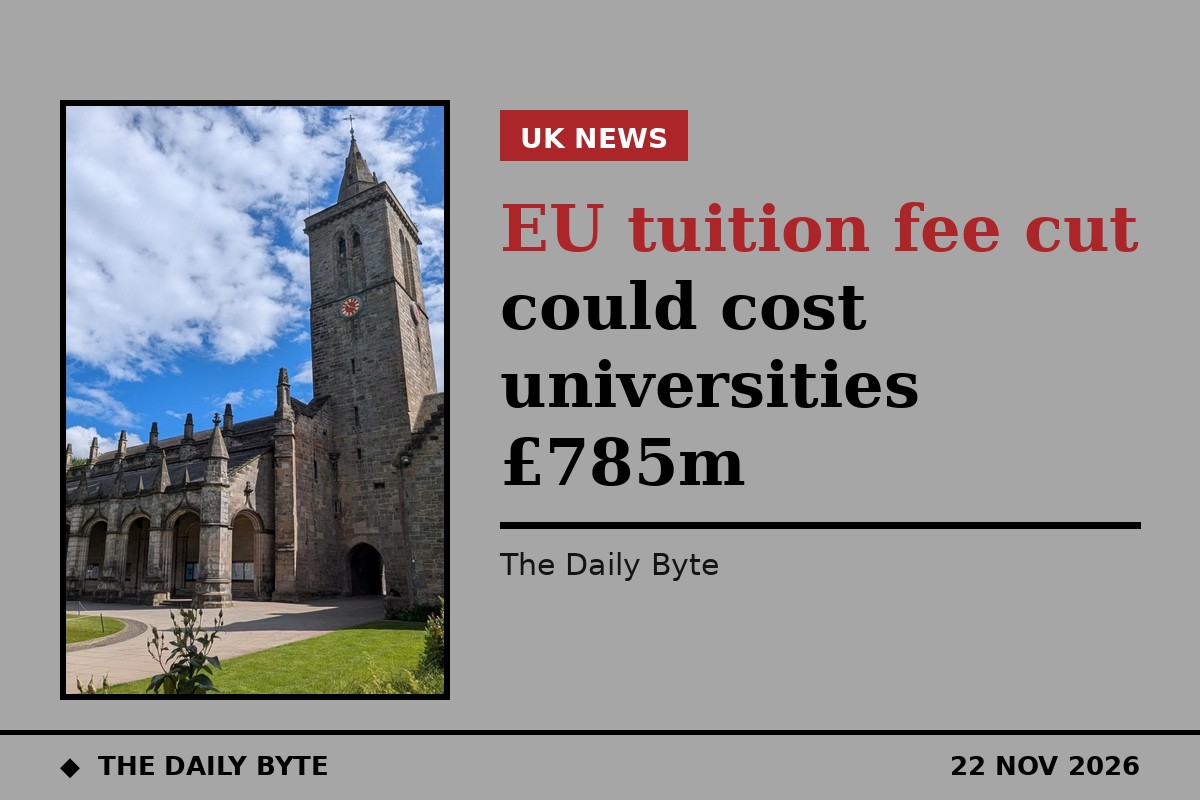
St Andrews faces a £12m hit
Professor Dame Sally Mapstone, vice-chancellor of the University of St Andrews, said her institution would lose about £12m a year in undergraduate tuition income alone if EU fees were cut to home levels. St Andrews, ranked first in The Sunday Times Good University Guide 2027, charges international students, including those from the EU, £33,000 a year for arts and science degrees, and has 630 EU undergraduates, about 7 per cent of its student body.
Mapstone said the cost of educating a student was about £15,000 a year, and urged the government to act "practically and pragmatically and not just politically" during the six-month window. She welcomed closer ties with Europe but warned that "unless we sort out the important financial practicalities of this, the unintended consequences for higher education in the UK could be considerable".
A sector-wide bill of up to £785m
Analysis by The Sunday Times suggests that charging EU students at home rates could cut what universities collect from European undergraduates and postgraduates from just under £1.058bn to about £273m, leaving an annual gap of as much as £785m. The paper warns that the shortfall could have to be filled by higher fees for UK students, further cuts, or taxpayer support.
The University of Manchester's vice-chancellor, Professor Duncan Ivison, said it was a "good thing" to have closer UK-EU relations, but added that "the issue of tuition fees is something we do have to figure out because there is a cost". He told the BBC that without compensation or extra funding, the change "would take £500 million, we estimate, out of the higher education sector at a time where there's a lot of pressure on the sector".
What the fees row is about
Since Brexit, EU students in the UK have generally paid international fees, which can reach up to £38,000 a year. Home fees are currently £9,970 in England and Wales, £4,985 in Northern Ireland, and free for Scottish students studying in Scotland. Brussels wants EU students to pay home fees again, while the UK government insists the fees question is not linked to the deal agreed on Friday.
Foreign Secretary Ed Miliband said on Saturday that the package covering food exports, energy and youth mobility would come into force regardless of whether a fees agreement is reached. The Conservatives, meanwhile, warned that linking the UK with the EU emissions trading system would push up household energy and fuel bills, and said they would scrap the deal.
The government plans to introduce its Cutting Costs Bill, the legislation for the Brussels package, to Parliament on Thursday. Universities will be watching closely: as Mapstone put it, extending a welcome to EU students is something the sector endorses, but "what is not being explicitly addressed is the cost of educating those students".