Vance Weighs Iran Talks as Tehran Calls Reports Baseless
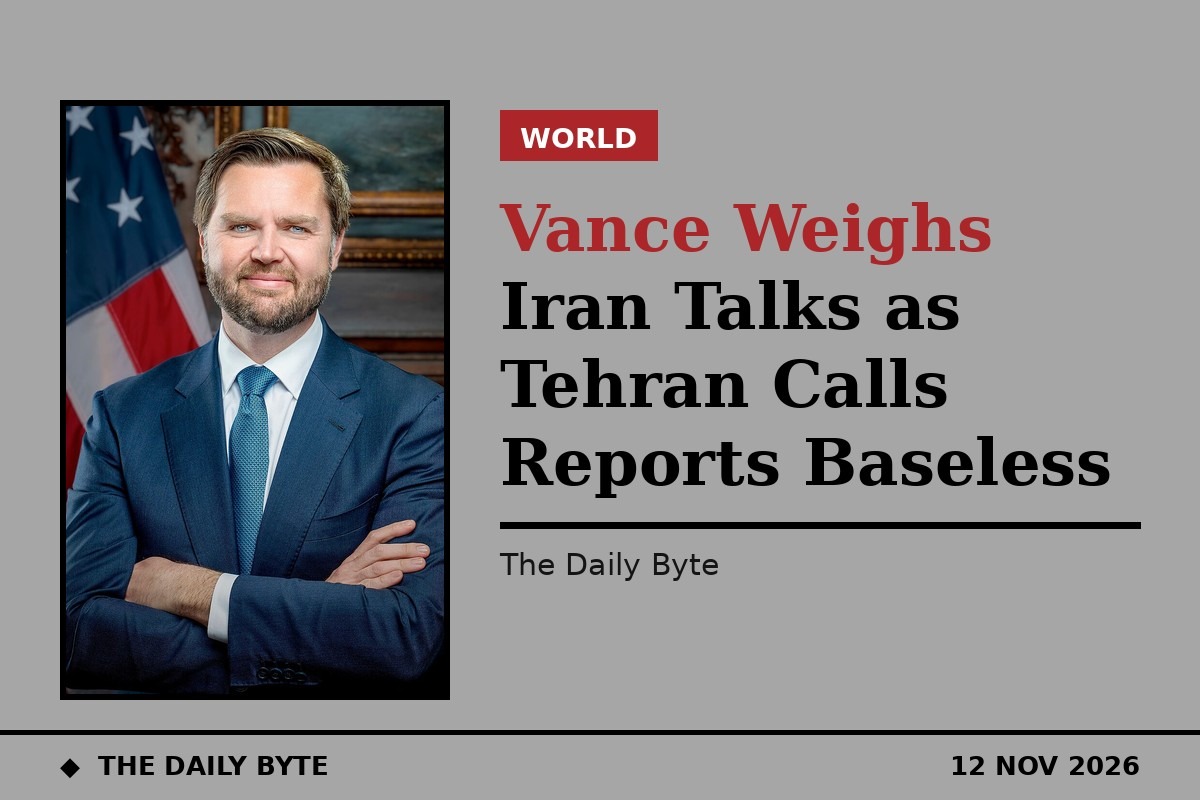
US Vice President JD Vance is considering face-to-face talks with Iran's top security official, Mohsen Rezaei, in an effort to end the war between the United States, Israel and Iran, The Wall Street Journal reported on 11 November. President Donald Trump has empowered Vance to lead the diplomatic effort, according to officials cited by the newspaper, although no meeting has been scheduled and discussions remain at a preliminary stage.
The report is the clearest sign yet that Washington is testing a direct channel to Tehran after months of fighting, a naval blockade and a closed Strait of Hormuz. It also underlines how far apart the two sides remain in public: within hours of the report emerging, senior Iranian officials dismissed it as fiction.
What the Wall Street Journal reported
According to the Journal, Vance sent Rezaei a letter in October requesting a meeting, and the two sides have since been discussing next steps through mediators. No date has been set, and Doha is seen as a possible venue. On Monday 9 November, Vance met Qatar's prime minister and later joined Trump, the newspaper said, as Qatar continues to act as the main go-between.
A meeting between a US vice president and a senior Iranian security official would be highly unusual. Rezaei is secretary of Iran's Supreme National Security Council and has become Tehran's most prominent public voice on the war, setting out its conditions for reopening the Strait of Hormuz and returning to talks.
The Journal's account followed days of speculation in Iranian and Turkish media. Turkey's intelligence chief, Ibrahim Kalin, said on 9 November that Qatar was expected to host a meeting between Vance and Rezaei the following week, describing it as an important opportunity for a breakthrough. Iranian media also carried reports of a planned meeting, attributed to the semi-official Mehr news agency.
Tehran: 'completely false and baseless'
Iran's leadership has rejected the reports outright. Rezaei said US claims of continuing negotiations or a planned meeting in Qatar were "completely false" and insisted Iran was "not currently conducting any negotiations with the Americans".
Foreign Minister Abbas Araghchi took the same line. "These speculations and media reports are entirely baseless, and there are no plans to hold such a meeting," Araghchi told the Iranian news agency IRNA on 10 November. A senior Iranian security official told Press TV the same day that a potential meeting was "off the table" unless Washington met Tehran's conditions.
Those conditions, set out repeatedly by Rezaei and Araghchi, include lifting the US naval blockade of Iranian ports, releasing frozen Iranian assets, easing oil sanctions and ending fighting on all fronts, including in Lebanon. Rezaei has said Tehran has already communicated its terms and is waiting for a clear American response, which he described as insufficient and deceptive.
Rubio: no need for major combat
The diplomatic signals from Washington have been mixed. Speaking to reporters in Paris on 10 November after two days of G7 foreign ministers' talks, Secretary of State Marco Rubio said Trump "really doesn't have any need to conduct major combat operations" against Iran, because the naval blockade and sanctions were doing the work.
Rubio also said Washington had asked other countries to help protect shipping in the Strait of Hormuz but had received no response from his G7 counterparts. The strait has been effectively shut to most commercial traffic since the war began on 28 February, and Iran says it will stay closed until its conditions are met.
For now, the gap between the two sides is stark. Washington is publicly exploring a senior-level meeting while insisting the economic pressure campaign continues; Tehran denies any talks are under way and says it will not negotiate until its demands are answered. Whether the Vance channel produces a real meeting — or joins the long list of reported contacts that both sides later denied — will become clear in the coming days.