Most Seats Now Back Rejoining the EU, Poll Finds
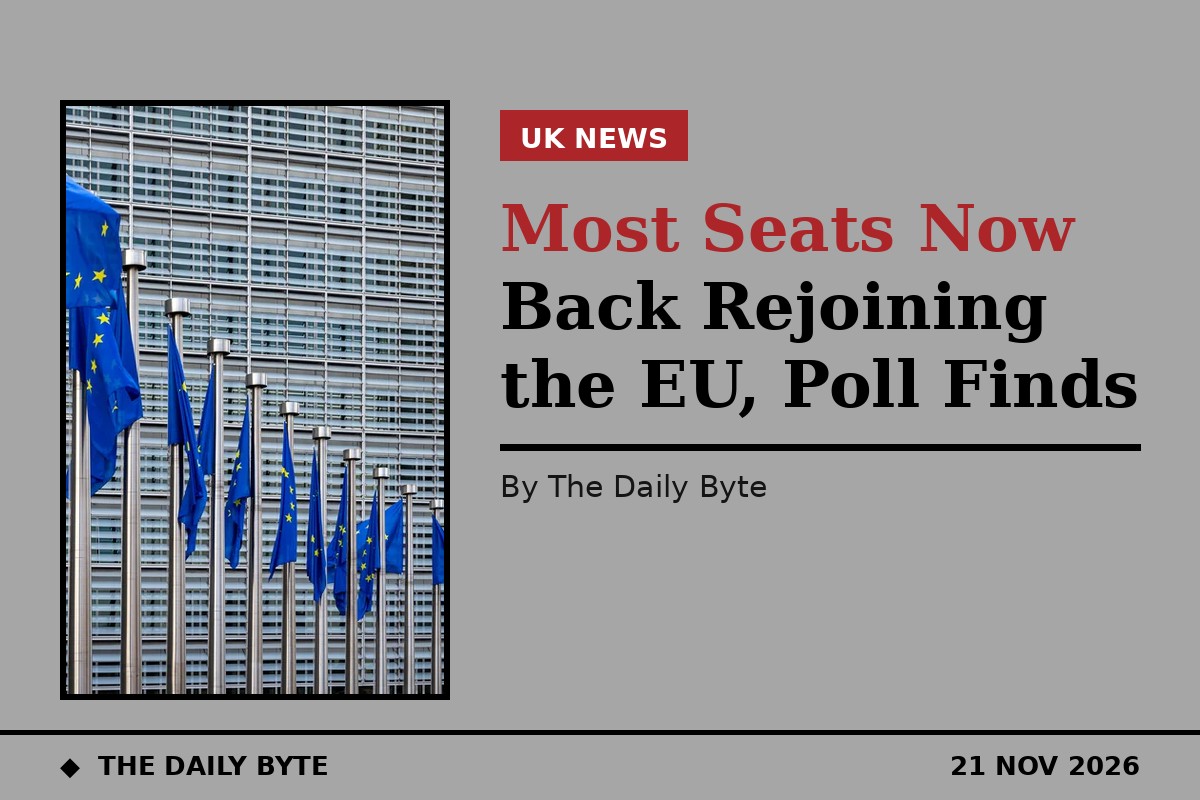
Voters in four out of five parliamentary seats across Great Britain now back rejoining the European Union, according to new constituency-level polling published on Friday. The survey of more than 7,000 people, carried out this month by Fortius Global, found that 512 of the 632 seats on the 2024 boundaries favour rejoining, while 73 back staying out and 47 are too close to call.
The findings will strengthen Prime Minister Andy Burnham's case for opening a debate on returning to the EU, days after he struck a reset deal with Brussels covering food trade, emissions trading and a youth mobility scheme. The prime minister has said he wants the United Kingdom to achieve as close as possible a relationship with the bloc, and Foreign Secretary Ed Miliband has said rejoining is on the table in future talks.
Support for rejoining was estimated at 58.3% in England, 68.9% in Scotland and 57.9% in Wales. The analysis found that voters in 274 of the 394 constituencies estimated to have voted Leave in the 2016 referendum would now like to rejoin, including the prime minister's own constituency of Makerfield and Conservative leader Kemi Badenoch's seat of North West Essex, where rejoining is predicted to lead by 59.4%.
Leave seats switch sides
About two-thirds of the current cabinet hold seats believed to have voted to leave the EU in 2016. The modelling suggests voters in many of those areas have changed their minds, including the Wigan seat of Culture Secretary Lisa Nandy and the Sheffield Heeley seat of First Secretary of State Lou Haigh.
Fortius Global, formerly the Messina Group, was founded by former Barack Obama pollster Jim Messina and also worked for the Remain campaign in 2016. Polling has consistently shown support for returning to the EU growing this year, and Burnham floated the idea in his party conference speech before travelling to Brussels on Friday for a summit with EU leaders.
At that summit the two sides agreed to scrap most checks on British food exports, link their emissions trading systems and open a youth experience scheme that could allow 100,000 young Europeans to work temporarily in the UK, with Britons able to do the same on the continent. Burnham described the package as a good day for Britain and a good day for Europe, and said the next 12 months would be spent informally exploring options for a closer long-term relationship.
Labour could gain from rejoining, poll suggests
The Fortius polling also suggests that campaigning to rejoin the EU could boost rather than harm Labour's electoral chances. Its modelling put Labour on an average of about 370 seats under the current EU ties, rising to 451 under associate membership, 454 under the single market and 475 under full EU membership. Labour's modelled vote share was highest under full membership, at 36.6%.
That finding cuts against the caution of some Labour ministers and MPs who hold previously Leave-voting seats and have privately expressed nerves about reopening the debate. It also comes as opponents of rejoining organise: those who campaigned for Brexit have begun to fight back this week with the launch of a new movement backed by Michael Gove called Stay Out, while Reform UK leader Nigel Farage has warned that people could take to the streets in protest if Brexit is reversed.
None of the polling settles the question. Constituency-level modelling is an estimate built from a national survey, not a vote, and the 47 seats described as too close to call show how much uncertainty remains. Northern Ireland's 18 seats were not included in the modelling, which covered Great Britain only. But the direction of travel is clear: in seat after seat that voted Leave a decade ago, the balance of opinion has moved, and the political argument over Britain's relationship with Europe is now firmly open again.