What Are Forever Chemicals? PFAS in Rivers Explained
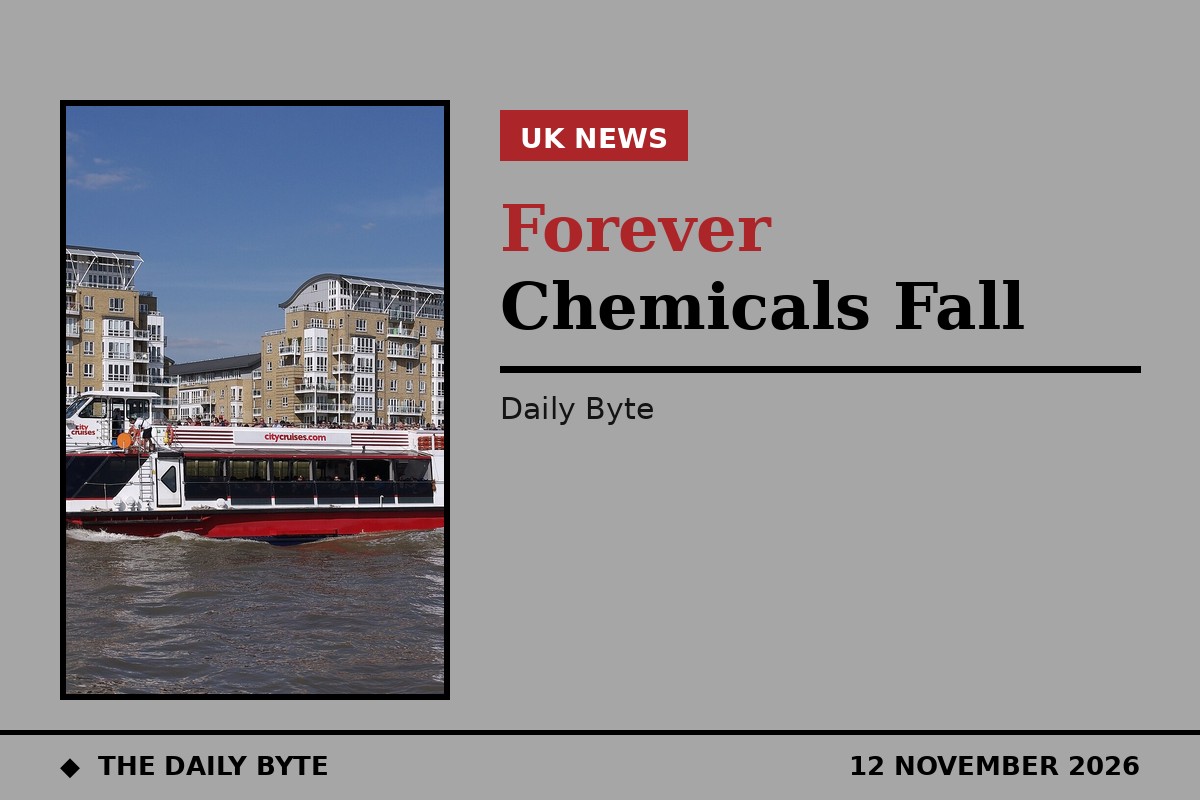
Levels of the two most toxic “forever chemicals” in England’s rivers have fallen by nearly a third over the past decade, according to a new Environment Agency report published on 12 November 2026. Concentrations of PFOS fell by around 30% between 2016 and 2025, and PFOA by 29%, while PFOS in freshwater fish fell by about 49%. But the report also warns that the wider problem is far from over. Here is what forever chemicals are, why they matter, and what the new findings really mean.
What are forever chemicals?
“Forever chemicals” is the common name for PFAS, short for per- and polyfluoroalkyl substances: a large family of man-made chemicals prized for repelling water and grease and resisting heat. They are used in non-stick cookware, waterproof clothing, food packaging, firefighting foams and many industrial processes. They are called forever chemicals because they barely break down in the environment or in the human body. The family includes more than 10,000 chemicals, of which around 200 are in frequent use.
What did the new Environment Agency report find?
The report, PFAS sources, pathways and environmental data (2026), updates the agency’s previous assessment from 2021 with more data and better monitoring. Between 2016 and 2025, PFOS concentrations in English rivers fell by around 30% and PFOA by 29%, and PFOS in freshwater fish declined by approximately 49%. The agency attributes the falls to restrictions on the use of these chemicals, changes in how they are used, and targeted regulatory action. PFOS was all but banned in the UK in 2010 and PFOA in 2020, after growing evidence of links to tissue damage in animals and increased rates of serious health conditions such as testicular cancer. PFOA is classified as carcinogenic to humans by the International Agency for Research on Cancer.
Why are levels falling?
The short answer is that bans work. PFOS was listed under the Stockholm Convention, the global treaty on persistent pollutants, in 2009, and PFOA followed in 2019. With the chemicals largely removed from new products, less is entering rivers. The Environment Agency’s chief scientist, Dr Robert Bradburne, called the falls encouraging, and Dr David Megson, a reader in environmental forensics at Manchester Metropolitan University, described the progress as “brilliant”.
Is the problem solved?
No. The report makes clear that PFAS remain widespread across the rivers, lakes, groundwater, estuaries and coastal waters monitored, reflecting decades of historic use and continuing releases from some sources. The agency also acknowledged that while concentrations have fallen, the total amount of these chemicals in the environment is likely unchanged, because they take so long to break down: they have simply been diluted and washed out to sea. Meanwhile the chemicals that replaced PFOS and PFOA are now turning up in waterways, including short-chain PFAS and fluorotelomer compounds, and trifluoroacetic acid (TFA), an ultra-short-chain PFAS, is now found widely across England.
What happens next?
The findings will support the UK’s first ever PFAS Plan, published by the government earlier this year, which aims to better protect people and the environment from these persistent chemicals. The Environment Agency is now regularly testing for 60 other PFAS to build a fuller picture of contamination across the country, and the government has announced plans to monitor PFAS levels in human bodies. The agency says the evidence will help show where further action is needed, and that the reductions in the two legacy chemicals prove regulation can work.
Frequently asked questions
Are forever chemicals in drinking water? PFAS have been detected in water sources in England, which is why the regulator is expanding monitoring to 60 further PFAS compounds. Drinking water in England is regulated and tested by water companies, and the Environment Agency’s report covers rivers and the wider environment rather than tap water specifically.
Can I avoid PFAS? Exposure is hard to avoid entirely because the chemicals are so widely used, but reducing use of non-stick cookware, stain-resistant treatments and grease-proof food packaging can cut personal exposure. The main route to lower levels overall is regulation of the chemicals at source.
Where can I read the official report? The Environment Agency’s report and the government’s announcement are published on GOV.UK. Source: GOV.UK, New report shows progress in cutting levels of ‘forever chemicals’ in England’s rivers.