What Is a UK Ancestry Visa? Eligibility and Fees
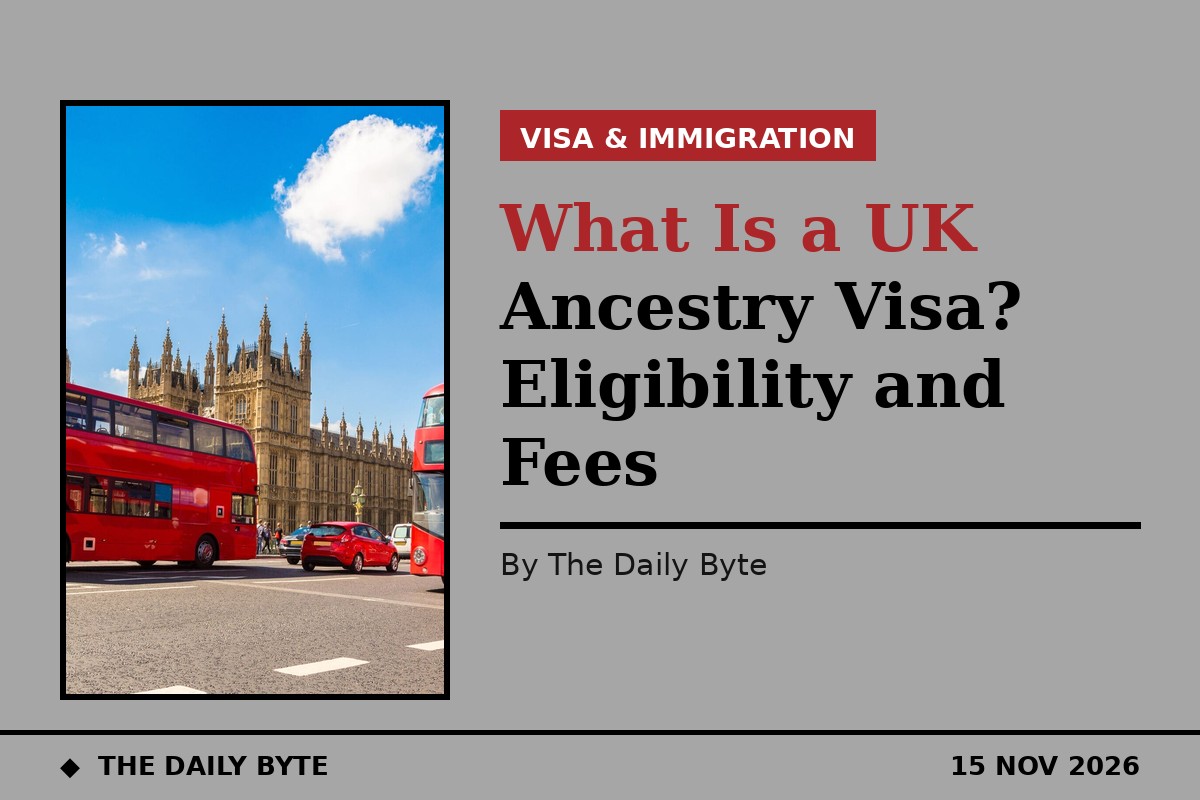
If one of your grandparents was born in the UK, the Channel Islands or the Isle of Man, you may be able to live and work in Britain for five years without an employer sponsor, a salary threshold or a points test. That is the UK Ancestry visa, one of the oldest work routes in the Immigration Rules, and it remains popular with Commonwealth citizens in Canada, Australia, New Zealand, South Africa and elsewhere whose families left Britain a generation or two ago.
This guide explains who qualifies, what it costs, what documents you need and how the route leads to settlement, as the rules stand on 15 November 2026, using the official GOV.UK guidance. Immigration rules change, and a settlement reform announced in early November 2026 has not yet become law, so always check the official GOV.UK page linked at the end before you apply. This article is general information, not personal immigration advice.
What is a UK Ancestry visa?
A UK Ancestry visa lets an eligible person come to the UK to live and work for five years. There is no employer sponsor and no job offer requirement. You can work in almost any job, employed or self-employed, full-time or part-time, paid or voluntary, and you can also study. After five years in the UK on this visa, you may be able to extend it for a further five years, or apply to settle permanently in the UK, known as indefinite leave to remain.
The route is unusual among UK work visas because it is based on family history rather than on a job. What it asks for instead is proof of that history, proof that you can support yourself without public funds, and proof that you can and plan to work in the UK. It is also one of the few routes with a hard limit that catches people out: you cannot switch into it from inside the UK if you arrived on a different visa. You must apply from outside the UK, before you travel.
Who can apply?
You can apply for a UK Ancestry visa if you are a Commonwealth citizen, a British overseas citizen, a British overseas territories citizen, a British national (overseas), or a citizen of Zimbabwe. Canada, Australia and New Zealand are Commonwealth countries, so their citizens qualify on nationality. Citizens of the United States do not, because the United States is not a Commonwealth country.
You must also prove that one of your grandparents was born in the UK, the Channel Islands or the Isle of Man, and meet the other eligibility requirements. GOV.UK says you must prove that you are 17 or over, that you have enough money, without help from public funds, to support and house yourself and any dependants, and that you can and plan to work in the UK. There is no English language test at the visa stage and no minimum salary. The English language requirement and the Life in the UK Test apply later, at settlement, if you are aged 18 to 64.
Proving your ancestry: what counts and what does not
The ancestry test is specific about where and how your grandparent was born. Your grandparent must have been born in the UK, the Channel Islands or the Isle of Man, or before 31 March 1922 in what is now Ireland, or on a ship or aircraft that was registered in the UK or belonged to the UK government. You prove the chain with full, long-form birth certificates: your own, your parent’s and your grandparent’s, showing the names that link each generation to the next.
Two points in the rules surprise many applicants. First, you can claim ancestry if you or your parent were adopted, and if your parents or grandparents were not married. Second, you cannot claim UK ancestry through step-parents, however close the family relationship feels. If your parents or grandparents changed their name since birth, for example through marriage, civil partnership or deed poll, you will need evidence of the change, such as a marriage or civil partnership certificate. If adoption is part of your chain, you will need the legal adoption papers.
How much does a UK Ancestry visa cost?
A UK Ancestry visa costs £726 for each person applying. You may also have to pay the Immigration Health Surcharge as part of your application. GOV.UK sets the surcharge at £1,035 a year for most visa and immigration applications, which means £5,175 over a five-year visa. Each dependant pays the same application fee and their own healthcare surcharge, with a lower surcharge rate of £776 a year for applicants under 18.
There are further fees later in the route. Extending the visa from inside the UK costs £1,407 per person, plus the healthcare surcharge. Applying for indefinite leave to remain costs £3,226 per person. You can also pay to get a faster decision on a settlement application: the super priority service costs an extra £1,000. Fees change, so confirm the current figures on the GOV.UK fees pages before you apply.
How to apply and how long it takes
You must apply online for a UK Ancestry visa before you travel to the UK. The earliest you can apply is three months before you travel. As part of the online application you will need to book an appointment at a visa application centre to prove your identity, where your fingerprints and photograph, known as biometric information, will be taken. You will need to take your passport with you to the centre, and you will usually be able to collect it on the day.
Once you have applied online, proved your identity and provided your documents, you should get a decision within three weeks when you apply from outside the UK. You may be able to pay to get a faster decision. Your decision will arrive by email and will explain what you need to do next. If your application is refused, the email should explain why, and the most common reasons are a missing link in the birth-certificate chain, bank statements that are out of date, or weak evidence that you plan to work in the UK.
What you can and cannot do
With a UK Ancestry visa you can work, study, and bring your partner or child as a dependant. Your work can be paid or voluntary, full-time or part-time, in self-employment or in a job where you are employed by someone else. You cannot change, or switch, into this visa if you came to the UK on a different visa, and you cannot get public funds. That no-switching rule is absolute for the main applicant: if you are already in the UK on another visa and you discover you have a qualifying grandparent, you cannot change into the Ancestry route from inside the UK. You would need to leave and apply from abroad.
Documents you will need
When you apply you will need to provide a current passport or another valid travel document, your full birth certificate, and the full birth certificates of the parent and grandparent your ancestry claim is based on. You will also need evidence that you are planning to work in the UK, for example job offers you have received or a business plan if you are self-employed, and evidence, such as bank statements, that you can support yourself and any dependants in the UK. The bank statements must be dated within 31 days of the date you submit your application.
Depending on your circumstances, you might also need evidence of name changes, legal adoption papers, tuberculosis test results if you are from a country where you have to take a TB test, and proof of your relationship with your partner or children if they are applying with you. Children born while you are in the UK do not automatically become British citizens. You must apply for their dependant visa before they turn 18 if they want to stay in the UK, and you will need a full UK birth certificate for each child, showing the names of both parents.
Bringing your partner and children
Your partner and children can apply to join you in the UK as your dependants if they are eligible. A dependant is your partner, your child under 18, or your child aged 18 or over who was previously on your or your partner’s visa as a dependant. You will need to provide evidence of your relationship when you apply. For a partner, that means proving you are in a civil partnership or marriage recognised in the UK, or that you have been living together in a relationship for at least two years, or have been in a relationship for at least two years but cannot live together, for example because you are working in different places or it is not accepted in your culture.
Your child must live with you, unless they are in full-time education at boarding school, college or university, must not be married or in a civil partnership and must not have children of their own, and must be supported by you without using public funds. Your partner or child can work, except as a sportsperson or coach, study, travel abroad and return to the UK, and apply to settle permanently if they have lived in the UK for five years and meet the other eligibility requirements. They cannot apply for most benefits, or the State Pension.
Your partner or child must apply online for a UK Ancestry visa from outside the UK, with their fingerprints and photograph taken at a visa application centre. There are limits on switching for dependants already in the UK: they cannot switch if they are on a visitor visa, a short-term study visa, a Parent of a Child Student visa, a Seasonal Worker visa, a Domestic Workers in a Private Household visa, or immigration bail. If they are in one of those categories, they must leave the UK and apply from abroad.
Extending your visa and settling in the UK
You can apply to extend your visa and stay in the UK for a further five years, as many times as you like, as long as you still meet the eligibility requirements. You must apply before your current visa expires. Once you have applied you can stay in the UK until you have been given a decision, as long as you applied before your last visa expired, but you must not travel outside the UK, Ireland, the Channel Islands or the Isle of Man until you get a decision, or your application will be withdrawn. You will usually get a decision within eight weeks. Your partner or child’s visa will not automatically extend if you extend yours; they can apply at the same time as you, or at any time before their current visa expires.
You may be able to apply for indefinite leave to remain if you have spent five continuous years in the UK on a UK Ancestry visa. In most cases you must have spent no more than 180 days outside the UK in any 12-month period. You must also prove you have enough money to support yourself and your dependants, can and plan to work in the UK, and are still a Commonwealth citizen. If you are aged 18 to 64 you will need to meet the English language requirements and book and pass the Life in the UK Test. The earliest you can apply is 28 days before you have been in the UK for five years, and your application may be refused if you apply earlier. It costs £3,226 for each person, and you will usually get a decision within six months using the standard service. Indefinite leave to remain gives you the right to live, work and study in the UK for as long as you like, and you can use it to apply for British citizenship.
Settlement reform: what may change
The five-year route to settlement is the part of the Ancestry visa most likely to change. On 2 November 2026 the Home Secretary confirmed the government’s earned settlement policy, under which the standard qualifying period for indefinite leave to remain would rise from five years to ten for most migrants, with shorter routes for higher earners and specified public-service roles. That policy is announced government policy, not yet law: the Immigration Rules have not yet been changed, the consultation response was published on 2 November 2026, and the detailed operation of the new pathways, including how they apply to individual routes such as Ancestry, will depend on the final Immigration Rules. Until a Statement of Changes is laid and comes into force, applications are decided under the current rules. If you are planning around a five-year settlement date, check the official GOV.UK pages and the Home Office consultation response before you rely on it.
Check before you apply
Three checks prevent most problems. First, trace the birth-certificate chain before you pay anything: if a grandparent’s birth was never registered, or a certificate is missing, the application cannot succeed on ancestry alone. Second, make sure your bank statements are dated within 31 days of submission and show enough money to support and house yourself and any dependants without public funds. Third, prepare real evidence that you can and plan to work, such as job offers or a business plan, rather than a bare statement of intent. The official source for every figure in this guide is the GOV.UK UK Ancestry visa page and the GOV.UK healthcare surcharge page, linked below. Rules and fees change, so confirm the current position there before you apply.