What Is a UK Graduate Visa? Explained
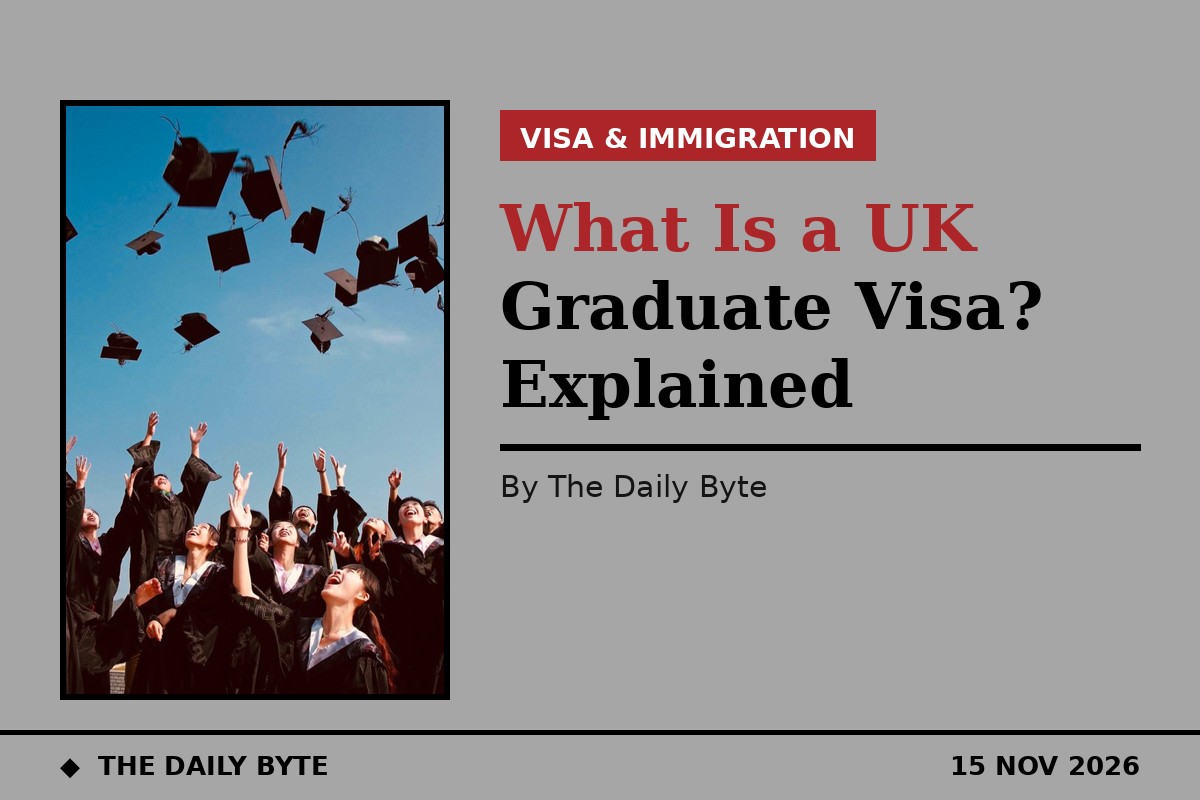
A UK Graduate visa lets you stay in the UK for two years after successfully completing an eligible UK degree, without needing a job offer or a sponsor. The length depends on when you apply: two years if you apply on or before 31 December 2026, and 18 months if you apply on or after 1 January 2027. If you have a PhD or other doctoral qualification, the visa lasts for three years either way. You must apply from inside the UK before your Student visa expires, and you cannot extend a Graduate visa — but you may be able to switch to a different visa, such as a Skilled Worker visa.
This guide explains who can apply, what it costs, how to apply, and what changes on 1 January 2027, using the rules published on GOV.UK and checked on 15 November 2026. Immigration rules change often, so always check the official GOV.UK page before you apply. This article is general information, not personal immigration advice.
Graduate visa at a glance
| Item | Detail (checked 15 November 2026) |
|---|---|
| What it is | Permission to stay and work in the UK after completing an eligible UK course |
| Job offer needed? | No — no job offer and no sponsor required |
| How long it lasts | 2 years if you apply on or before 31 December 2026; 18 months if you apply on or after 1 January 2027; 3 years for a PhD or other doctorate |
| Can it be extended? | No — but you may be able to switch to another visa |
| Application fee | £937 per person |
| Healthcare surcharge | Usually £1,035 for each year of the visa |
| Total cost, one person | £3,007 for 2 years; £2,489.50 for 18 months; £4,042 for 3 years (PhD) |
| Decision time | Usually within 8 weeks |
| Where to apply | Online, from inside the UK, before your Student visa expires |
| Official source | GOV.UK: Graduate visa |
Who can apply for a Graduate visa?
You can apply for a Graduate visa if all of the following are true: you are in the UK; your current visa is a Student visa or a Tier 4 (General) student visa; you studied a UK bachelor’s degree, postgraduate degree or other eligible course for a minimum period of time with that visa; and your education provider has told the Home Office you have successfully completed your course. You do not have to wait until you have graduated or been given a certificate — you can apply once your provider has reported your successful completion. If you are unsure whether your provider has done so, ask them.
Your education provider must be a licensed sponsor with a “track record of compliance”. GOV.UK says you can check this in the register of sponsors: the provider’s status column will read “Student Sponsor – Track Record”. Most UK universities hold this status, but it is worth checking before you plan around the route.
Eligible courses are usually a UK bachelor’s degree, a UK master’s degree, or a UK PhD or doctorate. You can also apply if you completed a law conversion course approved by the Solicitors Regulation Authority, the Legal Practice Course in England and Wales, the Solicitors Course in Northern Ireland or a Diploma in Professional Legal Practice in Scotland, the Bar Practice Course in England and Wales or the Bar Course in Northern Ireland, a Postgraduate Certificate in Education (PGCE), or a Postgraduate Diploma in Education (PGDE). You may also qualify if passing your course made you eligible for a job regulated by UK law or a UK public authority. If you are on a Student visa because you are a Student Union Sabbatical Officer, you can apply if you successfully completed one of these courses in the UK just before you started your current visa.
You must also have studied in the UK for long enough: at least 12 months if your course’s total length is more than 12 months, or the total length of your course if it is shorter than 12 months. Studying in the UK means you were in the UK when your provider needed you to be there — for example, to attend lectures or meet a tutor. GOV.UK gives the example of a one-year master’s degree: leaving the UK during term breaks or at weekends still counts as studying in the UK for one year. Special rules apply if you had to study outside the UK because of coronavirus between 24 January 2020 and 30 June 2022.
The big change: two years becomes 18 months on 1 January 2027
The length of a Graduate visa depends on the date you apply, not the date you graduate. GOV.UK sets out the rule in a short table, and it is the single most important fact about the route for anyone finishing a course in late 2026 or early 2027.
| When you apply | Bachelor’s or master’s graduate | PhD or other doctoral graduate |
|---|---|---|
| On or before 31 December 2026 | 2 years | 3 years |
| On or after 1 January 2027 | 18 months | 3 years |
That means 31 December 2026 is the last day to apply for a two-year Graduate visa. Applying in December instead of January keeps six extra months to live and work in the UK, and six extra months to find a sponsored job and switch to a Skilled Worker visa. The change was set out in the Statement of Changes HC 1333, laid on 14 October 2025, and it is already in the Immigration Rules. Your visa starts on the day your application is approved, not the day you apply, so an application made in December 2026 still gets the two-year grant even if the decision arrives in January.
There is one timing trap to avoid. You must apply before your Student visa or Tier 4 visa expires, and you can only apply after your education provider has told the Home Office you have successfully completed your course. If your provider is slow to report your completion, or your Student visa expires before the end of December, the deadline may be out of your hands — so check with your provider early and do not leave the application to the last days of the year.
How much does a Graduate visa cost?
When you apply, you pay the £937 application fee and the immigration health surcharge, which is usually £1,035 for each year you will be in the UK. The surcharge is charged for the full length of the visa, so the total cost depends on how long your visa lasts.
| Visa length | Application fee | Healthcare surcharge | Total for one person |
|---|---|---|---|
| 2 years (apply by 31 December 2026) | £937 | £2,070 | £3,007 |
| 18 months (apply from 1 January 2027) | £937 | £1,552.50 | £2,489.50 |
| 3 years (PhD or other doctorate) | £937 | £3,105 | £4,042 |
Each family member who applies pays the same fee and surcharge. The 18-month total is lower than the two-year total because the surcharge covers a shorter period — but the shorter visa also gives you less time to find sponsored work. If you work in public-sector healthcare, check whether you are eligible for the Health and Care Worker visa instead: it is cheaper to apply for and you do not need to pay the annual immigration health surcharge. If you get a job in public-sector healthcare after you have paid the surcharge, you may be able to get a refund.
How to apply, and how long a decision takes
You must apply online for a Graduate visa, from inside the UK. You will need a valid passport or other travel document showing your identity and nationality, and the Confirmation of Acceptance for Studies (CAS) reference number from when you applied for your Student visa. If you cannot find your CAS number, ask your education provider. You may also be asked for proof of your relationship with your partner or children, or a letter from a scholarship or sponsorship provider approving your application if they paid for both your course fees and living costs in the last 12 months. Documents not in English or Welsh need a certified translation.
You prove your identity either through the “UK Immigration: ID Check” app or by having your fingerprints and photograph taken at a UK Visa and Citizenship Application Services service point. If you need to attend a service point, you must not travel outside the UK, Ireland, the Channel Islands or the Isle of Man until you get a decision, or your application will be withdrawn.
Once you have applied online, proved your identity and provided your documents, you will usually get a decision within eight weeks. You can stay in the UK while you wait for a decision. If your application is successful, you will get an eVisa — a digital record of your identity and immigration status — and your decision email or letter will tell you how to access it through a UKVI account.
What you can and cannot do on a Graduate visa
A Graduate visa is deliberately flexible. You can work in most jobs, look for work, be self-employed, continue living in the UK with your partner and children if they are eligible, travel abroad and return to the UK, and do voluntary work. There is no minimum salary and no list of eligible occupations, which is the main difference from the Skilled Worker visa. You can also study, but only if your chosen course is not eligible for a Student visa — if it is, you should extend your Student visa instead. You may need an Academic Technology Approval Scheme (ATAS) certificate if you are studying or researching sensitive topics.
There are limits. You cannot apply for most benefits, known as public funds, or the State Pension, and you cannot work as a professional sportsperson. And the visa cannot be extended: when it ends, you must either leave the UK or switch to a different visa. That is why the route is best thought of as a bridge — time to find work, build UK experience and move onto a sponsored route — rather than a long-term visa in its own right.
Bringing your partner and children
If your partner and children joined you in the UK as dependants on your current Student visa or Tier 4 visa, they can apply to stay as dependants on your Graduate visa. Your child can also apply if they were born in the UK during your Student visa, Tier 4 visa or Graduate visa. Each family member applies separately and pays the visa fee. If their application is successful, their visa will end on the same date as yours.
A partner must have been a dependant on your Student visa to apply, and you must show that you are still partners — for example, that you are married or in a recognised civil partnership, or have lived together in a relationship for at least two years. Children under 18 usually need to have been dependants on your Student visa too, unless they were born in the UK while you held that visa. Children over 18 must have been dependants on your Student or Graduate visa. New dependants cannot generally join you from outside the UK on a Graduate visa, but they may be able to join you if you switch to a different visa, such as a Skilled Worker visa.
What happens when a Graduate visa ends?
The most common next step is switching to a Skilled Worker visa. That requires a job offer from a licensed sponsor in an eligible occupation, at the required salary — usually £41,700 a year or the going rate for the job, whichever is higher — and English at level B2. Graduates switching from a Graduate visa can qualify for the lower “new entrant” salary of at least £33,400 a year and 70% of the going rate, which makes the switch easier for many people in their first job after university. Time spent on a Graduate visa counts towards the four-year cap on new-entrant terms, so the discount does not last indefinitely.
Other options depend on your circumstances: the Health and Care Worker visa if you work in health or adult social care, the Global Talent visa if you are a leader or potential leader in academia, research, arts or digital technology, or a family or partner visa if your situation has changed. What you cannot do is simply extend the Graduate visa or stay on after it expires. Planning your next step well before the visa ends — ideally in the first year — matters more than ever now that the route is 18 months for applications made from January 2027.
Graduate visa vs Skilled Worker visa
| Question | Graduate visa | Skilled Worker visa |
|---|---|---|
| Do you need a job offer? | No | Yes, from a licensed sponsor |
| Minimum salary? | None | Usually £41,700 a year or the going rate |
| How long does it last? | 2 years, or 18 months from 1 January 2027; 3 years for a PhD | Up to 5 years at a time |
| Can it be extended? | No | Yes, as many times as you qualify |
| Can it lead to settlement? | Not directly — only by switching to another route | Yes, after 5 years under the current rules |
| Who is it for? | People who have just completed an eligible UK course | People with a sponsored skilled job offer |
Frequently asked questions
How long does a UK Graduate visa last?
Two years if you apply on or before 31 December 2026, and 18 months if you apply on or after 1 January 2027. PhD and other doctoral graduates get three years in both cases. What matters is the date you apply, not the date you graduate.
Do I need a job offer for a Graduate visa?
No. The Graduate visa does not require a job offer, a sponsor or a minimum salary. You can work in most jobs, look for work or be self-employed once the visa is granted.
Can I extend my Graduate visa?
No, you cannot extend it. When it ends you must switch to a different visa, such as a Skilled Worker visa, or leave the UK.
How much does a Graduate visa cost?
The application fee is £937, plus the immigration health surcharge of usually £1,035 per year. That comes to £3,007 in total for a two-year visa, £2,489.50 for an 18-month visa, or £4,042 for a three-year PhD visa.
Can my family stay with me on a Graduate visa?
Your partner and children can apply as your dependants if they were dependants on your Student visa, and children born in the UK during your stay can also apply. Their visas end on the same date as yours.
Rules checked against GOV.UK on 15 November 2026. Immigration rules change frequently — always check the official GOV.UK Graduate visa page before you apply, and seek regulated immigration advice for your own circumstances. This article is general information, not personal immigration advice.