What Is a UK Parent Visa? Explained
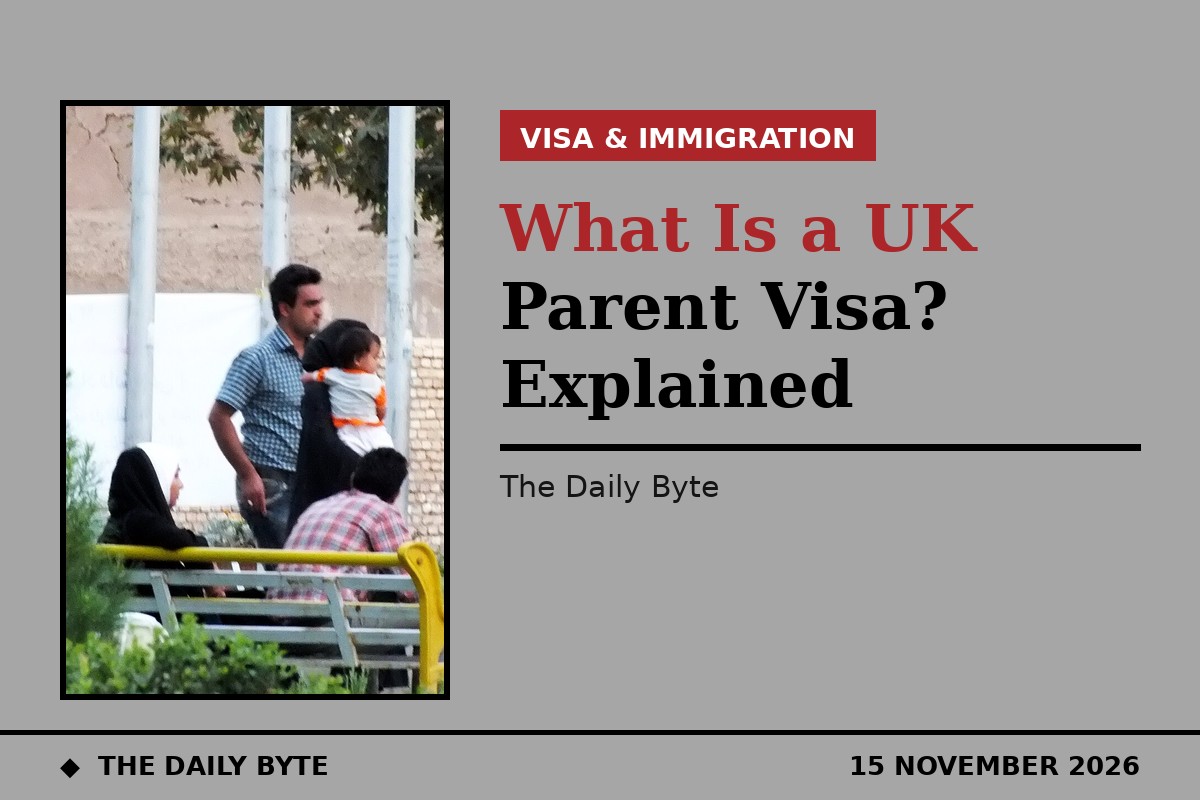
A UK parent visa — officially the family visa as a parent — lets a parent live in the United Kingdom to care for their child, where that child is British, Irish or settled in the UK. It is part of the family visa system under Appendix FM of the Immigration Rules, and it leads to settlement after five years. It is designed for parents who are not in a relationship with the child's other parent; if you are, the partner route applies instead.
The route is often confused with the partner visa, and the confusion matters, because the two routes have different tests. The most important difference is money: unlike the partner route, the parent route has no £29,000 minimum income requirement. You must show that you can maintain and accommodate yourself and your child without recourse to public funds, but there is no fixed income figure to hit. Some online guides wrongly state the £29,000 figure for parents; the GOV.UK guidance and the Immigration Rules do not impose it on this route.
Who is the parent route for?
The route is for a parent who is not in a genuine and subsisting partner relationship with the child's other parent. Home Office guidance states it plainly: the parent route is not for couples. If you are in a relationship with the other parent and that parent is British or settled, GOV.UK says you must apply as a partner instead. The parent route is for separated parents, single parents, and parents whose relationship with the other parent has ended.
It is also a route that turns on evidence of real family life, not just biology. You must show a genuine parental relationship and an active role in your child's upbringing. The Home Office wants documents from schools, doctors, courts and public bodies showing that you live with or care for the child — school letters to your address, medical letters confirming you attend appointments, court orders confirming residence. Photographs and messages alone are not enough.
The child test
Your child must be under 18 when you apply, or have been under 18 when you were first granted leave in this route. The child must live in the UK and be a British or Irish citizen, hold indefinite leave to remain or settled status under the EU Settlement Scheme, or hold qualifying pre-settled status.
There is one extra way to qualify, but only if you apply from inside the UK: a child who has lived in the UK continuously for seven years can qualify, where it would not be reasonable to expect the child to leave. That seven-year rule is part of the private life provisions, and it is one of the reasons some parent applications are made from inside the UK rather than from abroad.
Your role as a parent
You must have sole parental responsibility for the child, or, if the child lives with the other parent or carer, you must have direct access to the child in person. That access should be agreed with the other parent or set by a court, and you must be able to show that you exercise it.
The child must usually live with you, unless they are living away from home in full-time education. And the other parent must not be your partner, and must themselves be British or Irish, settled, or hold qualifying pre-settled status. These conditions are checked against the evidence, and the Home Office can refuse an application where the parent's role in the child's life is not shown in documents.
Money and housing
As noted above, there is no £29,000 income threshold on the parent route. What you must show is adequate maintenance and accommodation — enough to support and house yourself and the child without claiming public funds. That is a lower and more flexible test than the partner route's fixed figure, but it is still a real test: the Home Office will look at your income, savings and housing costs, and at whether the arrangement is sustainable for the length of the grant.
Because the test is flexible, the evidence matters. Payslips, bank statements, a tenancy agreement or a letter from the person providing your housing, and a realistic budget all help. If you rely on support from family, that support should be documented rather than asserted.
English language
The English requirement follows the same ladder as the partner route. For a first application you need English at level A1 in speaking and listening. When you extend after two and a half years, the requirement rises to A2. When you apply for settlement after five years, it is B1 — and the March 2026 Statement of Changes raises the settlement English requirement to B2 on many routes from 26 March 2027, so check whether that higher level will apply by the time you reach settlement.
What does it cost, and how long does it take?
Under the Home Office fee table in force from 8 April 2026, a family visa as a parent costs £2,064 if you apply from outside the UK, or £1,407 if you apply from inside the UK. You also pay the Immigration Health Surcharge at £1,035 a year: £3,105 for the initial two-year-and-nine-month grant from outside the UK, or £2,587.50 for a two-and-a-half-year grant inside the UK. Settlement after five years currently costs £3,226 per person.
Decision times are very different depending on where you apply. GOV.UK currently quotes around 12 weeks for applications made outside the UK, but around 12 months for parent applications made inside the UK, and it notes there is no service standard at all for the in-country route. That long wait is a real factor in deciding where and when to apply, and it is one of the reasons some families take regulated advice before choosing.
How long it lasts, and settlement
A first grant as a parent lasts for two years and nine months if you apply from outside the UK. Extensions and in-country switches last for two years and six months. After five years of continuous residence on the route, you can apply for indefinite leave to remain, and British citizenship normally follows twelve months after that.
Once permission is granted you can work and study in the UK, but you cannot usually claim benefits or other public funds. Your permission is tied to your role as a parent, so a major change in your child's circumstances can affect later applications — another reason to keep the Home Office informed and to take advice before an extension or settlement application.
Not to be confused with the adult dependent relative route
There is a separate family route for an elderly or ill parent who needs long-term personal care from a British or settled child. That is the adult dependent relative route, and it is much harder to meet: it costs £3,635 from outside the UK, and it requires evidence that the care needed is not available or affordable in the country where the parent lives. It is a different application with a different test, and it should not be confused with the parent-of-a-child route explained here.
Immigration rules and fees change, often in April. Before you apply, check the official GOV.UK page for family visas as a parent, and confirm the current fee, the English requirement and the decision times on the day you apply. This guide is general information, not personal immigration advice, and it cannot tell you whether your own application will succeed. The official page is the only source that matters: GOV.UK — Family visas: apply as a parent. A second independent guide to the same route is published by Wesbridge Associates: Parent of a British Child Visa Guidance.