What is inflation and how is it measured in the UK?
Inflation is the rate at which the general level of prices for goods and services rises, which means each pound buys a little less than it did before. In the UK, inflation is measured by comparing the Consumer Prices Index, or CPI, with what it was a year ago. In the 12 months to October 2026, CPI rose by 3.6%, up from 3.5% the previous month, according to the Office for National Statistics. That means a basket of goods and services that cost £100 a year earlier would cost about £103.60 now. This guide explains what inflation is, how it is measured, what is driving UK prices now, and why the Bank of England aims to keep it at 2%.
Inflation matters because it affects almost every household decision. When prices rise quickly, wages, savings and benefits buy less. When prices rise slowly and predictably, it is easier to plan spending, saving and borrowing. A little inflation is normal in a healthy economy, but high and unstable inflation makes life harder for everyone, and very high inflation can damage an economy badly.
What inflation means in plain English
Inflation is not the price of one thing going up. It is the average rise in prices across the whole economy. If the price of bread rises but the price of televisions falls, inflation looks at the combined effect across everything people buy. The Bank of England explains it with a simple example: if CPI inflation is 2%, then a basket that cost £100 a year ago would cost £102 today.
The rate of inflation is the speed at which prices are rising, not the level of prices. If inflation falls from 4% to 2%, prices are still rising, just more slowly. Prices only fall overall if inflation turns negative, which is called deflation. Deflation can be a problem too, because when prices fall, businesses make less money and may cut wages and staff, which can lead to lower incomes and higher unemployment.
Inflation is different from the cost of living, although the two are closely linked. The cost of living is what you actually pay for the things you buy, while inflation is the measure of how fast those prices are changing. When prices are rising quickly, inflation is high and you cannot buy as much with your money, so the cost of living is higher.
How inflation is measured in the UK
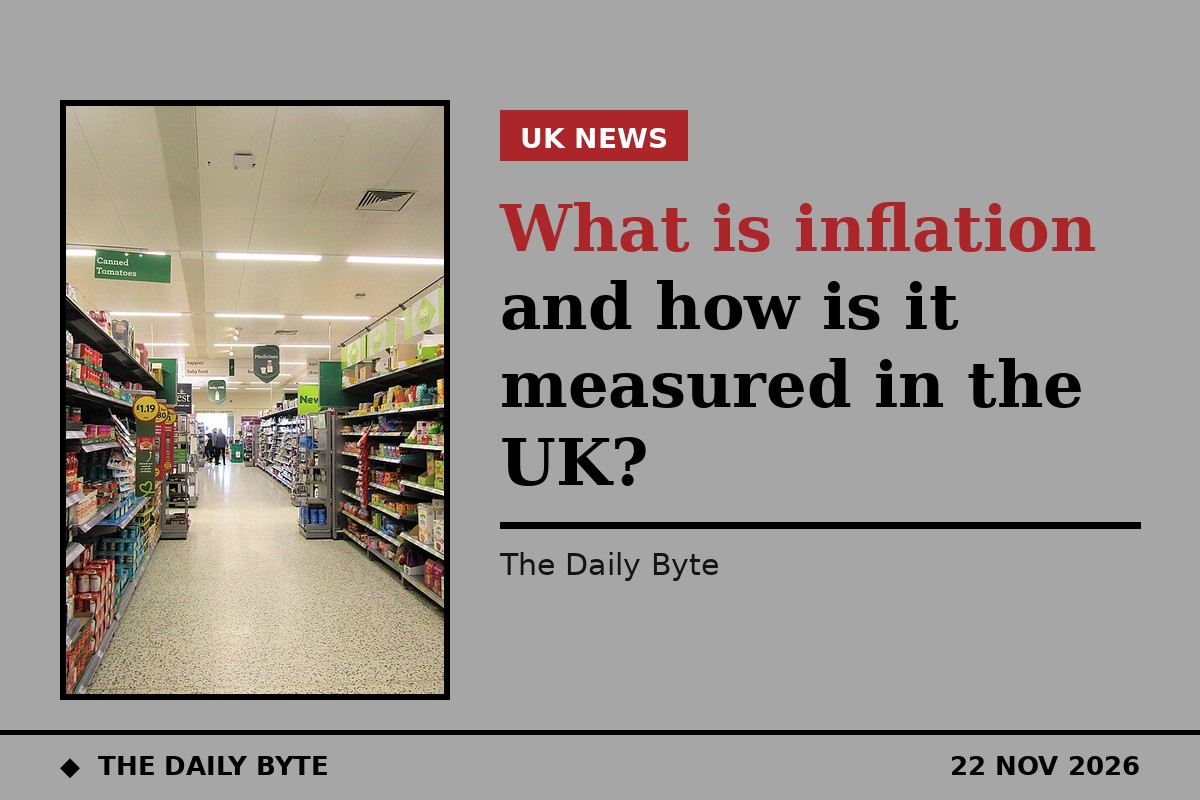
Every month, the Office for National Statistics, or ONS, checks the prices of about 700 items in a basket of goods and services, designed to represent what people buy on average. The basket includes everyday items such as a loaf of bread and a bus ticket, but also much larger ones, such as a car and a holiday. The basket is updated regularly so that it reflects what people actually spend their money on, with new products added and old ones removed as shopping habits change.
The overall price of the basket is known as the Consumer Prices Index. To calculate the rate of inflation, the ONS compares the CPI with what it was a year ago. The change in the price level over the year is the rate of inflation. The ONS also publishes a monthly rate, which shows how much prices changed in a single month, and breaks the figures down by category, so you can see which areas are pushing prices up and which are holding them down.
Price collectors and online data gather thousands of prices each month from shops, supermarkets, websites and service providers across the UK. The ONS then weights each item according to how much households spend on it, so a rise in the price of food, which everyone buys, has a bigger effect on the headline rate than a rise in the price of something few people buy.
CPI, CPIH and core inflation
You will often see more than one inflation figure, and it helps to know the difference. CPI is the Consumer Prices Index, and it is the measure the Bank of England's 2% target is based on. CPIH is the Consumer Prices Index including owner occupiers' housing costs, which adds the cost of owning, maintaining and living in your own home. The ONS calls CPIH its most comprehensive measure of inflation, and the housing component accounts for about 18% of it. In the 12 months to October 2026, CPIH rose by 3.7%, up from 3.6% the previous month, while CPI rose by 3.6%.
Core inflation is another measure you will see in news reports. Core CPI excludes energy, food, alcohol and tobacco, because those prices can swing sharply for reasons that have little to do with the underlying economy, such as a bad harvest or a change in oil prices. Core CPI rose by 2.8% in the 12 months to October 2026, little changed from September. Economists watch core inflation because it gives a clearer picture of the persistent pressures in the economy.
The ONS also splits inflation into goods and services. In October 2026, the CPIH goods annual rate rose from 3.2% to 3.5%, while the CPIH services annual rate was 3.9%, little changed from September. Services inflation, which covers things such as rents, restaurant meals and insurance, tends to move more slowly than goods inflation, and it is closely watched because it is often driven by wage growth in the UK.
What is pushing UK prices up now?
In October 2026, transport made the largest upward contribution to the rise in inflation, particularly motor fuels. The average price of petrol rose by 5.2 pence per litre between September and October 2026, to 174.7 pence per litre, the highest price recorded since August 2022. Diesel rose by 7.0 pence per litre to 199.5 pence per litre, the highest price recorded since the ONS records began in January 1996. Overall, motor fuel prices rose by 33.2% in the 12 months to October 2026, the largest annual rise since July 2022, and transport prices as a whole rose by 7.5% over the year.
Not every category pushed prices up. Restaurants and hotels made the largest downward contribution, with prices in that division rising by 3.4% over the year, down from 3.8% in September. Food and non-alcoholic drinks rose by 0.9% in the 12 months to October 2026, down from 1.3% in September, and the rate was last lower in September 2021. Within food, chocolate prices fell by 2.9% in the year, partly because cocoa prices are much lower than they were in 2024 and partly because a higher proportion of chocolate was sold at discounted prices.
Housing and household services rose by 4.5% over the year, little changed from September. Gas prices rose by 6.3%, partly because of the change in the Ofgem energy price cap in October 2026, while electricity prices fell by 0.8%, helped by the government's decision to cut VAT on electricity from 5% to 0% from 1 October 2026. Owner occupiers' housing costs rose by 4.0% in the 12 months to October 2026.
Why the target is 2%
The government sets a target for how much overall prices should go up each year in the UK. That target is 2%, and it is the Bank of England's job to keep inflation at that rate. The 2% target is similar to that of many other countries. It is low enough to keep price rises small, but high enough to avoid deflation, when overall prices fall and businesses make less money and begin to cut costs by reducing wages and staff.
A low and stable rate of inflation helps to create a healthy economy. If prices are predictable, it is easier for households to plan how much they can spend, save or invest, and for businesses to plan prices, wages and investment. For most of the last 20 years, UK inflation has been about 2%, but it has been higher at times. Between 1997 and 2021, CPI inflation was 2% on average, in line with the target. It began to rise in 2021 and reached a peak of 11% in 2022. It has fallen since then, but at 3.6% in October 2026 it is still above target.
In extreme cases, high and volatile inflation can cause an economy to collapse. The Bank of England gives the example of Zimbabwe in 2007 to 2009, when price levels increased by about 80 billion per cent in a month, and people simply refused to use Zimbabwean banknotes and the economy ground to a halt. That is an extreme case, but it shows why central banks take inflation seriously.
How the Bank of England tries to keep inflation down
The main tool the Bank of England uses to keep inflation low and stable is interest rates. An interest rate tells you how high the cost of borrowing is, or how high the rewards are for saving. Higher interest rates make it more expensive for people to borrow money and encourage them to save, so overall people tend to spend less. If people spend less on goods and services, prices tend to rise more slowly, and that lowers the rate of inflation. Lower interest rates have the reverse effect: borrowing is cheaper, saving is less rewarding, people spend more, and inflation tends to rise.
The Bank influences interest rates in two main ways. First, it sets Bank Rate, also known as the base rate, which is the most important interest rate in the UK because it influences all other interest rates. Second, it can buy and sell bonds in financial markets to support spending in the economy, mainly government bonds, or gilts. Buying assets in this way is called quantitative easing, and it allows the Bank to influence the interest rates on savings and loans. The Bank used quantitative easing when interest rates were very low, almost at zero.
Interest rates do not work instantly. A change in Bank Rate takes time to feed through to mortgages, loans, savings and spending, and then to prices. That is one reason the Bank looks ahead and tries to judge where inflation is heading, rather than reacting only to today's figure. It also explains why the Bank can keep rates higher for longer when inflation stays above target, even if that makes borrowing more expensive in the short term.
What inflation means for your money
Inflation affects savers and borrowers in opposite ways. If you have savings, inflation reduces what your money can buy, so the real value of your savings falls unless the interest you earn keeps up with rising prices. If you have a loan or a mortgage, inflation can reduce the real value of what you owe, but higher interest rates usually mean higher monthly payments, so the benefit is not straightforward.
For wages, what matters is whether pay rises faster than prices. If your pay rises by 2% while prices rise by 3.6%, your money buys less than it did a year ago, even though your pay went up. That is why wage growth is watched so closely alongside inflation. For people on fixed incomes, such as pensioners, high inflation is particularly difficult, because their income does not automatically rise with prices. Some benefits and the State Pension are uprated each year, but the uprating usually follows past inflation, so there can be a lag.
Inflation also affects the value of investments, the cost of running a business, and the price of imports. When the pound is weak, imported goods cost more, which can push inflation up. When oil prices rise, transport and energy costs rise too, which is what happened in October 2026, when motor fuels were the biggest driver of the increase in the inflation rate.
Where to check the latest figures
The ONS publishes the latest consumer price inflation figures every month, and the Bank of England publishes its own explainer and the current inflation rate on its website. The figures in this article are from the ONS bulletin for October 2026, published in November 2026, and from the Bank of England's explainer on what inflation is. Inflation figures are revised from time to time as methods improve, so check the official sources for the latest numbers. Sources: Office for National Statistics, Consumer price inflation, UK, at https://www.ons.gov.uk/economy/inflationandpriceindices/bulletins/consumerpriceinflation/latest, and Bank of England, What is inflation?, at https://www.bankofengland.co.uk/explainers/what-is-inflation.
Frequently asked questions
What is the current UK inflation rate? CPI inflation was 3.6% in the 12 months to October 2026, according to the ONS. CPIH, which includes housing costs for owner occupiers, was 3.7%.
What is the difference between CPI and CPIH? CPI is the Consumer Prices Index. CPIH is the same index plus owner occupiers' housing costs, which account for about 18% of CPIH. The ONS calls CPIH its most comprehensive measure of inflation.
Why is the Bank of England's inflation target 2%? The government sets the 2% target. It is low enough to keep price rises small, but high enough to avoid deflation, when overall prices fall and businesses cut wages and staff.
Does falling inflation mean prices are falling? No. If inflation falls from 4% to 2%, prices are still rising, just more slowly. Prices only fall overall if inflation turns negative, which is called deflation.
How often is UK inflation measured? The ONS checks the prices of about 700 items every month and publishes the annual inflation rate in a monthly bulletin.