What Is the Pension Tax Allowance?
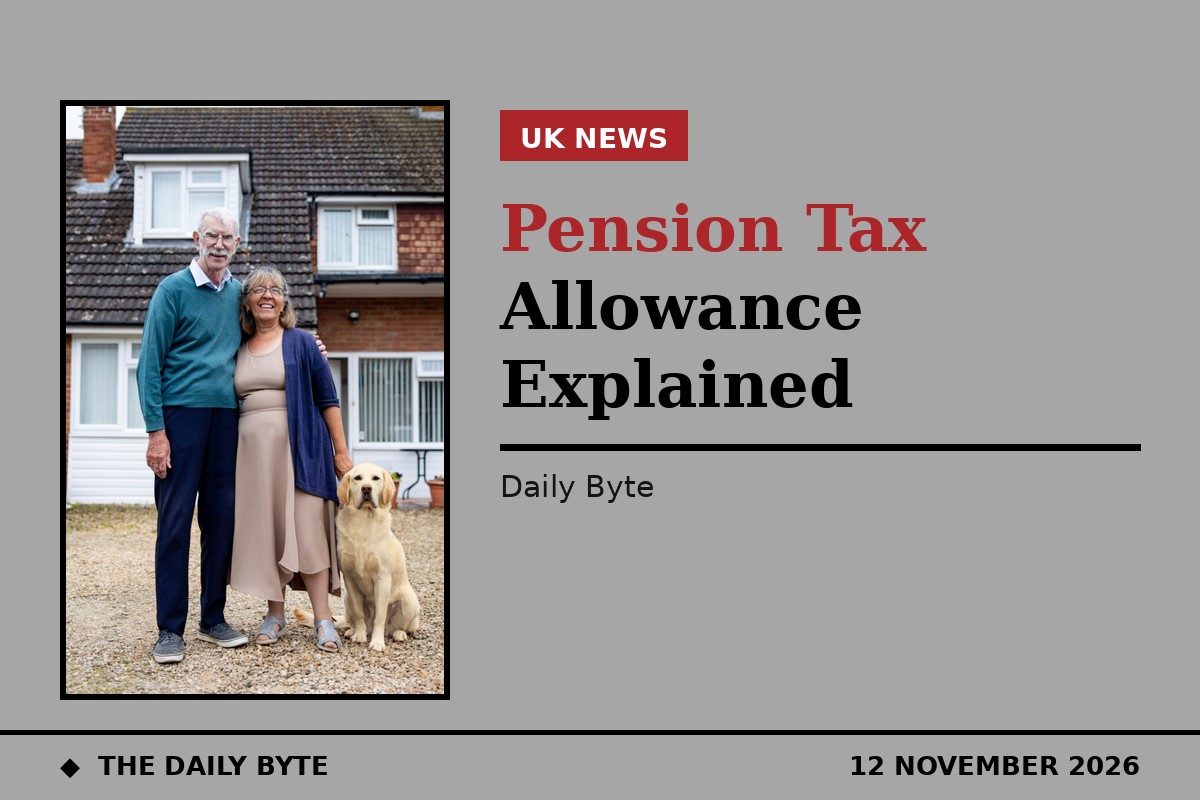
From 6 April 2027, a new Pension Tax Allowance will mean that people above State Pension age whose total income is no more than the full new State Pension will pay no Income Tax. For the 2027/28 tax year the full new State Pension is £13,036.40 a year, and the allowance is worth up to £94. Above that income the allowance tapers away by £1 for every £3 of extra income, and it disappears once total income reaches £13,319. It applies automatically, with nothing to claim, for the three tax years from 2027/28 to 2029/30. It is a reduction in the tax you owe, not a rise in the Personal Allowance, and it is not yet law: it will be legislated in Finance Bill 2026-27.
This guide explains why the allowance was created, how it works, who benefits, what counts as income, and what it does not do. It is general information, not financial or tax advice.
Why was the Pension Tax Allowance created?
The problem is simple arithmetic. The Personal Allowance, the amount of income you can have before paying Income Tax, is £12,570 and has been frozen at that level since April 2021. The full new State Pension rises each April under the triple lock, by the highest of average earnings growth, consumer price inflation or 2.5%.
In 2026/27 the full new State Pension is £241.30 a week, or £12,547.60 a year, which is still just below the Personal Allowance. From April 2027 it rises by 3.9%, in line with earnings growth, to £250.70 a week, or £13,036.40 a year. That is £466.40 above the Personal Allowance. A pensioner whose only income was the full new State Pension would therefore have become liable for a small amount of Income Tax, about £93 a year, collected through the tax system even though they had no other income.
The Pension Tax Allowance was announced by Chancellor John Healey in the Budget on 28 October 2026 to stop that happening. HM Treasury says the aim is to make sure pensioners are not brought into paying tax because of State Pension uprating in this Parliament, and to remove the administrative burden of collecting small amounts of tax from people on low incomes.
How does the Pension Tax Allowance work?
The allowance is a reduction in your Income Tax bill. It is calculated by applying the basic rate of Income Tax, 20%, to the gap between the full new State Pension and the Personal Allowance. For 2027/28 that gap is £13,036.40 minus £12,570, which is £466.40, and 20% of that is £93.28, which HM Treasury rounds to £94.
| Total income in 2027/28 | Pension Tax Allowance | Income Tax result |
|---|---|---|
| Up to £12,570 | Not needed | No tax is due, because income is below the Personal Allowance |
| £12,570 to £13,037 | Full allowance, worth up to £94 | No Income Tax to pay |
| £13,037 to £13,319 | Part of the allowance, falling by £1 for every £3 of extra income | Some tax to pay, reduced by the remaining allowance |
| £13,319 or more | None | Tax is due in the normal way |
The taper is the part most people misunderstand. For every £3 of income above the full new State Pension, you lose £1 of the allowance. Because the full allowance is worth about £94, it is used up after about £282 of extra income, which is why it ends at £13,319. The State Pension itself remains taxable income: the allowance does not make it tax-free, it cancels out the small tax bill that would otherwise arise.
Worked examples for 2027/28
The examples below use the Treasury's published figures for 2027/28: a Personal Allowance of £12,570, a full new State Pension of £13,036.40 a year, and a full Pension Tax Allowance of £93.28, rounded to £94.
| Example | Tax before the allowance | Allowance | Tax to pay |
|---|---|---|---|
| Total income £12,800, all State Pension | 20% of £230, which is £46 | Full £93.28, which covers the £46 | £0. The unused part of the allowance is lost; it cannot create a refund |
| Total income £13,000, all State Pension | 20% of £430, which is £86 | Full £93.28, which covers the £86 | £0 |
| Total income £13,200, all State Pension | 20% of £630, which is £126 | About £38.75, after the taper removes about £54.53 | About £87.25 |
| Total income £13,500, all State Pension | 20% of £930, which is £186 | None, because income is above £13,319 | £186 |
For the £13,200 example, the taper calculation is: income above the full new State Pension is £13,200 minus £13,036.40, which is £163.60. A third of that is about £54.53, so the allowance falls from £93.28 to about £38.75. The tax before the allowance is £126, so the tax to pay is £126 minus £38.75, which is £87.25.
Who benefits, and who does not?
You benefit if you are above State Pension age, or reach State Pension age during the tax year, and your total income is below £13,319 in 2027/28. HM Treasury estimates that about 500,000 pensioners will get a tax reduction from the allowance in 2027/28, and about 290,000 of them will pay no Income Tax at all as a result. The Budget costing puts the measure at £45 million in 2027/28, rising to £150 million in 2029/30.
You do not benefit if your total income is £13,319 or more, even if most of it is State Pension. That is why the allowance mainly helps people with a small total income. A pensioner who receives the full new State Pension plus any meaningful private or workplace pension will usually already be above the threshold. With the full new State Pension alone worth £13,036.40, only about £283 a year of other income is enough to reach the end of the taper.
Eligibility turns on age and income, not on whether you actually draw the State Pension. The HMRC policy paper says eligibility is based on total income regardless of source and is not dependent on receipt of State Pension income, so people who have deferred their State Pension, or who are still working past State Pension age, can qualify if their total income is low enough.
What counts as total income?
Total income means income from every source. That includes the State Pension, private and workplace pensions, earnings, self-employed profit, rental profit, savings interest and dividends. Interest from an Individual Savings Account does not count. Because the test looks at everything, a small private pension or a modest amount of savings interest can be enough to push someone above the threshold, even when their State Pension alone would have qualified.
What the allowance is not
Four points are commonly misunderstood. First, the allowance does not raise the Personal Allowance. The Personal Allowance stays at £12,570. The allowance is taken off the tax you would otherwise owe, after the Personal Allowance has been applied.
Second, it cannot be transferred to a husband, wife or civil partner. It is applied to each person individually, based on that person's age and total income.
Third, it cannot create a refund. If the tax you owe is £46 and the allowance is worth £93.28, the allowance clears the £46 and the rest is lost.
Fourth, it is not permanent. It applies for three tax years, 2027/28, 2028/29 and 2029/30, ending on 5 April 2030, and it will be uprated each April in line with the full new State Pension. The government has said only that it will consider arrangements beyond April 2030 in the usual way.
How does it fit with the triple lock?
The allowance exists because of the triple lock. The triple lock raises the State Pension each April by the highest of average earnings growth, consumer price inflation or 2.5%. The Budget on 28 October 2026 kept the triple lock up to and including the April 2029 uprating. From April 2030 the State Pension will rise by the highest of 2.5%, inflation, or the amount needed to keep its value relative to earnings at the level reached in April 2029.
That means the gap between the full new State Pension and the frozen Personal Allowance will keep growing, and the Pension Tax Allowance will be uprated with the State Pension so that it keeps pace. In 2026/27 the full new State Pension is £241.30 a week. By April 2027 it will be £250.70 a week, and the government has said it is set to rise by more than £2,000 a year over this Parliament.
Do I need to do anything?
No. HMRC will apply the allowance automatically, using information it already holds about your State Pension age and income. You do not need to contact HMRC or make a claim. The State Pension is paid with no tax taken off, so any tax due is normally collected through the tax code on another pension or a job, or through Simple Assessment. The allowance will be reflected in that calculation.
One caution: the allowance is announced, not yet law. It will be legislated in Finance Bill 2026-27, which Parliament still has to pass. The figures in this guide are the Treasury's published figures for 2027/28, and the allowance will be recalculated each year as the full new State Pension changes.
Frequently asked questions
Will I pay no tax on my State Pension from April 2027? Only if your total income from all sources is no more than the full new State Pension, £13,036.40 in 2027/28. If your total income is higher, you may pay some tax, and above £13,319 the allowance gives no help.
Do I need to claim the Pension Tax Allowance? No. HMRC applies it automatically, and you do not need to contact HMRC.
Can I transfer the allowance to my partner? No. It is applied individually and cannot be transferred to a spouse or civil partner.
Does the allowance raise my Personal Allowance? No. The Personal Allowance stays at £12,570. The allowance is a reduction in the tax you owe.
How long does the Pension Tax Allowance last? It applies for the tax years 2027/28, 2028/29 and 2029/30, ending on 5 April 2030, unless the law is extended.
Sources: HM Treasury, Pension Tax Allowance Explainer, on GOV.UK (gov.uk); HM Treasury, Budget 2026: Overview of tax legislation and rates (gov.uk).