What Is the Serious Fraud Office? Explained
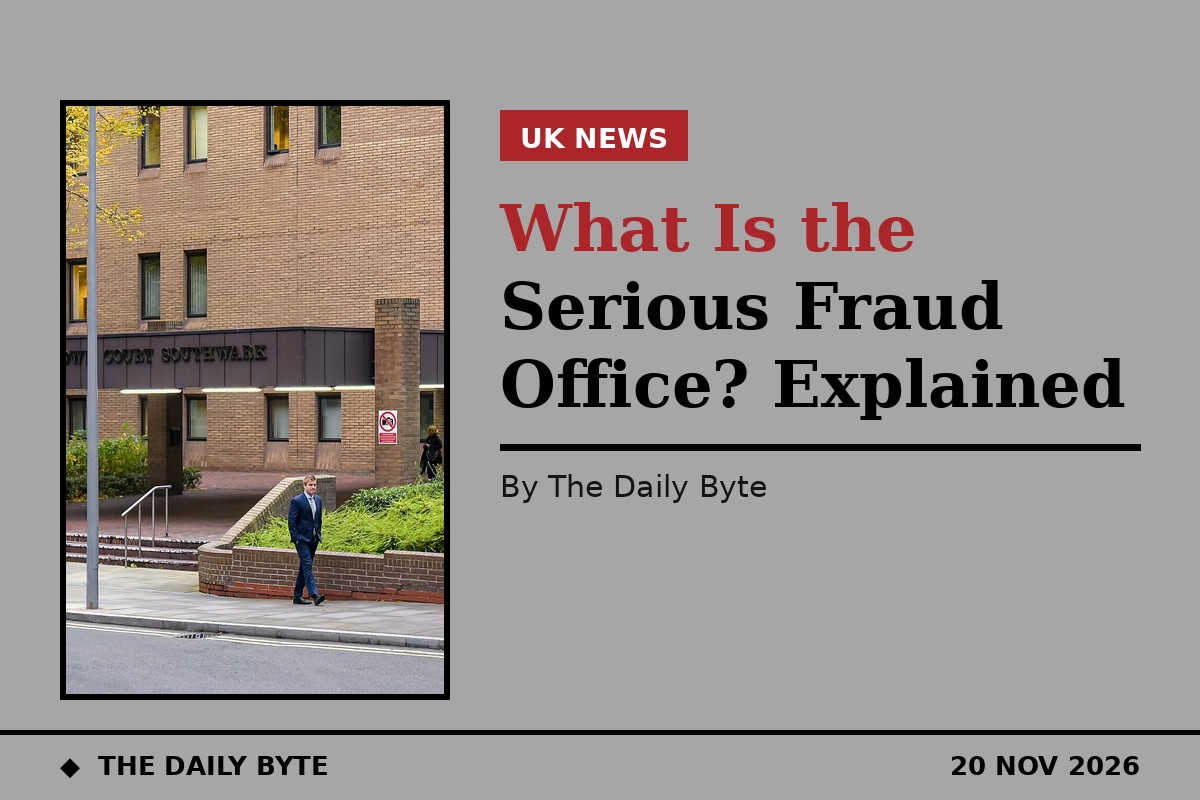
The Serious Fraud Office (SFO) is the UK government department that investigates and prosecutes serious or complex fraud, bribery and corruption in England, Wales and Northern Ireland. It is unusual in Britain because it both investigates its cases and prosecutes them, using mixed teams of lawyers, investigators and forensic accountants.
MPs put the SFO back in the headlines this week, when the Public Accounts Committee's report into botched wall insulation recommended referring the scandal to the SFO so that criminals may be brought to justice. The committee found that 98 per cent of homes fitted with external wall insulation under two government schemes need remedial work, and that businesses may have falsified claims for installations in up to 16,500 homes.
How was the SFO created?
The SFO was born out of scandal. During the 1970s and early 1980s a series of financial scandals in the City of London destroyed public trust in the way serious fraud was handled: investigations were run by the police, prosecutions by separate lawyers, and complex cases too often collapsed. In 1983 the government set up the Fraud Trials Committee, chaired by Lord Roskill, to find a better way of fighting fraud. Its report, published in 1986 and known as the Roskill Report, recommended a new unified organisation responsible for detecting, investigating and prosecuting serious fraud, with all the necessary skills under one roof.
Parliament followed that recommendation. The Criminal Justice Act 1987 created the Serious Fraud Office and gave it its powers, and the office opened for business in April 1988. It is a non-ministerial government department, which means it operates at arm's length from ministers, and it is superintended by the Attorney General for England and Wales, who is accountable to Parliament for it.
What does the SFO investigate?
The Director of the SFO may investigate any suspected offence which appears, on reasonable grounds, to involve serious or complex fraud, bribery or corruption. The office takes on only a small number of large economic crime cases, and it is designed to tackle the top tier: conduct that harms the UK's reputation as a safe place to do business, large-scale bribery of foreign officials, major accounting fraud, and complex financial crime that crosses borders.
Its jurisdiction covers England, Wales and Northern Ireland, but not Scotland, where fraud is investigated by Police Scotland and prosecuted by the Crown Office, nor the Isle of Man or the Channel Islands. The SFO also pursues criminals for the financial benefit they have made from their crimes, seeking confiscation of the proceeds, and it assists overseas jurisdictions with their own investigations into serious fraud, bribery and corruption. It is the principal enforcer of the Bribery Act 2010, the law that criminalised bribing foreign public officials and made companies liable if they fail to prevent bribery by people associated with them.
What makes the SFO different from the police and the CPS?
Most criminal cases in England and Wales are investigated by the police and prosecuted by the Crown Prosecution Service (CPS), two separate organisations. The SFO is the exception: it does both jobs itself. Its case teams follow the Roskill model, in which investigators, lawyers, law clerks and forensic accountants work together from the start of a case, under a case controller who oversees the investigation and instructs counsel from the outset.
| Body | Investigates | Prosecutes | Remit |
|---|---|---|---|
| Serious Fraud Office | Yes | Yes | Serious or complex fraud, bribery and corruption |
| Police | Yes | No | Most crime, passing files to the CPS |
| Crown Prosecution Service | No | Yes | Prosecutes cases investigated by the police and others |
| National Crime Agency | Yes | No | Serious and organised crime |
The SFO also has powers that ordinary investigators do not. Section 2 of the Criminal Justice Act 1987 allows it to require any person or business, including banks, to hand over relevant documents — even confidential ones — and to answer relevant questions, including questions about confidential matters. Refusing to comply without reasonable excuse is a criminal offence. These compulsory powers are one of the reasons the office was created: in complex fraud cases, the evidence is usually in documents held by the suspects themselves.
What are deferred prosecution agreements?
Since 2014 the SFO has had a second way of dealing with companies, alongside prosecution: the deferred prosecution agreement (DPA). Under Schedule 17 of the Crime and Courts Act 2013, a company accused of certain economic offences can agree a deal with the SFO under which prosecution is suspended, usually for three years, in return for a financial penalty, repayment of profits, compensation for victims and reforms to its compliance systems. A Crown Court judge must approve the agreement, declaring that it is in the interests of justice and that its terms are fair, reasonable and proportionate. DPAs are available only to organisations, not to individuals.
The first DPA was agreed with Standard Bank in 2015, which paid financial orders of just over $25 million plus compensation. In January 2017 Rolls-Royce agreed to pay £497,252,645 to settle allegations of bribery and corruption in its dealings around the world, and Tesco Stores agreed to pay just under £129 million later that year. The largest DPA so far came on 31 January 2020, when the SFO reached an agreement with Airbus SE. The UK sanction came to €990,963,712 including costs — disgorgement of €585,939,740 in profits and a penalty of €398,034,571 — as part of a global settlement worth more than €3.5 billion with the French and American authorities. The Airbus investigation, which concerned bribery in Malaysia, Sri Lanka, Taiwan, Indonesia and Ghana, had been run as a joint investigation team with France's Parquet National Financier since January 2017. Between 1 January 2016 and 31 December 2021 the SFO entered into 11 DPAs in total.
What is the SFO's record?
The SFO's supporters point to results no other UK agency could have achieved: the first convictions under section 7 of the Bribery Act 2010, the first DPAs, and settlements worth hundreds of millions of pounds that returned money to the public purse. Its critics point to a mixed record in court. The office began investigating the Al-Yamamah arms deal in 2004 on suspicion of false accounting, but the investigation was controversially dropped in 2006. In 2017 the Conservative manifesto pledged to dismantle the SFO and fold it into the National Crime Agency; the pledge was not carried out, and the office survived. In February 2020 the SFO's prosecution of Barclays and four of its former executives over the bank's 2008 fundraising from Qatar ended in acquittals at Southwark Crown Court, a high-profile defeat.
Because the SFO handles only a handful of cases at a time, its results swing sharply from year to year: a single settlement can dominate one year's figures, and a collapsed trial can dominate the next. The office published a strategy for 2024 to 2029 setting out its approach and goals, and it says its focus remains on the most serious economic crime affecting the UK.
Who runs the SFO?
The SFO is led by its Director, who is appointed by and superintended by the Attorney General. Nick Ephgrave has been Director since 2023, succeeding Lisa Osofsky, who held the post from 2018 to 2023. Earlier directors include David Green, who led the office from 2012 to 2018 and refocused it on its original purpose of tackling top-end fraud, bribery and corruption. The Director acts independently of government in deciding which cases to investigate and prosecute, in the same way as the Director of Public Prosecutions. The office is based in London, at Cockspur Street, and most of its staff are specialist caseworkers — investigators, lawyers and forensic accountants — rather than general administrators.
Why is the SFO in the news now?
The immediate trigger is the Public Accounts Committee's report into the Energy Company Obligation (ECO) scheme and the Great British Insulation Scheme (GBIS), published in November 2026. The National Audit Office found that 98 per cent of homes fitted with external wall insulation under the two schemes require remedial work, and that just 1 per cent of external wall jobs met the required PAS 2035 standard. Energy regulator Ofgem estimated that businesses had falsified claims for installations in up to 16,500 homes, and the committee said no single organisation in the system had overall responsibility for tackling fraud.
Energy minister Martin McCluskey told MPs that repair work had been completed at just 2,227 of the 24,600 homes affected, leaving about 91 per cent still waiting. The committee's chair described the failure as the most catastrophic he had seen in 12 years on the committee, and the report took the unusual step of recommending that the government refer the matter to the Serious Fraud Office so that criminals may be brought to justice. Whether the government follows that recommendation — and whether the SFO takes the case — is now the question. A referral is not a prosecution: the SFO would first have to decide, under its own test, whether the case involves serious or complex fraud on a scale that justifies its involvement.
Frequently asked questions
Does the SFO investigate all fraud?
No. Most fraud is investigated by the police and prosecuted by the Crown Prosecution Service. The SFO takes on only a small number of large, serious or complex cases.
Can the SFO prosecute individuals as well as companies?
Yes. Deferred prosecution agreements are available only to organisations, but the SFO prosecutes individuals in the Crown Court in the normal way, including company directors and executives.
What is Section 2 of the Criminal Justice Act 1987?
It gives the SFO compulsory powers to require people and businesses to hand over relevant documents, including confidential ones, and to answer relevant questions. Refusing to comply without reasonable excuse is a criminal offence.
Does the SFO cover Scotland?
No. The SFO covers England, Wales and Northern Ireland. In Scotland, fraud is investigated by Police Scotland and prosecuted by the Crown Office and Procurator Fiscal Service.
How is the SFO held accountable?
It is a non-ministerial government department superintended by the Attorney General, who is accountable to Parliament for it. The Director decides cases independently of ministers.
What is a deferred prosecution agreement?
It is a court-approved deal, available since 2014, under which a company avoids prosecution for economic offences by paying a penalty, repaying profits, compensating victims and reforming its compliance, while prosecution is suspended.
Sources: GOV.UK; UK Parliament; Judiciary of England and Wales.


