What is the youth allowance? Milburn's plan for under-25s explained
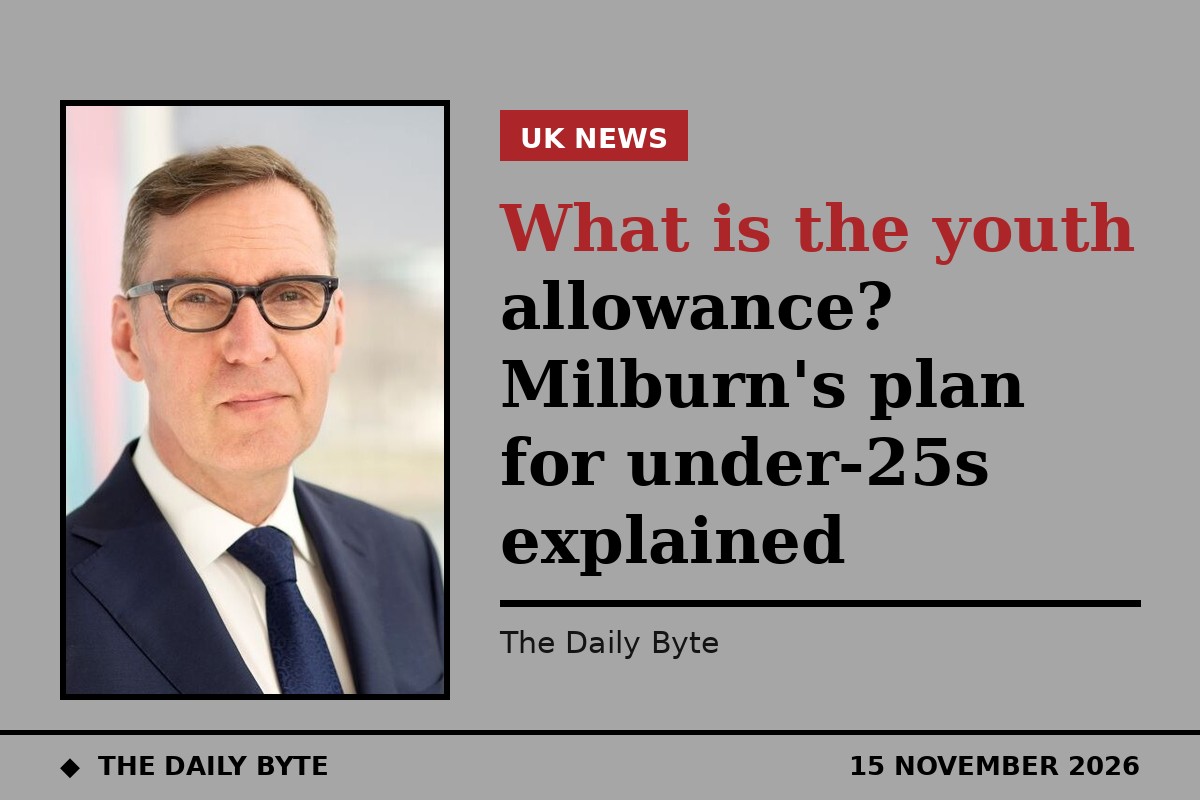
The youth allowance is the new benefit Alan Milburn is expected to recommend for under-25s in place of two existing sickness and disability payments. Under the proposals reported on 11 and 12 November 2026, young people under 25 would no longer be able to claim the health element of Universal Credit or Personal Independence Payment (PIP). Instead, they would receive a youth allowance paid at the standard rate of Universal Credit. The final report is due on Tuesday 17 November 2026, and nothing has changed yet: these are recommendations from a government-commissioned review, not law.
Milburn, a former Labour health secretary, was asked by the government to review how to reduce the number of young people not in education, employment or training, known as Neets. His proposals were briefed to BBC News and The Times on 11 November, ahead of publication of the full report.
What would the youth allowance replace?
The youth allowance would replace two payments for people under 25. The first is the health element of Universal Credit, the extra amount paid to claimants assessed as having limited capability for work and work-related activity. The second is Personal Independence Payment, known as PIP, which helps with the extra costs of living with a disability or long-term health condition and is paid whether or not the claimant is in work.
Under the reported plan, under-25s would get the youth allowance at the standard Universal Credit rate instead. For a single person under 25, the standard allowance in 2026/27 is £338.58 a month, according to GOV.UK.
What is the additional cost allowance?
Many current PIP recipients would instead be considered for a separate payment called the additional cost allowance. Like PIP, it would not be means-tested and would not depend on whether the person is in work. It would help with the day-to-day costs linked to a disability or health condition, but fewer people are expected to qualify than under PIP.
Two key details have not yet been published: the rate, and the test for who qualifies. Both are expected in the full report on 17 November 2026.
Who would get extra help?
Young people with the most severe disabilities, who cannot reasonably be expected to work, would receive a separate, higher-rate benefit under the reported proposals. Milburn is also expected to call for prompt mental health support for young people with mild ADHD, autism and anxiety, rather than long NHS waits.
The changes would be paired with expanded employment support worth billions of pounds, including personal advisers, work placements and job subsidies. Milburn told The Times that young people would have a personal adviser who would “stick with them until they have found a job or an apprenticeship or college place”. There would also be an element of conditionality: people who did not engage with the support system could lose some of their benefits.
Would existing claimants be affected?
Yes, if the recommendations are adopted as reported. Milburn told The Times the changes should apply to both existing and new claimants, because hundreds of thousands of young people are, in his words, “stuck in a benefit system that is trapping them in poverty”.
Milburn has also been candid that some young people would receive less money, at least at first. “I’m not saying that any of this will be easy, or that it will be pain-free, because it won’t,” he told The Times. “Candidly, it could mean that some people will get less financial support at the beginning of their benefit claim than under the current system.”
Why is Milburn proposing this?
The review is aimed at the nearly one million young people aged 16 to 24 who are not in education, employment or training. Office for National Statistics figures cited by the BBC put the number at just under one million in April to June 2026, around one in eight 18- to 24-year-olds and up 3% on the same period a year earlier. The Times reported Milburn’s estimate that the state spends £22 billion a year on young people who are Neet, while the annual cost of PIP alone is expected to exceed £40 billion by the end of the decade.
Milburn argues the system should be rebuilt “from scratch” so that it invests in young people’s longer-term life chances rather than paying them to remain on benefits. “You’ve got to invest upfront in order to get savings out of the back end,” he told The Times.
What happens next?
The full Milburn review is expected on Tuesday 17 November 2026. The government is reported to be likely to take the recommendations forward into legislation in the new year, and Prime Minister Andy Burnham is reported to back them. A government spokesperson told the BBC: “We will always ensure there is a safety net for the most vulnerable and those who are unable to work.”
The proposals have already drawn criticism from within Labour. Bell Ribeiro-Addy told BBC Radio 4’s Today programme she was not sure she could vote for cuts “unless it’s very clear what we’re voting for”. Housing minister Matthew Pennycook said the plans “have got to be taken as a package” and that the government would respond after the report is published.
| Payment | What it is | Under the reported plan |
|---|---|---|
| Youth allowance | Proposed new payment for under-25s | Standard Universal Credit rate (£338.58 a month, single under-25, 2026/27) |
| Universal Credit health element | Extra amount for limited capability for work | Would end for under-25s |
| PIP | Help with extra costs of disability, paid whether in work or not | Would end for under-25s |
| Additional cost allowance | Proposed replacement for some PIP claimants | Not means-tested or linked to work; rate and test not yet published |
| Higher-rate benefit | Proposed payment for the most severe disabilities | Young people who cannot reasonably be expected to work |
Frequently asked questions
Is PIP being scrapped for under-25s? Not yet. Ending PIP and the Universal Credit health element for under-25s is a recommendation in a review that has not been published in full. No change has been confirmed, and existing claimants will not automatically lose their payments.
When will the final Milburn report be published? The final report is due on Tuesday 17 November 2026, according to reporting by the BBC and The Times.
How much is the standard Universal Credit allowance for a single person under 25? £338.58 a month in 2026/27, according to GOV.UK. That is the rate the proposed youth allowance would be paid at for a single claimant under 25.
Would some young people get less money? Yes, possibly. Milburn has acknowledged some people could receive less at the start of their claim than under the current system; the full detail has not yet been published.
Sources: BBC News, “Some under-25s should get less benefits, Milburn review to say”, 11 November 2026; Parliament News, “Milburn review: some under-25s to be taken off sickness benefits in major welfare overhaul”, 12 November 2026; GOV.UK, Universal Credit: what you’ll get. This article is general information about reported proposals, not benefits advice. Check GOV.UK for the current rules, as proposals and rates can change.


