UK Deforestation Due Diligence Consultation Explained
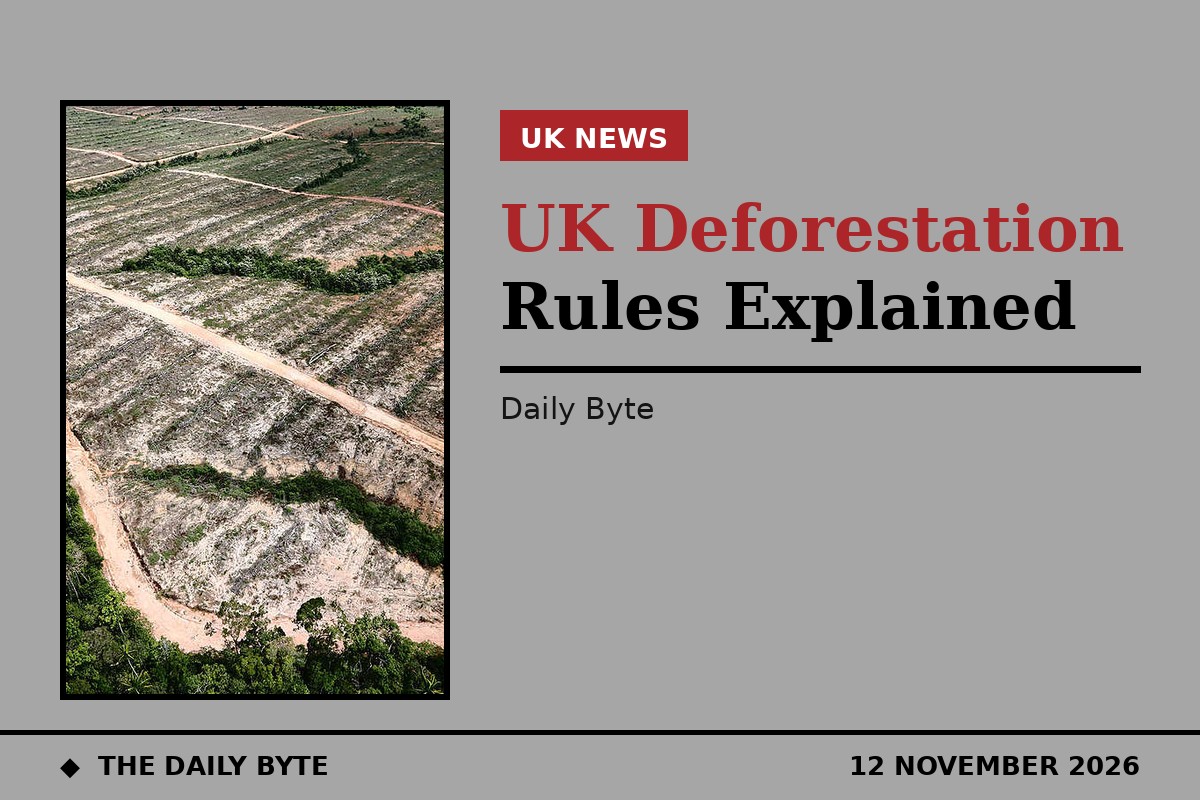
On 11 November 2026 the UK government opened a consultation on requiring businesses in Great Britain to check whether the commodities they use were produced in breach of local deforestation laws. The consultation closes on 17 January 2027. It covers seven commodity groups, timber, cattle, cocoa, coffee, oil palm, rubber and soy, together with products made from them, and it would apply to businesses with annual turnover above £1 million. The rules are not yet in force: the government is seeking views before writing the regulations, which it aims to introduce in 2027.
This explainer sets out what the consultation proposes, which businesses and products are in scope, what due diligence would involve, how the UK plan differs from the European Union's rules, why the proposals have taken five years to arrive, and what happens next.
What is the consultation proposing?
The consultation, published by the Department for Environment, Food and Rural Affairs (Defra), sets out a proposed approach to due diligence regulations for businesses using timber and forest-risk commodities in Great Britain, meaning England, Scotland and Wales. The core idea is a legality test. A business in scope would have to put in place a due diligence system to check that the commodities it uses, or places on the market, were produced in line with the relevant laws of the country where they were produced.
The government would make the regulations using powers in the Environment Act 2021, alongside changes to strengthen the UK Timber Regulation, which already covers timber. The consultation asks for views on which products and businesses should be in scope, what evidence businesses should have to gather, and how the system should be enforced. It is a consultation, not a final set of rules, so the details may change before regulations are laid.
The proposals were announced as world leaders met for a Leaders' Summit Event on Forests at COP31, the UN climate conference in Antalya, Türkiye, which runs from 9 to 20 November 2026.
Which commodities are covered?
The proposed regulations would cover seven core commodities and certain products derived from them. These are the same seven commodities covered by the EU Deforestation Regulation, although the list of derived products may differ between the two systems.
| Commodity | Everyday products that can contain it |
|---|---|
| Timber and wood | Furniture, flooring, paper and packaging, construction timber |
| Cattle | Beef, leather goods, gelatine |
| Cocoa | Chocolate, cocoa butter in food and cosmetics |
| Coffee | Roast and soluble coffee |
| Oil palm | Palm oil in food, soap, cosmetics and cleaning products |
| Rubber | Tyres, gloves, footwear and seals |
| Soy | Animal feed, cooking oil, soy foods and ingredients |
The point of the list is that deforestation is often hidden inside ordinary shopping. A chocolate bar, a tyre or a wooden table can all be linked to land that was cleared to grow a crop or raise cattle. The consultation is aimed at the businesses that buy and sell those commodities, rather than at shoppers.
Which businesses would be in scope?
Defra's stated intention is to cover businesses in Great Britain with annual turnover above £1 million that use covered commodities or wood products. That threshold is an intention stated by the government, not yet an operative legal test, because the regulations have not been made. Smaller businesses below the threshold would not be directly in scope, although they may still be asked for information by larger customers that need to trace their supply chains.
The proposed regulations would apply in Great Britain only. Northern Ireland faces a separate framework: under its Windsor Framework arrangements, the EU Regulation on Deforestation-Free Products will apply there in stages from 30 December 2026. A business that trades in both Great Britain and Northern Ireland, or that exports to the EU, may therefore have to meet two different sets of rules.
What would businesses have to do?
Under the proposals, a business in scope would have to establish a due diligence system and keep records showing that it had checked the legality of the commodities it used. In practice that would mean gathering information about where a commodity came from, down to the land where it was produced, checking that production followed the relevant laws of the producing country, and assessing and addressing the risk that it did not.
The government has not yet set out the exact reporting requirements, penalties or enforcement body, and those are among the questions the consultation asks. What is clear is the direction of travel: the current framework relies heavily on voluntary action and reporting, and the government says that framework is fragmented. The proposed regime would make the checks mandatory for large businesses, with a regulator able to act where the rules are not followed.
How is this different from the EU rules?
The UK proposal and the EU Deforestation Regulation share the same seven commodities, but they apply different tests. The difference matters for any business that trades with the EU as well as in Great Britain.
| Feature | UK proposal, Great Britain | EU Deforestation Regulation |
|---|---|---|
| Test | Produced in line with the laws of the country of production | Deforestation-free and produced in line with the laws of the country of production |
| Deforestation cut-off date | No cut-off date proposed | Land must not have been deforested after 31 December 2020 |
| Who is covered | Businesses with turnover above £1 million, as proposed | Operators and traders placing covered products on the EU market or exporting them |
| Status | Consultation until 17 January 2027; regulations planned for 2027 | Already law; main rules apply to large and medium businesses from 30 December 2026 |
| Where it applies | Great Britain | EU market, and Northern Ireland under the Windsor Framework |
In short, the EU rule asks two questions, was the land deforested after the end of 2020, and was production legal. The UK proposal, as consulted on, asks only the second question. Campaigners have argued that a legality-only test is weaker, because deforestation can be legal in the country where it happens and still destroy forest. The government says the legality approach is the one provided for in the Environment Act 2021.
Why has it taken five years?
The commitment to forest-risk commodity rules dates back to the Environment Act 2021, which gave the government powers to make due diligence regulations. The consultation opened on 11 November 2026, five years after that commitment, and campaigners have criticised the delay. Analysis by Global Witness, reported when the consultation opened, found that delays had allowed commodities imported directly into the UK to be linked to more than 59,000 hectares of deforestation since the government first committed to the rules.
Defra says UK consumption of goods associated with deforestation was linked to approximately 29,000 hectares of global deforestation in 2023 and 9.4 million tonnes of carbon emissions. The Fairtrade Foundation welcomed the consultation while pressing for strong rules, and business groups have asked for clarity on exactly what evidence will be required, so that they can prepare their supply chains.
What happens next?
The consultation runs until the end of 17 January 2027. Responses can be made through the government's online survey or by email to the address given in the consultation notice. After the consultation closes, the government will publish a summary of responses and then bring forward regulations, which it aims to deliver in 2027. The regulations would then have to be laid before Parliament.
Businesses that use any of the seven commodities should use the consultation period to map their supply chains, identify which products are in scope, and check what information their suppliers can provide about the origin of the goods. Exporters should also note the EU timetable: the main EU rules apply from 30 December 2026, and from that date goods on the EU list cannot be released into the EU without a due diligence statement lodged in the EU information system.
Frequently asked questions
Is the UK banning products linked to deforestation? No. The consultation proposes due diligence checks, not a ban. No new duties are in force yet.
Which products are covered? Timber, cattle, cocoa, coffee, oil palm, rubber and soy, and certain products derived from them, such as chocolate, furniture, tyres and palm oil in food and cosmetics.
Does the consultation apply in Northern Ireland? No. It covers Great Britain only. Northern Ireland will apply the EU Deforestation Regulation in stages from 30 December 2026.
When will the rules take effect? The government aims to introduce regulations in 2027, after the consultation closes on 17 January 2027. No compliance deadline has been set.
What is the difference between the UK and EU tests? The UK proposal tests whether production was legal in the country of production. The EU also requires the product to be deforestation-free, with a cut-off date of 31 December 2020.
Sources: GOV.UK, Implementing due diligence regulations on the use of timber and forest risk commodities in Great Britain (gov.uk); edie, UK opens long-awaited consultation on deforestation rules after five-year delay (edie.net).