What Is the UK-EU Youth Mobility Deal? Explained
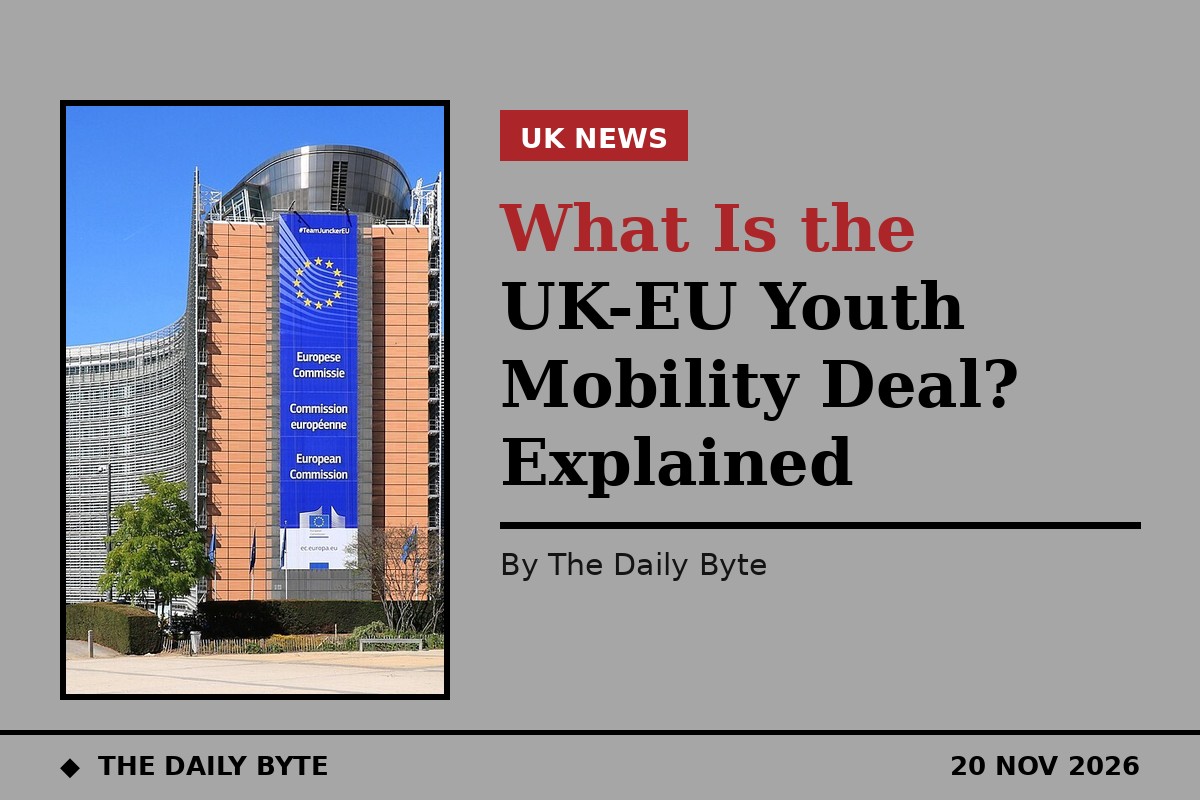
Britain and the European Union have agreed a youth mobility deal allowing 100,000 young people a year to live, work or study on each other's territory for up to three years. The agreement, settled at a summit in Brussels on 20 November 2026, is the centrepiece of a wider post-Brexit reset package covering food trade, carbon markets and migration cooperation, described by Downing Street as the biggest change to the relationship since the United Kingdom left the bloc.
The scheme is for people aged up to 31, and it works in both directions: 100,000 visas a year for young Europeans coming to Britain, and the same number for young Britons going to the EU. It is not open yet, and no one can apply for it today. The agreements are expected to come into force by the end of the decade.
What has been agreed?
The youth mobility scheme is one of three deals agreed at the Brussels summit, where Prime Minister Andy Burnham met European Council President António Costa and European Commission President Ursula von der Leyen. The table below sets out the key terms as reported on 20 November 2026.
Visas: 100,000 a year in each direction. Age: up to 31. Length of stay: up to three years. What holders can do: live, work or study. When it starts: the scheme should be running before 2030, with the agreements coming into force by the end of the decade. A review clause is expected to make sure the numbers remain broadly proportionate.
The deal is a compromise. Britain first proposed a cap of 50,000 visas a year, mindful that immigration was a factor in the Brexit vote. The EU wanted the scheme uncapped. The two sides settled on 100,000. During the final talks Britain had also discussed a figure of 80,000, which the EU rejected.
Who can apply, and what can they do?
The scheme is for young adults aged up to 31. Successful applicants will be able to live, work or study in the other side's territory for up to three years. The full eligibility rules, including any requirements on funds, health cover or English or other language skills, have not yet been published, and the joint statement due later on 20 November is expected to set out the timelines in full.
What is already clear is that the scheme is reciprocal and capped: the same number of places is available in each direction, and once the annual allocation is filled, applicants will have to wait for the next year.
What are the catches?
There are two important restrictions for young Britons. First, they will be limited to working in one named EU country, rather than spending three years travelling around Europe working as they go. Second, the number of Britons who can go to each EU country is expected to be capped, with the EU dividing up the total among its 27 member states largely on the basis of population size.
That means a young Briton could be turned down for a particular country even if the overall UK quota has not been filled, because that country's allocation is full. The same population-based division applies in the other direction, so smaller EU countries will have far fewer places than larger ones.
What else is in the reset package?
The youth mobility deal sits alongside two other agreements. The first is a food and drink deal that ends the checks and certificates currently required on British food exports to the EU, such as sausages and seeds. In return Britain will follow some EU food rules for the first time since Brexit. Downing Street put the food deal alone at up to 5.1 billion pounds a year, and Mr Burnham said the whole package could add 0.4 per cent to Britain's economy.
The second is an agreement linking the UK and EU emissions trading systems, which will exempt goods such as steel from each other's carbon border levies. The package also includes a structured dialogue on migration and a Channel action plan on irregular migration, covering returns to third countries and measures against the pull factors for irregular migrants. Britons will also be able to use pet passports to take dogs, cats and ferrets to the EU for the first time.
There are conditions attached. To get the deals, the UK must accept some EU rules and standards that it has no role in setting. The deal is also reported to include a clause requiring the UK to repay European countries the cost of reimposing checks if a future government were to walk away from it.
What about student fees?
Student fees were the last obstacle in the talks. The EU had demanded that European students pay the same tuition fees as British students. Brussels dropped that demand and accepted a discount covering the cost of their courses, to be introduced within six months. The detail of how that discount will work has not yet been published.
When can people apply?
Not yet. No applications are open, no start date has been announced, and the scheme will need legislation and systems on both sides before it can operate. Officials have indicated it should be running before 2030. Anyone planning around the scheme should wait for the joint statement and the official guidance that follows it, rather than relying on summaries of the summit.
How is this different from the existing Youth Mobility visa?
Britain already runs a Youth Mobility Scheme visa, which allows young people from a list of partner countries and territories, including Australia, Canada and Japan, to live and work in the UK, usually for up to two years. That route is separate from the EU deal.
The new agreement creates a dedicated reciprocal route for EU citizens and young Britons, with a longer stay of up to three years and a much larger annual allocation of 100,000 places in each direction. The existing scheme continues unchanged unless the government says otherwise.
Frequently asked questions
How many youth mobility visas will be available? 100,000 a year for EU citizens coming to the UK, and 100,000 a year for young Britons going to the EU.
What age do I need to be? The scheme is for people aged up to 31.
How long can I stay? Up to three years, during which you can live, work or study.
Can I work in several EU countries? No. Young Britons will be limited to working in one named EU country under the scheme.
When does the scheme open? There is no opening date yet. The agreements are expected to come into force by the end of the decade, with the scheme running before 2030.
Sources: Reuters, "Britain, EU set to agree to reset but divisions persist", 20 November 2026; The Times, "Andy Burnham agrees to 100,000 visas in EU youth mobility scheme", 20 November 2026.


