What is the UK Hong Kong BN(O) visa?
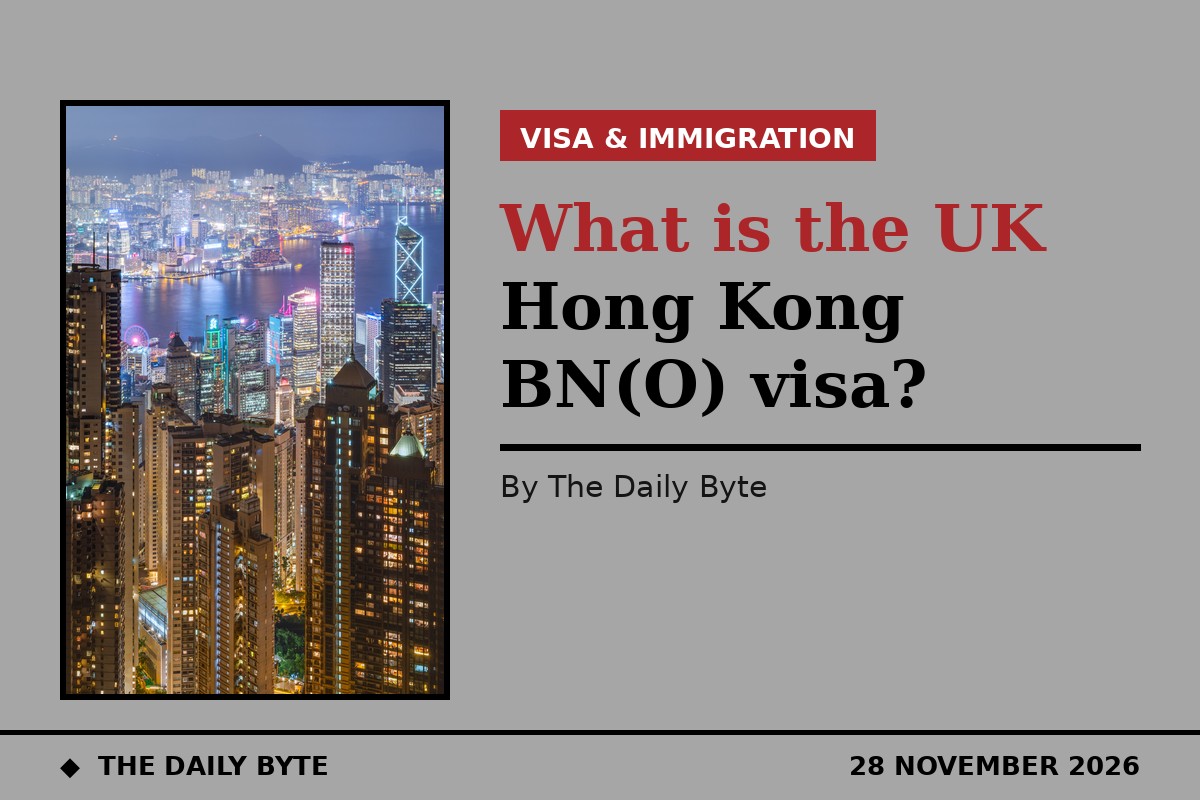
The Hong Kong British National (Overseas) visa — usually called the BN(O) visa — is a UK immigration route that lets British National (Overseas) status holders who normally live in Hong Kong, and their close family members, come to live, work and study in the UK. It opened on 31 January 2021, after the UK government created it in response to developments in Hong Kong, including the national security law imposed in 2020. Visa holders can apply for settlement after five years in the UK, and for British citizenship a year after that, if they meet the requirements.
Unlike most UK work and family visas, the BN(O) route is not sponsored. There is no job offer to secure, no salary threshold to meet and no employer licence involved. Eligibility turns on who you are — a BN(O) status holder or their family member — and on whether you can support and house yourself for your first six months in the UK. This guide explains who qualifies, what the visa allows, what it costs and how it leads to settlement.
Who is a British National (Overseas) status holder?
British National (Overseas) status was available to people who held British Dependent Territories Citizenship through a connection with Hong Kong and who registered for it in the ten years before Hong Kong was handed over to China on 1 July 1997. The status is held for life, but it cannot be passed on to a spouse or children, and no one born after 30 June 1997 can be a BN(O) status holder. There are no plans to reopen BN(O) registration.
That cut-off date is the single most important fact about the route. It means the visa is open to a fixed, ageing group of people — those who were registered before the handover — and to their families. You do not need to hold a valid BN(O) passport to apply: if you do not have one, the Home Office checks your status against its own and the Passport Office's records. What matters is the status itself, not the document.
Who can apply for the BN(O) visa?
There are two routes into the visa, set out in Appendix Hong Kong British National (Overseas) to the Immigration Rules.
The BN(O) Status Holder route is for the BN(O) citizen themselves. The main applicant must be a BN(O) status holder who is ordinarily resident in Hong Kong or the UK at the time of application, and must be over 18, unless they are applying as the child of a main applicant. Their dependent partner and their children or grandchildren under 18 who form part of the same household can apply with them. Other adult family members can only apply under this route in exceptional circumstances, where they have a high degree of dependency on the BN(O) citizen.
The BN(O) Household Member route is for the adult child of a BN(O) status holder — someone born on or after 1 July 1997 — who forms part of the same household as their BN(O) parent. The parent should apply first as the main applicant, and the adult child applies alongside them, together with the adult child's own partner and children under 18. This route exists precisely because BN(O) status cannot be inherited: without it, the adult children of BN(O) holders, who were too young to register before the handover, would have had no way to come with their parents.
Applications can be made from overseas, where entry clearance is mandatory, or from inside the UK. If you apply from overseas you must be ordinarily resident in Hong Kong; if you apply from inside the UK you must be ordinarily resident in Hong Kong, the UK or the Crown Dependencies, and you must already be in the UK with lawful immigration status.
What does the visa allow you to do?
BN(O) visa holders can live, work and study in the UK. There is one notable restriction on work: you cannot work as a professional sportsperson or coach. Otherwise there is no restriction on the type of job you can take, and you do not need a sponsor.
The visa carries a "no recourse to public funds" condition, which means you cannot normally claim most benefits or public housing. That condition can be changed later if you become destitute, but it is the default position, and it is why the financial requirement focuses on self-sufficiency rather than earnings. Healthcare is covered through the Immigration Health Surcharge, which is paid in full when you apply, and children can attend state schools.
What do applicants need to show?
The Home Office's caseworker guidance for the route lists the key requirements. Applicants must be BN(O) status holders or eligible family members, be ordinarily resident as described above, and be able to adequately maintain and accommodate themselves and any dependants for six months without recourse to public funds. There is no set amount of money you must show: the test is whether your funds and housing are adequate for your circumstances. The requirement is treated as met if you have already been living in the UK with permission for 12 months or more when you apply.
Applicants applying from overseas need a valid tuberculosis test certificate from a Home Office-approved clinic. Everyone must meet the suitability requirements in the Immigration Rules, which cover matters such as serious criminality and behaviour that is not conducive to the public good. Applications are made online on GOV.UK, or through the UK Immigration: ID Check app where available, and biometric information is required.
How much does the BN(O) visa cost?
You choose between two lengths of permission when you apply, and the fee is charged per person, including each dependant. According to the Home Office caseworker guidance, version 15.0, published for Home Office staff on 8 October 2026:
- £206 for 30 months' permission
- £285 for five years' permission
The Immigration Health Surcharge is also payable in full when you apply, for each applicant. Law firm guides summarising the GOV.UK fees put the surcharge at £2,587.50 for an adult on the 30-month visa and £5,175 on the five-year visa, with lower amounts for children under 18 (£1,940 and £3,880). The surcharge rate can change, so check the GOV.UK fees page before applying rather than relying on any single figure. An affordability waiver for the surcharge can be available in some circumstances when you apply to extend your visa.
The five-year option is usually the cheaper route overall for a family that intends to stay: it covers the whole qualifying period for settlement in a single application, with one fee and one surcharge payment, rather than two applications 30 months apart. The 30-month option suits families who want to spread the cost or who are unsure about their long-term plans.
Do you need to speak English to get the visa?
No. There is no English language requirement for the BN(O) visa itself, which is unusual among UK visa routes. The language requirement comes later: if you go on to apply for settlement, you will need to meet the usual knowledge of English and Life in the UK requirements. That means families can arrive without first passing an English test, but should plan for the tests well before the five-year settlement point.
How does the visa lead to settlement and citizenship?
The BN(O) route is a route to settlement. After five years' continuous residence in the UK, visa holders can apply for settlement — also known as indefinite leave to remain — providing they meet the requirements. After a further 12 months with settlement, they can apply for British citizenship.
Guides to the route put the absence limit for settlement at no more than 180 days outside the UK in any 12-month period of the five years, so long trips away need to be planned with that limit in mind. The Home Office updated its guidance in October 2026 so that dependent children are no longer required to complete a five-year continuous residence period before qualifying for settlement, and it clarified how settlement works for children whose parents have different visa expiry dates. Family members who travel to the UK at different times may therefore qualify to settle at different times, and may need further applications for permission to stay to complete their own five years.
Could the settlement rules change?
Yes, possibly — and this is the main uncertainty hanging over the route. The government's immigration White Paper proposed a standard ten-year qualifying period for settlement, and its earned settlement consultation has now closed. But as of late November 2026, no change to the BN(O) five-year route is in force, no implementation date exists, and transitional treatment for people already on the route remains undecided. The five-year path to settlement, followed by citizenship after a further year, is the law as it stands today. Because this is a live policy debate, anyone planning around the settlement timetable should check the current GOV.UK guidance before making decisions.
Frequently asked questions
Do I need a valid BN(O) passport to apply? No. You need to be a BN(O) status holder, and the Home Office will check that against its records if you do not hold a passport. The status itself is what counts.
Do I need a job offer or a sponsor? No. The BN(O) route is not sponsored, so there is no job offer, salary threshold or sponsor licence involved. You need to show you can support and house yourself for six months.
Can I apply from inside the UK? Yes, if you are already in the UK with lawful immigration status and are ordinarily resident in the UK, Hong Kong or the Crown Dependencies. You can also apply from Hong Kong before travelling.
Can my adult child come with me? Yes, if they were born on or after 1 July 1997, form part of your household and apply alongside you under the Household Member route, together with their own partner and children under 18.
Does the visa give access to benefits? No, not normally. The visa carries a no recourse to public funds condition, although that can be changed if you become destitute. You can use the NHS through the Immigration Health Surcharge and your children can attend state school.
Immigration rules change, and fees and requirements are updated regularly, so always check the official GOV.UK pages linked below before applying. This article explains the rules as they stand; it is not personal immigration advice, and anyone unsure about their eligibility should seek regulated immigration advice.