Why Are NHS Consultants Striking? Pay Dispute Explained
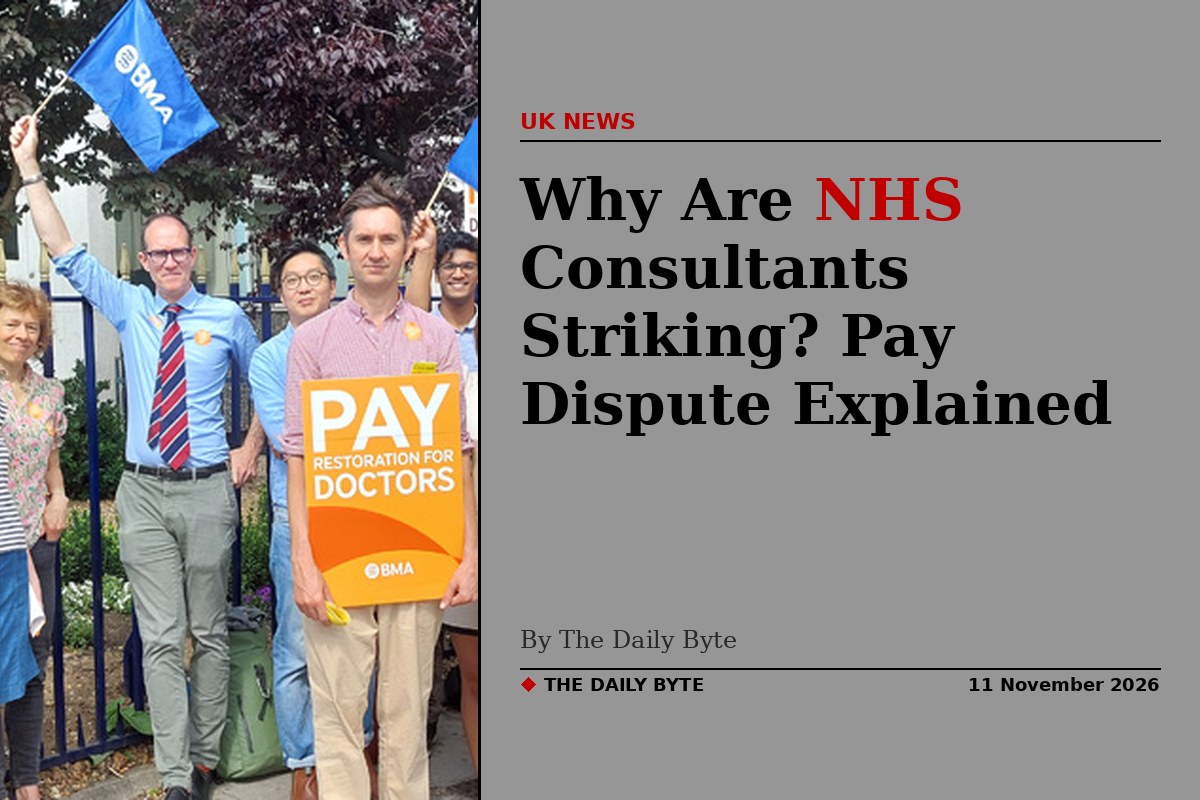
NHS consultants in England are not striking on 25 and 26 November 2026 after all. On 11 November 2026, the British Medical Association (BMA) announced that the planned two-day walkout by hospital consultants had been paused so the union could enter formal negotiations with the government over pay and working conditions. The strike is paused, not cancelled: the BMA has warned that further action will follow if the talks fail to deliver.
Consultants are the most senior doctors in NHS hospitals, and the dispute has been running for 18 months. This explainer answers why NHS consultants are striking, what they are asking for, what the government has offered, and what the pause means for patients with appointments on the strike dates.
Why are NHS consultants striking?
Consultants say they are striking, or were preparing to strike, for two linked reasons: pay and working conditions. On pay, the BMA says consultants have lost a quarter of their pay in real terms over the last 17 years, a fall it dates to 2009-10. Although consultants received a 3.5% pay increase this year, the union says that does not come close to restoring the value their salaries have lost since then. On working conditions, the BMA says consultants are working under increasingly unsustainable pressures, with workloads that leave too little time for each patient, and it has asked for a 10% cut in working hours.
The immediate trigger for the strike dates was the government's pay proposal for 2027-28. In evidence to the Review Body on Doctors' and Dentists' Remuneration in October, the government said it planned a 2.4% pay rise for 2027-28. The BMA describes that figure as a below-inflation rise, in effect a further real-terms cut, and says it would not require trade-offs against the government's health commitments. That is the gap at the centre of the dispute: the union wants meaningful progress towards restoring pay, while the government has so far offered a rise the union regards as a cut in real terms.
Consultants voted in July to take industrial action, giving the BMA a mandate to call strikes. The union announced the two-day walkout after 18 months of talks with the government failed to produce agreement on the key issues. The strike was then called, paused and, in the BMA's words, suspended to allow formal negotiations to take place.
What is an NHS consultant?
A consultant is the most senior grade of hospital doctor in the NHS. Consultants lead clinical teams, take final responsibility for patients' care, carry out complex operations and procedures, supervise junior doctors and make the decisions on diagnosis and treatment that other staff follow. They work across every specialty, from surgery and anaesthetics to paediatrics, psychiatry and emergency medicine.
Because consultants hold the most senior clinical roles, their absence is felt across a hospital. When consultants strike, hospitals cannot run routine clinics, planned operations or most outpatient appointments as normal. That is why strike action by consultants, even for two days, is disruptive, and why the decision to pause the November walkout matters to large numbers of patients.
What strike was planned for 25 and 26 November?
The BMA announced on 26 October 2026 that consultants in England would strike for 48 hours, from 25 to 26 November. Had the walkout gone ahead, consultants would have provided emergency care only, with hospitals operating at what the BMA and NHS describe as "Christmas Day" levels of cover. Routine appointments, planned operations and most outpatient clinics would have been postponed or cancelled, while emergency departments, intensive care and other urgent services would have continued.
The strike would have been the latest in a long-running series of disputes between doctors and the government over pay. Resident doctors, formerly known as junior doctors, have staged a series of walkouts in recent years, and consultants have also taken industrial action before. This time, however, the two sides reached the point of formal talks before the walkout happened.
The decision to pause the action was taken at an urgent meeting of the BMA's consultants committee on Tuesday night, 10 November, following talks with Health Secretary Yvette Cooper. The BMA said the committee had agreed to enter formal negotiations with the government, and the union's co-chairs said they had received assurances that there were no constraints on what could be discussed in those negotiations.
What do consultants want?
The BMA's demands fall into two parts. First, pay restoration: the union wants a credible plan to reverse the 25% real-terms fall in consultants' pay since 2009-10. It has not presented the pause as a settlement of that claim; the co-chairs said the union was seeking "meaningful progress" on the issue, and that the dispute remained unresolved.
Second, working conditions. The BMA says consultants need more time, recognition and support to deliver the best possible care for patients and to secure the future of the NHS, without being driven to burnout. Its specific asks have included a 10% reduction in working hours, alongside action on workload and the conditions in which consultants work. The union frames the dispute as being about the sustainability of the consultant workforce, not only about salaries.
The government's position, as set out in its evidence to the pay review body, is that a 2.4% rise for 2027-28 is what it can afford without trading off its other health commitments. The Times has reported that the government's mandate for the negotiations does not allow for pay increases this financial year, which limits what the talks can deliver in the short term even though the BMA says no topics have been ruled out.
| Issue | BMA position | Government position |
|---|---|---|
| Pay since 2009-10 | Down 25% in real terms over 17 years | 3.5% rise this year; 2.4% proposed for 2027-28 |
| Working hours | 10% cut in working hours sought | Working conditions open for discussion in talks |
| Strike, 25-26 November | Paused to allow formal negotiations | Formal negotiations agreed; talks welcomed |
| If talks fail | Further strike action will be called | No pay rise this financial year, per The Times |
What did the BMA and the government say?
Dr Helen Neary and Dr Shanu Datta, co-chairs of the BMA's consultants committee, said they welcomed the chance to enter formal negotiations and hoped it marked a turning point in a dispute that had gone on for far too long. They said consultants had lost a quarter of their pay in real terms over 17 years while working under increasingly unsustainable pressures, and that pausing strike action gave both sides the opportunity to make progress.
They also issued a warning. "After 18 months of dispute, however, our patience is not infinite," they said, "and should these negotiations fail to swiftly deliver on the issues at the heart of this dispute, we will call further action." The message is clear: the pause is conditional, and the strike dates could be revived if the talks stall.
Health Secretary Yvette Cooper welcomed the pause and said she had held "constructive" talks with the BMA's consultants committee. The government has consistently said it wants the dispute resolved through negotiation, and the agreement to enter formal talks is the first time the two sides have moved from informal soundings to a structured process since the strike was announced.
What does the pause mean for patients?
For patients, the immediate effect is that hospitals in England will not be running on emergency-only cover on 25 and 26 November. Planned operations, routine clinics and outpatient appointments scheduled for those two days should go ahead as planned, unless an individual hospital says otherwise. That is a significant relief for patients who had been waiting for treatment and for hospitals that had been preparing to cancel large amounts of planned care.
There are two important qualifications. First, the pause is not a settlement, and the underlying dispute is unresolved. If negotiations fail, the BMA has said it will call further action, which could mean new strike dates. Patients should therefore treat the pause as good news for November, not as the end of the dispute.
Second, the pause applies to consultants in England only. A ballot of consultants and SAS doctors in Scotland over working conditions and pay remains under way, and planned strike action in Northern Ireland remains set to go ahead: consultants and SAS doctors there are due to strike on 23 and 24 November, and resident doctors on 20 and 21 November, according to the BMA.
What happens next?
The two sides will now sit down for formal negotiations, with the BMA saying it has been assured that no subject is off the table. No timetable for the talks has been published, and neither side has said when they expect to conclude. The test will be whether the government brings proposals on pay and working conditions that the BMA's consultants committee regards as meaningful progress.
Three things will show whether the talks are working. The first is whether the government moves on pay, either for this year or for 2027-28, given the reported limit on increases this financial year. The second is whether the two sides agree concrete measures on working hours and workload, which the BMA has put alongside pay at the centre of the dispute. The third is whether the BMA calls off the threat of further action or, if the talks fail, sets new strike dates.
For now, the walkout planned for 25 and 26 November is off, and hospitals in England will operate normally on those days. The dispute itself, over a quarter of lost pay in real terms and the conditions consultants work in, is still to be resolved.
Frequently asked questions
Is the NHS consultants' strike cancelled? No. The strike planned for 25 and 26 November 2026 in England has been paused, not cancelled. The BMA says it will call further action if negotiations with the government fail.
Why are NHS consultants striking? The BMA says consultants' pay has fallen 25% in real terms over 17 years, and that working conditions and workloads have become unsustainable. It is seeking pay restoration and a 10% cut in working hours.
Will my hospital appointment on 25 or 26 November go ahead? Yes, in England. With the strike paused, hospitals will not be on emergency-only cover on those dates, so planned appointments and operations should proceed as scheduled unless your hospital contacts you directly.
What has the government offered? The government has proposed a 2.4% pay rise for 2027-28, which the BMA describes as below inflation. The Times has reported that the government's negotiating mandate does not allow pay increases this financial year.
Does the pause affect Scotland or Northern Ireland? No. A ballot of consultants and SAS doctors in Scotland is still under way, and strike action in Northern Ireland remains planned for 20 to 24 November, according to the BMA.
Sources: British Medical Association, "Consultants in England pause strike action", 11 November 2026; Reuters, "Senior doctors in England put strike on hold after union secures negotiations", 11 November 2026.