Why Was the Sony PlayStation £2bn Lawsuit Dismissed?
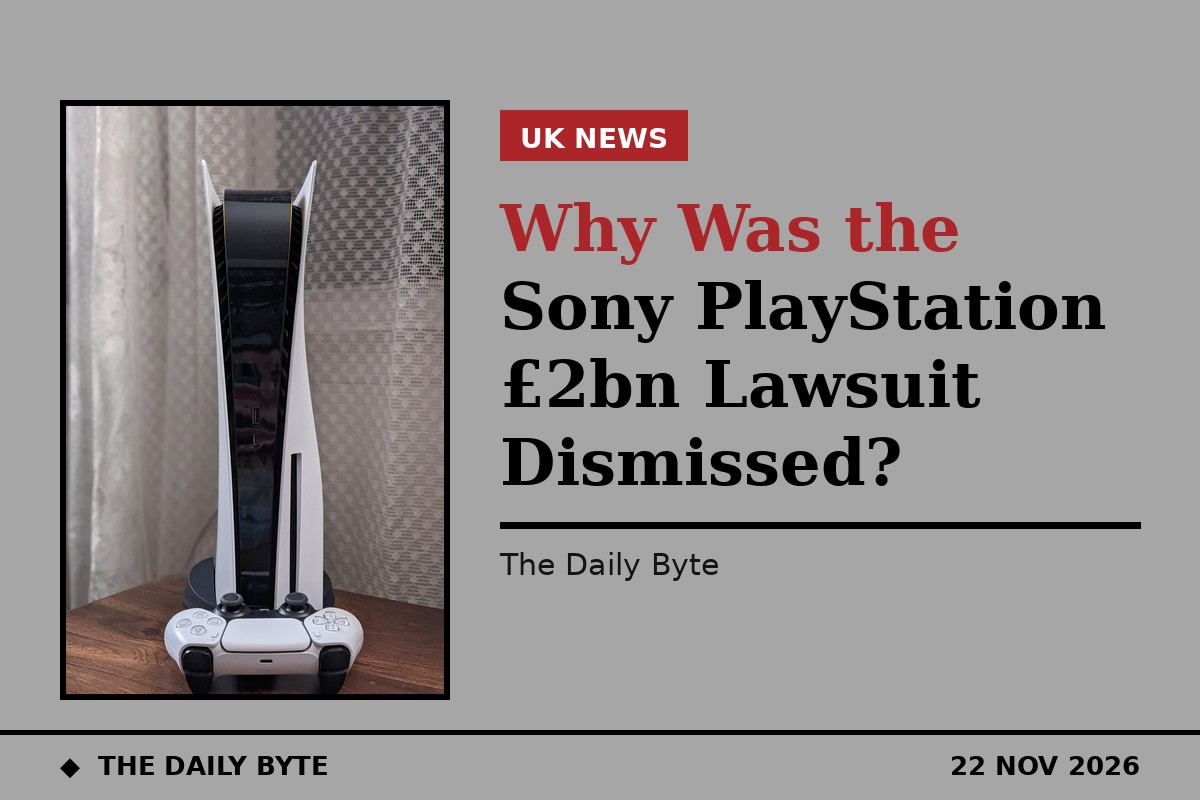
The Competition Appeal Tribunal has thrown out the £2 billion class action against Sony over PlayStation Store prices in its entirety. In a unanimous judgment handed down on 17 November 2026, the tribunal found that the claimants had failed to prove that Sony broke competition law, so the roughly 12.2 million UK PlayStation customers on whose behalf the case was brought will receive no payout. The decision can still be appealed, and a hearing on costs and any application for permission to appeal is listed for the week beginning 14 December 2026.
The case, brought by consumer campaigner Alex Neill, argued that Sony used its control of the PlayStation Store to shut out rival sellers and charge excessive prices for digital games and add-on content, taking a 30% commission on every sale. The tribunal rejected that argument: Sony was not shown to be dominant, competition between consoles and the availability of physical games kept its prices in check, and the claimants' market definition was an "unsafe" basis on which to judge its conduct.
| Fact | Detail |
|---|---|
| Case | Alex Neill Class Representative Ltd v Sony Interactive Entertainment Europe Ltd and others |
| Citation | [2026] CAT 86 |
| Court | Competition Appeal Tribunal, London |
| Judgment date | 17 November 2026 (unanimous) |
| Panel chair | Ben Tidswell |
| Class size | About 12.2 million UK consumers |
| Claim value | £1.49 billion in damages, £1.971 billion with interest |
| Trial | 30 days, 10 March to 8 May 2026 |
| Outcome | Claim dismissed in its entirety |
| Next date | Costs and permission to appeal, week beginning 14 December 2026 |
What was the claim against Sony?
The claim was an opt-out collective action — the UK's version of a class action — filed in 2022 and given the go-ahead by the tribunal in 2023. Alex Neill's company, Alex Neill Class Representative Ltd, brought it on behalf of about 12.2 million people in the UK who bought digital PlayStation games or add-on content between August 2016 and February 2026.
The allegation was that Sony abused a dominant market position, breaching section 18 of the Competition Act 1998 and, for the period before 31 December 2020, article 102 of the Treaty on the Functioning of the European Union. The claimants said Sony removed "all actual and potential competition" in digital PlayStation games by requiring digital purchases to be made only through the PlayStation Store, setting the retail prices itself, and taking a 30% cut. That, they argued, produced excessive and unfair prices, and they sought £1.49 billion in damages — £1.971 billion once interest was added.
Why did the tribunal dismiss the lawsuit?
The tribunal's core finding was about market definition. The claimants defined the market narrowly as the sale of digital PlayStation games and add-on content. The tribunal rejected that as an "unsafe" basis for assessing Sony's conduct: digital PlayStation sales could not be considered in isolation from the wider market for consoles and games.
Two points drove that conclusion. First, consumers could buy physical games instead of digital ones, and physical discs remain a real alternative for PlayStation owners. Second, competition between gaming systems — PlayStation against Xbox and Nintendo — constrained what Sony could charge. The tribunal accepted that Sony and other suppliers used game revenue to subsidise the price of consoles, and concluded that "competition and rivalry at the system level do provide an effective means to regulate pricing and competitive conduct in the aftermarket". In other words, if Sony pushed digital prices too high, buyers could choose a different console or buy discs.
The tribunal also found that buyers had enough information, and enough incentive, to think about the lifetime cost of games and add-on content when choosing a console — especially high-spending users. Because the narrow market definition failed, the claimants also had to meet the strict legal test from the European case Oscar Bronner v Mediaprint for a refusal to supply, and the tribunal concluded they could not meet it.
What did the judges say about physical games?
Physical games were central to the outcome. The claimants' case treated the PlayStation Store as the only route to digital games, and therefore as a monopoly. The tribunal disagreed, holding that the option of buying a physical copy — and of buying a rival console in the first place — gave consumers a genuine choice that disciplined Sony's pricing. The judgment records that "potential PlayStation console purchasers had both access to sufficient information and an incentive to consider that information in order to make informed purchasing decisions at the console level, especially in the case of high-value users who spend significant amounts in the digital gaming aftermarket."
That reasoning will be closely read by other platform operators. The International Comparative Legal Guides analysis calls it a substantial victory for businesses defending competition claims over closed digital platforms, and notes that it makes similar claims against other app stores harder to sustain.
Who was in the class, and what would they have received?
The class covered anyone in the UK who bought digital PlayStation games or add-on content from the PlayStation Store in the period from August 2016 to February 2026 — about 12.2 million people. Because it was an opt-out action, consumers were included automatically and did not need to sign up. Had the claim succeeded, the £1.49 billion sought would have been distributed among class members, but no individual amounts were ever fixed, and the claim was for aggregate damages rather than a set sum per person.
As it stands, class members receive nothing: there is no finding of wrongdoing, no compensation fund and no order requiring Sony to change how the PlayStation Store operates.
Can the decision be appealed?
Yes. Alex Neill said she was disappointed, noting the case had been "five years in the making and raised important questions on behalf of 12 million UK consumers". Any application for permission to appeal, and the question of who pays the trial costs, will be considered at a hearing in the week beginning 14 December 2026. Until then, the dismissal stands.
An appeal would go to the Court of Appeal, and would need to show that the tribunal made an error of law — for example, in its approach to market definition or to the Bronner test. Appeals in competition cases are not unusual, but overturning a unanimous tribunal judgment after a 30-day trial is a high bar.
Frequently asked questions
Do PlayStation owners get any money from the Sony lawsuit? No. The tribunal dismissed the claim in full on 17 November 2026, so there is no compensation. The only way that changes is if an appeal succeeds.
Was Sony found to have overcharged PlayStation users? No. The tribunal found the claimants had failed to establish any breach of competition law, and was not satisfied Sony was dominant in the market or that its prices were excessive.
What happens next? A hearing in the week beginning 14 December 2026 will deal with costs and any application for permission to appeal. If permission is granted, the case could continue in the Court of Appeal; if not, the dismissal is final.
Sources: Competition Appeal Tribunal, [2026] CAT 86; International Comparative Legal Guides; Glasgow Times.