Wizz Air chief urges EU-wide action on bomb threats
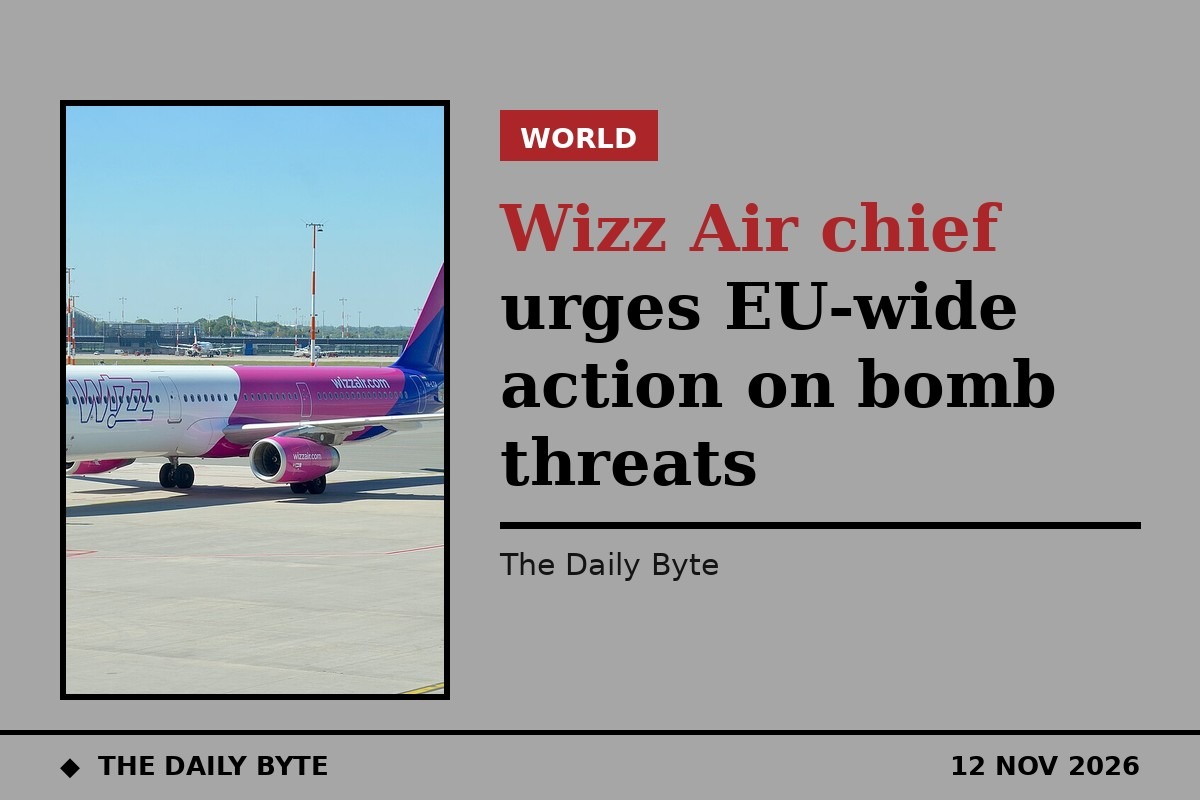
Europe needs a more harmonised approach to security, and a body to lead it, against "hybrid warfare" after a recent series of bomb threats, the chief executive of Hungarian budget airline Wizz Air said on Thursday.
Jozsef Varadi said he had recently met the European Commission in person to press the issue. "I personally had a meeting with the European Commission very recently, trying to address this issue and urging these people to act together and find ways of getting coordinated," he said on a post-earnings call.
Bomb threats have disrupted travel, newsrooms and schools across Europe during November, with the latest alert temporarily disrupting train services in northern France on Thursday morning.
Fourteen Wizz Air flights targeted
Wizz Air received hoax bomb alerts for 14 flights operated across Europe last week and had to divert two aircraft as a result of the threats, which were sent by email to airports and airlines.
In a separate interview with Reuters, Varadi linked the threats to what he called hybrid warfare affecting the whole of Europe. "We are an airline originating from Central Europe, we are probably closest to any of these hybrid warfare exposures than any of the Western airlines," he said.
Reuters said it was not able to establish the identity of the sender, the origin of the emails, or whether they all had come from the same source as the threats to any or all of the dozens of flights affected this month.
Fears of a hybrid campaign
The emailed threats add to concerns among European officials that the hoaxes are part of a campaign of "hybrid" disruptions, which many have blamed on Russia, aimed at countries that have helped Ukraine.
Varadi acknowledged that coordination would be difficult, noting that the issue is highly sensitive given the principle of national sovereignty, and that no country was willing to give ground on it. Even so, he argued that Europe must consider how to raise the level of responsibility in confronting such a threat.
What happens next
Varadi's intervention puts pressure on the European Commission to take a more central role in coordinating the response to the threats, which have so far been handled country by country. Whether member states will accept a single body leading the effort remains an open question, given the sovereignty concerns he himself raised.
For airlines, the disruption is immediate and costly: every hoax alert can force a diversion, delay passengers and trigger security checks. For European governments, the episode has become the latest test of how the continent responds to low-level disruption that stops short of open conflict but still unsettles daily life.