Women pardoned over abortion offences as criminal records deleted in England and Wales
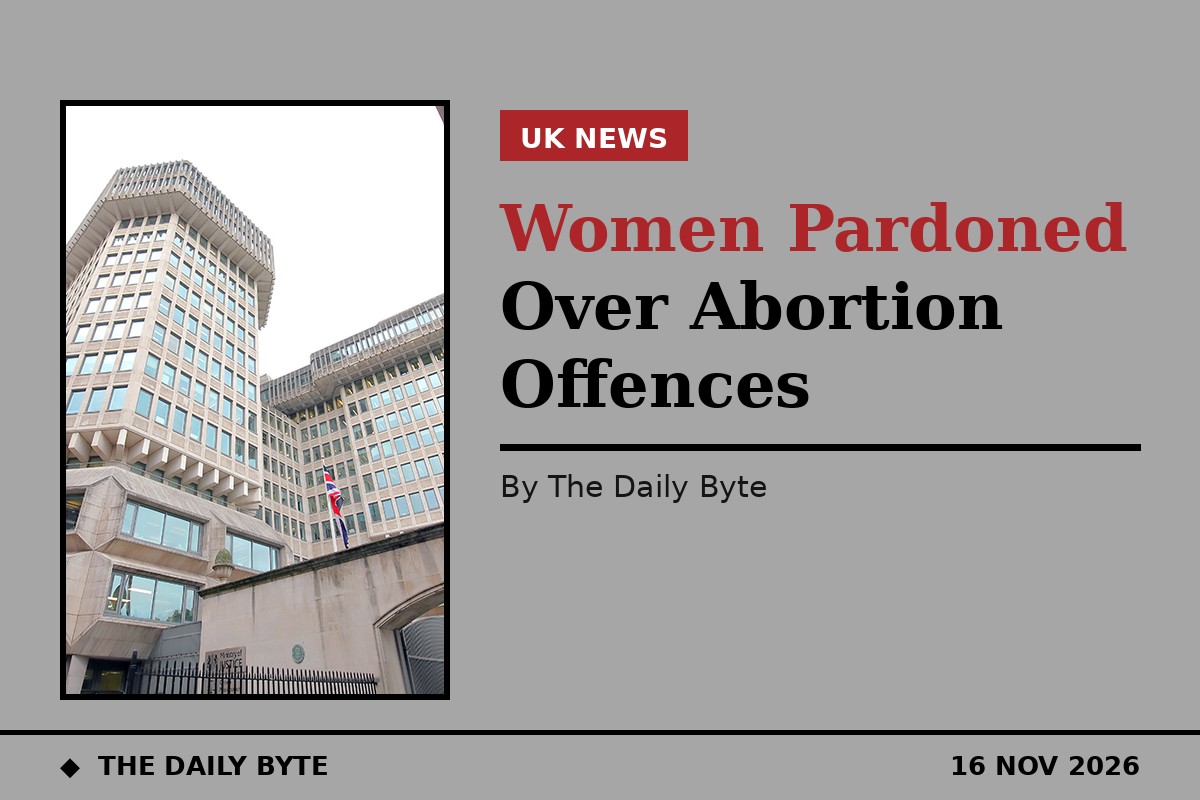
Women in England and Wales who were convicted or cautioned over ending their own pregnancies have been automatically pardoned from today, Monday 16 November 2026, as a change in the law takes effect and the authorities begin deleting the relevant criminal records.
The change, made by section 242 of the Crime and Policing Act 2026, means no woman needs to apply for a pardon or ask for her records to be cleared. Police forces and the courts are required to delete details of convictions and cautions, as well as records of arrests and investigations, from the records they hold. The Ministry of Justice says it aims to complete the deletions it is aware of within a month of the provision coming into force.
Alex Davies-Jones, the Minister for Victims and Tackling Violence Against Women and Girls, said: “Pardoning women for abortion offences related to their own pregnancy has been a priority and I’m pleased to be able to commence the change that Parliament voted for.”
What the new law covers
The pardon applies to women who were acting in relation to their own pregnancies, whether they are living or have since died. It covers offences under sections 58 and 59 of the Offences Against the Person Act 1861 and under the Infant Life (Preservation) Act 1929, including cases where a woman acted beyond the 24-week limit set out in the Abortion Act 1967 and was prosecuted, cautioned, arrested or investigated as a result. It does not apply to offences relating to another woman’s pregnancy.
The pardon follows section 241 of the same Act, which came into force earlier this year and removed criminal liability for a woman who ends her own pregnancy, or tries to, at any stage of the pregnancy.
The law on abortion services is unchanged
The change does not alter the Abortion Act 1967, which remains the legal framework governing access to abortion services in England and Wales. Doctors and anyone else who acts outside that framework can still face prosecution; what has changed is the position of the woman herself.
Heidi Stewart, chief executive of the British Pregnancy Advisory Service, said the change was an important milestone, adding that for too long women had faced the devastating consequences of outdated abortion laws, including police investigations, prosecutions and criminal convictions at moments of great vulnerability.
The reform follows an amendment to the Crime and Policing Bill put forward by Labour MP Tonia Antoniazzi, who has said police investigated more than 100 women suspected of illegal abortions in the five years before Parliament voted for the change. The Ministry of Justice has not published a figure for how many women are affected. Government figures cited in reporting of the change show 26 prosecutions under the older offences between 2017 and 2024, resulting in 10 convictions, though those figures do not identify every woman whose case qualifies for a pardon or record deletion.
Women who want to confirm that their records have been found and the relevant details deleted can contact the Ministry of Justice at Section242@Justice.gov.uk. No application is needed, and the pardon applies automatically from today.
Source: Ministry of Justice / GOV.UK; see also Tyla.


