World Diabetes Day: 902 children diagnosed in crisis
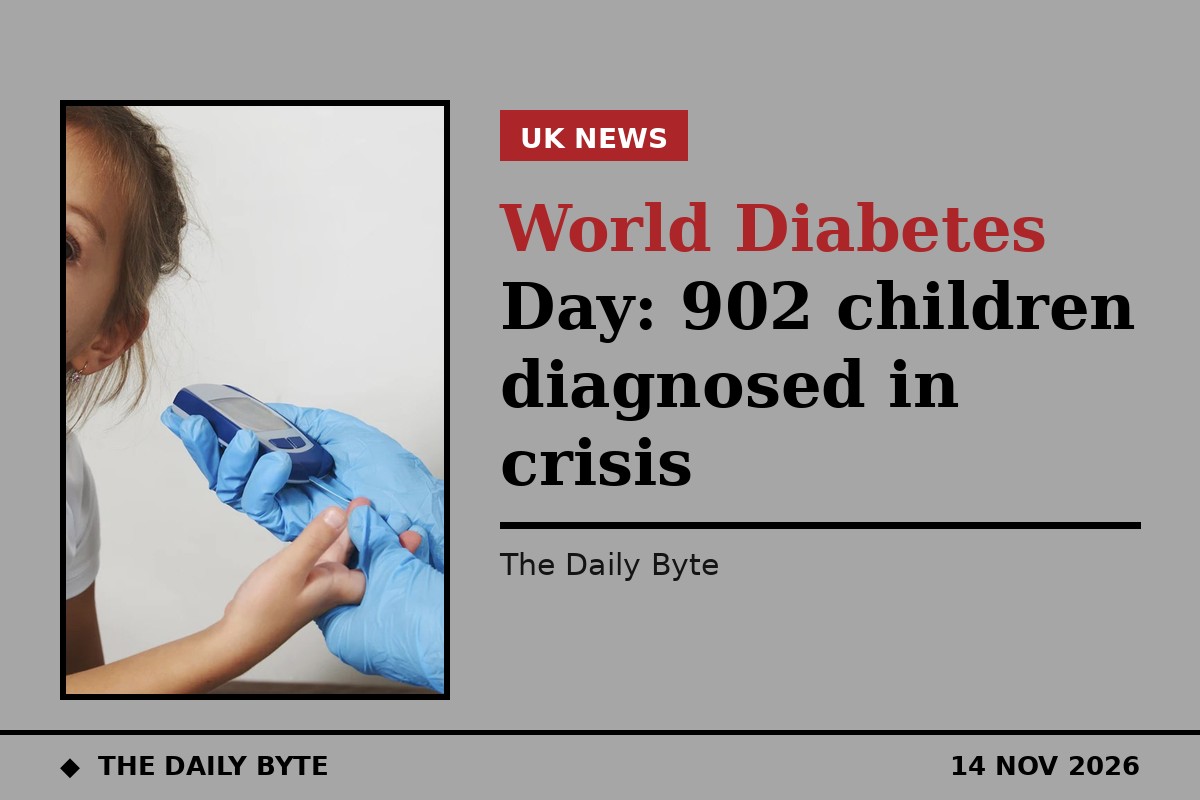
More than 900 children in England and Wales were diagnosed with type 1 diabetes while already in a life-threatening medical emergency, new audit data shows, as Diabetes UK uses World Diabetes Day today, 14 November, to urge parents and health professionals to learn the warning signs.
Data from the National Paediatric Diabetes Audit (NPDA) shows that 902 children aged 15 and under were diagnosed with type 1 diabetes while in diabetic ketoacidosis, known as DKA, between April 2024 and March 2025. That is 28% of children diagnosed in that year, up from 20% in 2017-18 and 26% in 2023-24. Rates are highest among the youngest children, with one in three children under five diagnosed while already in DKA. Diabetes UK reports that DKA is caused by a severe lack of insulin and can leave a child seriously ill very quickly.
The audit, published by the Royal College of Paediatrics and Child Health, found that 35,801 children and young people were receiving care from paediatric diabetes units in England, Wales and Jersey in 2024-25, a 29% increase in caseload over the past decade. Its key message is blunt: the rate of DKA at diagnosis remains high at 28%, especially in children aged 0 to 4. The NPDA report recommends that guidance and clinical pathways be reviewed so they highlight the early signs of diabetes and ensure anyone presenting with them has an immediate point-of-care blood glucose test.
The 4Ts: the signs to know
Diabetes UK is asking everyone to learn the 4Ts of type 1 diabetes: Toilet — going for a wee more often, heavier nappies in babies, or new bedwetting; Thirsty — being unusually thirsty or feeding more in babies; Tired — feeling unusually tired, sleeping more than usual, or changes in behaviour such as irritability; and Thinner — unexplained weight loss or looking thinner than usual. In babies and younger children the symptoms can be harder to spot because they often appear alongside other common childhood illnesses, which can mean type 1 diabetes goes undetected until a child becomes critically unwell.
The charity is calling on parents and healthcare professionals to "think type 1 diabetes" if a child presents with any one of the 4Ts and to arrange an urgent test, saying that in many cases a simple finger-prick blood glucose test could identify the condition sooner and help prevent a medical emergency.
Lyla's story
Two-year-old Lyla Story, from Hull, died in her sleep from DKA in May 2025. In the days before her death she had shown several of the 4Ts, including extreme tiredness, increased thirst and more wet nappies, but her type 1 diabetes was not diagnosed. Her father, John Story, is now supporting efforts to raise awareness of the warning signs. On 9 March 2026 a debate in Westminster on Lyla's Law shone a light on the need for earlier diagnosis, after more than 120,000 people signed a petition set up in Lyla's memory, which her parents handed in to Downing Street. The petition called for increased use of finger-prick tests in healthcare settings whenever someone presents with the 4Ts.
Colette Marshall, chief executive of Diabetes UK, said: "A type 1 diabetes diagnosis should never start with a medical emergency. Yet every year, hundreds of UK families face the heartbreaking reality of seeing their children reach crisis point before anyone recognises the condition." She added: "For almost a decade, we have seen no improvement in these figures — and that has to change, starting now."
What to do if you spot the signs
Type 1 diabetes can affect anyone, at any age, and symptoms can develop quickly, over days or weeks. If you notice any of the 4Ts in your child, contact your GP immediately and ask for a test for type 1 diabetes. If your GP surgery is closed, call 111 for advice. If symptoms are getting worse, go straight to A&E.


