Young bus drivers could get long-haul jobs under new plan
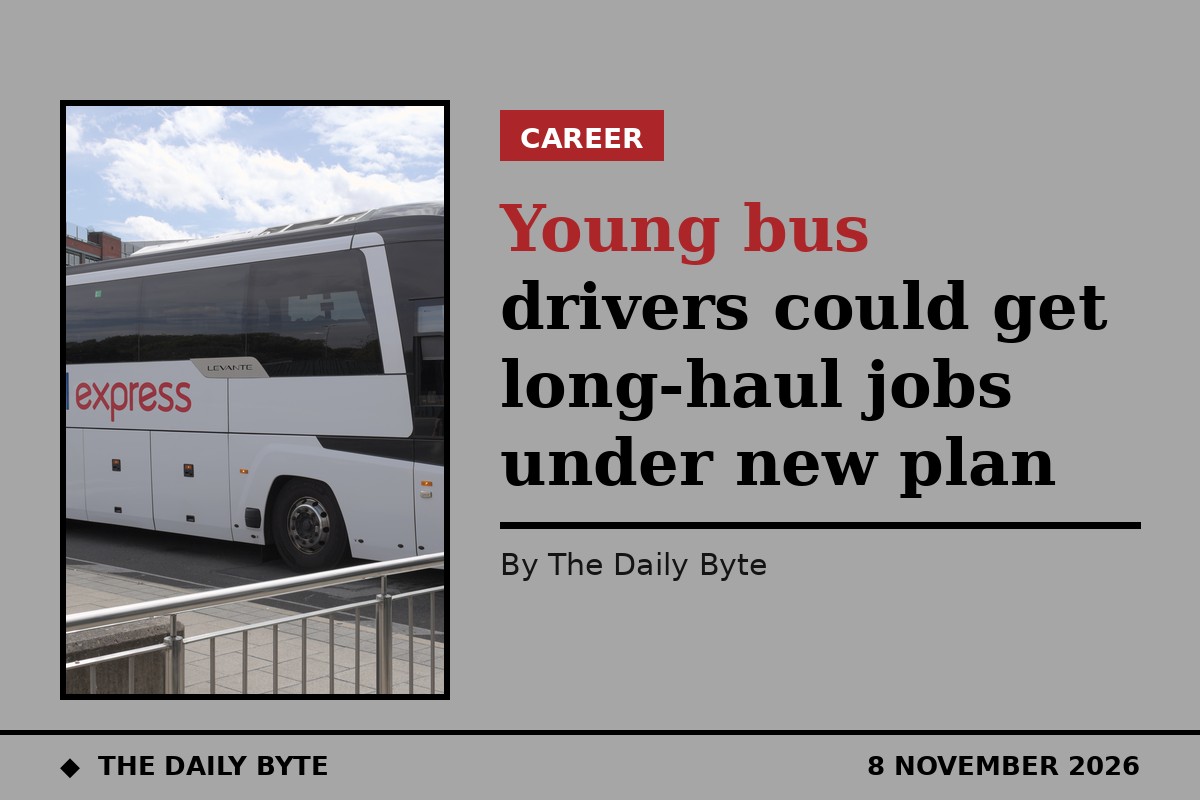
Young people aged 18 and 19 could soon be allowed to drive buses and coaches on long-distance routes, under new Government proposals aimed at tackling driver shortages and opening up more jobs for school and college leavers. The Department for Transport (DfT) has opened a consultation on changing licensing rules that currently keep younger drivers off many longer journeys.
At present, drivers aged 18 and 19 who hold a full bus or coach licence can only carry passengers on regular services where the route is no longer than 50 kilometres, around 31 miles. That restriction shuts them out of much coach work, including tours, school trips and long-distance services, and the Government says operators have told it the limit makes it hard to recruit young drivers and keep them in the industry.
The consultation, published on GOV.UK on 6 November 2026, puts forward three possible approaches and does not express a preferred option. The first would keep the current restrictions but allow 18- and 19-year-olds who complete additional training to drive non-regular services and regular services over 50km. The second would remove the restrictions in full but require operators to use technology to monitor all drivers aged 18 and 19. The third would also remove the restrictions and instead publish guidance for young drivers and their employers. The Government says it could implement one or more of the options, as elements of them could be combined.
Nothing has changed yet. The existing restrictions remain in force while the consultation runs, and any change would need to balance new opportunities for young people and the needs of the sector with maintaining high standards of road safety. Drivers would still need to pass the Driver Certificate of Professional Competence (CPC), and the proposals do not affect minibus licences.
The case for change rests in part on a survey of bus and coach operators carried out by the department between 28 January and 7 March 2026. Of the 81 operators who responded, 27 per cent of coach operators reported having no work suitable for 18- and 19-year-old drivers, and a further 14 per cent said only a fifth of their work was suitable. The department is considering the change to help reduce driver shortages and create additional employment for 18- and 19-year-olds.
The numbers show how small the current pool of young drivers is. DVLA records show that on 25 September 2026, just 68 people aged 18 and 456 people aged 19 held a full bus and coach licence. There were an estimated 113,900 bus and coach drivers in the UK between April 2025 and March 2026. Buses and Local Transport Minister Simon Lightwood said: “We want to clear the roadblocks that have been preventing too many young people from getting behind the wheel of a rewarding career.”
The proposals also sit alongside wider apprenticeship reforms. The Government has announced plans to cover the full cost of apprenticeships for people aged 25 and under and to provide a £2,000 hiring payment for eligible smaller employers taking on apprentices aged between 16 and 24. The passenger transport driver apprenticeship typically takes between eight and 14 months and leads to a Level 2 qualification, a category D passenger-carrying vehicle licence and a Driver Certificate of Professional Competence.
A similar consultation was carried out two years ago by the previous government but moved no further after the 2024 general election. The new consultation applies to England, Scotland and Wales. Northern Ireland has separate driver licensing arrangements and is not covered. Responses can be made online, by email or by post, and the consultation closes at 11.59pm on 18 December 2026. Anyone interested in the detail can read the full consultation on GOV.UK.